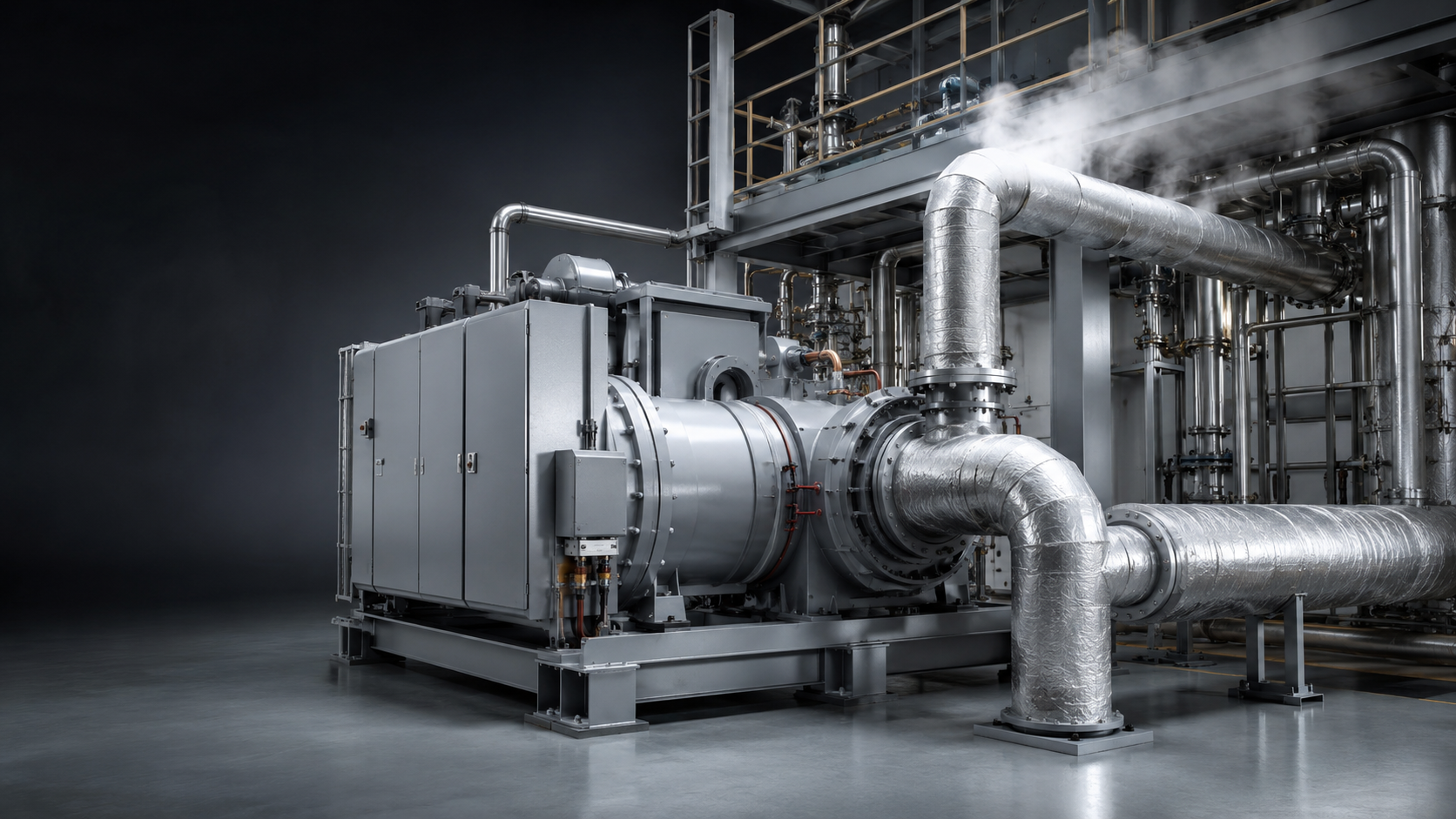
A growing number of chemical parks now treat waste heat as a feedstock for decarbonization instead of allowing valuable thermal energy to escape into the environment. One recent project demonstrates this shift by using industrial waste heat at just 25 to 30°C through a high-temperature heat pump. The system supplies district heating for roughly 1,000 households while reducing approximately 1,750 tonnes of CO2 annually. As energy prices remain unpredictable and sustainability targets become stricter, this approach is attracting the attention of chemical producers, utilities and procurement teams worldwide.
Why Waste Heat Is Becoming a Valuable Industrial Resource
For decades, many manufacturing sites viewed low-temperature waste heat as an unavoidable by-product. Most facilities focused on improving production efficiency while excess heat disappeared through cooling systems or exhaust streams.
That mindset is changing quickly. Modern heat pump technology makes it possible to recover energy that previously had little commercial value. Instead of treating waste heat as a disposal issue, companies now see it as an opportunity to reduce fuel consumption and improve operational efficiency.
The shift also supports broader decarbonization goals across industrial clusters. Chemical parks often contain multiple facilities located close together, creating ideal conditions for sharing recovered thermal energy.
How High-Temperature Heat Pumps Work
A high-temperature heat pump captures low-grade heat from industrial processes and upgrades it to temperatures suitable for practical applications such as district heating or industrial operations.
The process follows a straightforward cycle:
Heat enters the system from cooling water or another waste heat source that typically ranges between 25 and 30°C.
The refrigerant absorbs this energy before compression raises both pressure and temperature.
The upgraded heat transfers into a heating network where homes, commercial buildings or industrial users benefit from the recovered energy.
The cycle repeats continuously, reducing the need for additional fossil fuel combustion.
Unlike conventional boilers, heat pumps move existing heat rather than generating it from fuel. That distinction makes them significantly more energy efficient under suitable operating conditions.
Why Chemical Parks Offer the Best Environment
Chemical parks combine multiple production plants, shared infrastructure and centralized utility systems. These characteristics make waste heat recovery much easier than in isolated manufacturing facilities.
Several advantages stand out:
Multiple factories produce different waste heat streams throughout the day, creating a stable energy supply.
Existing utility corridors reduce the investment required for connecting heat sources with consumers.
Shared infrastructure allows operators to spread investment costs across several companies.
District heating systems often already exist nearby, creating immediate demand for recovered thermal energy.
Instead of each facility investing independently, chemical parks can develop integrated energy networks that benefit every participant.
Business Value Beyond Carbon Reduction
The environmental benefits receive significant attention, but procurement professionals often focus first on financial performance.
Heat recovery projects can strengthen business operations in several ways:
Lower natural gas consumption reduces exposure to fuel price volatility.
Stable operating costs improve long-term production planning.
Reduced emissions support customer sustainability requirements.
Better energy efficiency strengthens competitiveness in export markets where environmental performance increasingly influences purchasing decisions.
Companies also improve their resilience against future carbon pricing policies that may increase operating costs for energy-intensive industries.
Supply Chain Considerations for Industrial Buyers
Installing a heat recovery system involves more than purchasing a single piece of equipment. Buyers must evaluate the complete supply chain supporting long-term operation.
Important procurement considerations include:
Heat pump manufacturer capabilities and technical support.
Compressor reliability and maintenance requirements.
Availability of replacement components over the equipment lifetime.
Integration with existing process control systems.
Qualified engineering partners for installation and commissioning.
Industrial buyers increasingly evaluate suppliers based not only on equipment specifications but also on lifecycle support and operational reliability.
The Role of District Heating in Industrial Decarbonization
One of the most interesting aspects of this technology involves connecting manufacturing facilities with surrounding communities.
The featured installation demonstrates how industrial waste heat can supply approximately 1,000 households through district heating while avoiding around 1,750 tonnes of CO2 emissions every year.
This creates benefits for multiple stakeholders:
Manufacturers improve energy efficiency.
Local communities receive more sustainable heating.
Utility operators diversify their energy sources.
Regional governments advance climate objectives without constructing entirely new energy generation facilities.
Such partnerships illustrate how industrial infrastructure can provide value beyond factory boundaries.
Challenges That Still Need Attention
Although the technology continues to mature, implementation requires careful planning.
Several factors influence project success:
Initial capital investment remains substantial for large installations.
Existing facilities may require infrastructure upgrades.
Heat availability can fluctuate depending on production schedules.
Regulatory approvals may differ between regions.
Companies must also evaluate electricity prices because heat pumps rely on electrical power to upgrade thermal energy. Regions with cleaner electricity generation generally achieve greater carbon reduction benefits.
Market Outlook for Heat Pumps in Chemical Parks
Industrial decarbonization continues to move from long-term ambition toward practical implementation. Heat recovery technologies fit well within this transition because they improve efficiency without requiring fundamental changes to core chemical production processes.
Growing pressure to reduce emissions, rising expectations from customers and continuous improvements in heat pump technology will likely accelerate adoption across industrial clusters.
Chemical companies that invest early may benefit from lower operating costs, stronger sustainability credentials and greater energy independence. Equipment manufacturers and engineering firms also stand to gain as demand expands for integrated energy solutions.
What Procurement Teams Should Do Now
Procurement managers should view waste heat recovery as part of broader energy strategy rather than a standalone engineering project.
Key actions include:
Assess available waste heat streams across manufacturing facilities.
Compare long-term operating savings alongside initial capital costs.
Work closely with engineering teams to identify integration opportunities.
Evaluate suppliers based on technical expertise, service capability and lifecycle support.
Consider partnerships with local utilities where district heating infrastructure already exists.
Industrial waste heat has shifted from being an overlooked by-product to becoming a strategic energy resource. High-temperature heat pumps demonstrate that existing thermal energy can support industrial competitiveness while reducing environmental impact at the same time.
Ready to source industrial heat pump related chemical solutions from verified global suppliers? Explore competitive offers on our platform today.