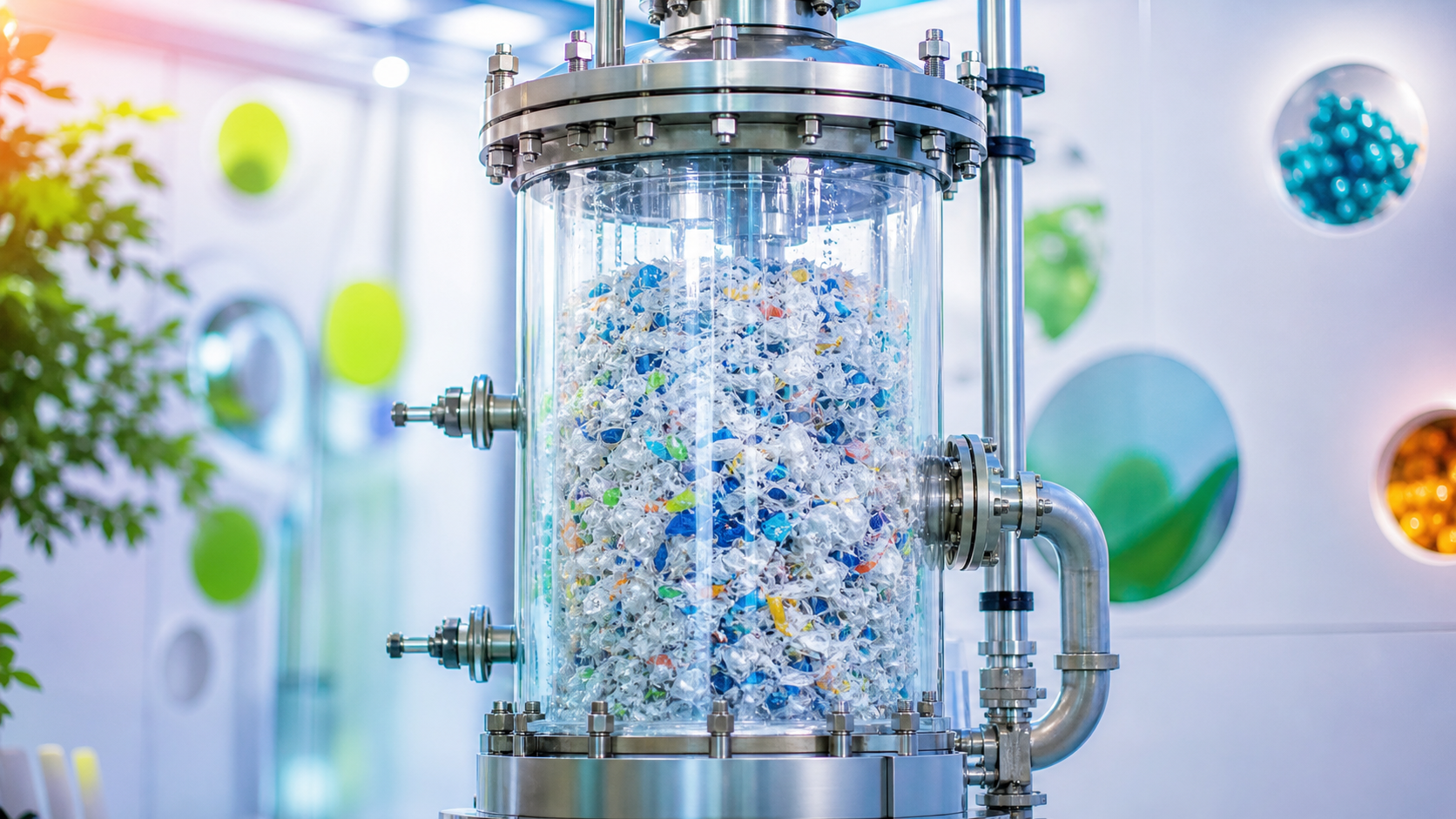
Plastic recycling has become a strategic issue for the petrochemical industry, but ambitious circular-economy pledges have not translated into widespread commercial scale. Chemical plastic recycling offers a potential route for converting difficult waste streams into usable chemical feedstocks, yet the economics and operating realities remain challenging.
Chemistry World's August 2026 coverage highlights the persistence of these barriers, providing a useful reality check for chemical traders, procurement teams and industry buyers. The central issue is no longer whether advanced recycling can work technically. The harder question is whether projects can consistently secure feedstock, control costs and produce materials that compete with conventional petrochemical alternatives.
The Scale Gap in Chemical Plastic Recycling
Chemical plastic recycling has attracted attention because it can address plastic waste that mechanical recycling struggles to process. Instead of simply remelting material, advanced processes can break polymers down into chemical intermediates, oils or other feedstocks that may re-enter industrial production.
The commercial challenge comes from moving beyond individual facilities and demonstration projects. A recycling technology may perform successfully under controlled conditions, yet scaling requires dependable waste collection, sorting, preprocessing, transportation, processing capacity and reliable outlets for the resulting products.
Industry pledges can create strong expectations around future circular feedstock availability. Procurement teams, however, need actual volumes, consistent specifications and predictable pricing before they can treat recycled feedstocks as dependable alternatives to virgin materials.
Why Feedstock Economics Remain Difficult
The economics of chemical plastic recycling begin with the waste itself. Not all plastic waste carries the same value, purity or processing characteristics, and difficult mixed streams can require additional preparation before they enter an advanced recycling unit.
This creates several cost pressures:
Collection and sorting: Waste must reach the recycling facility in sufficient quantities and with characteristics compatible with the selected technology.
Preprocessing: Contaminants, moisture and incompatible materials can increase preparation requirements and operating costs.
Transportation: Low-value waste can become significantly more expensive when facilities depend on long-distance supply chains.
Yield and quality: Processing performance affects how much commercially useful output a facility can generate from each tonne of incoming material.
These factors matter directly to chemical buyers. If recycled feedstock costs materially more than conventional alternatives, downstream manufacturers need either a regulatory incentive, customer premium or other commercial mechanism to justify the difference.
Technology Works, But Commercial Scale Is Different
Advanced recycling encompasses several technological approaches, and their commercial prospects depend on the type of plastic waste they process and the products they generate. The technical ability to transform waste does not automatically establish a competitive industrial business.
A plant also needs stable throughput. Running below capacity can weaken unit economics because fixed costs remain while output falls.
Scale introduces another challenge. Larger facilities require more capital and more reliable feedstock contracts, while investors need confidence that future output will have buyers. This creates a circular dependency between financing, feedstock availability and offtake commitments.
For petrochemical companies, the attraction lies in potentially creating a new source of carbon feedstock. For recyclers, the immediate priority remains proving that the entire chain can operate consistently at industrial volumes.
Petrochemical Markets Create a Tough Benchmark
Chemical plastic recycling does not operate in isolation. Its products compete, directly or indirectly, with established petrochemical feedstocks that benefit from mature infrastructure, established logistics and large production networks.
When conventional feedstock prices remain competitive, recycled alternatives face a difficult commercial environment. Buyers must consider not only the purchase price but also quality consistency, processing performance, supply reliability and contractual terms.
This is particularly important for chemical traders. A recycled feedstock opportunity may appear attractive based on sustainability objectives, but the trading decision ultimately depends on whether the material can meet technical requirements at a workable delivered cost.
The market therefore needs more than technological progress. It needs a sustainable relationship between recycled feedstock pricing and the economics of the downstream products made from it.
Policy Support Can Change the Commercial Equation
Regulation can influence the economics of chemical plastic recycling by changing the relative attractiveness of virgin and recycled feedstocks. However, policy conditions can also shift as governments balance environmental objectives against industrial competitiveness and energy security.
Chemistry World's August 2026 reporting provides a broader policy lens through coverage of delayed methane regulation fines and eased carbon trading restrictions amid energy security concerns. These developments illustrate how environmental policies can face pressure when governments and industries confront changing energy and economic priorities.
For recycling projects, policy uncertainty can complicate long-term investment decisions. A facility designed around expected regulatory incentives needs confidence that those conditions will remain strong enough to support its operating model.
Procurement teams should therefore distinguish between policy-driven demand and demand created by genuine market economics. Both can support growth, but they carry different risks.
The Supply Chain Is as Important as the Recycling Plant
One of the biggest misconceptions around advanced recycling is that adding processing capacity automatically creates a circular supply chain. In reality, a recycling facility represents only one part of a much larger network.
The commercial chain needs coordination between waste generators, collectors, aggregators, processors, recyclers, chemical producers and manufacturers. Any weak link can reduce the volume or quality of material reaching the next stage.
For chemical importers and exporters, this creates several questions before committing to recycled material:
Can suppliers provide consistent volumes throughout the contract period?
Does the feedstock or recycled output meet the buyer's required specification?
How sensitive are delivered costs to transportation distances?
Does the supplier depend on a narrow group of waste sources?
Can alternative suppliers provide equivalent material if one facility experiences an outage?
These questions turn chemical plastic recycling from a sustainability discussion into a conventional procurement risk assessment.
Why Industry Pledges Have Not Solved the Problem
Industry commitments can stimulate investment, create demand signals and encourage collaboration. They cannot, by themselves, eliminate high processing costs or guarantee sufficient waste supply.
A pledge to increase recycled content creates potential demand, but a recycler still needs access to suitable feedstock and a commercially viable processing route. Likewise, a chemical producer may express support for circular feedstocks while continuing to purchase conventional materials when price, availability or technical performance makes them the more practical option.
This explains part of the gap between announced ambitions and operating capacity. Commitments can create a market signal, but contracts and cash flows determine whether infrastructure scales.
The next phase of the market will likely depend more heavily on commercial discipline. Projects that can secure feedstock and offtake arrangements while controlling processing costs will have a stronger foundation than projects relying primarily on long-term sustainability expectations.
What Chemical Buyers Should Watch in 2026
Buyers do not need to reject chemical plastic recycling because the market has not reached its expected scale. Instead, they should evaluate the sector through measurable commercial indicators.
The most useful signals include:
Operating capacity: Actual production matters more than announced capacity because commercial performance depends on sustained operations.
Feedstock contracts: Long-term access to suitable plastic waste can indicate stronger supply security.
Offtake agreements: Confirmed buyers provide evidence that recycled outputs have a defined commercial destination.
Product consistency: Recycled chemical feedstocks need specifications that fit downstream processing requirements.
Delivered economics: Procurement decisions should account for processing, logistics and handling costs rather than comparing headline prices alone.
Policy exposure: Buyers should understand how dependent a supplier's business model is on regulatory support or sustainability premiums.
These indicators can help distinguish emerging commercial supply from projects that remain dependent on future investment or market development.
The Market Outlook for Chemical Plastic Recycling
Chemical plastic recycling still has a role in the transition toward more circular petrochemical supply chains, particularly where conventional mechanical recycling cannot efficiently handle complex waste streams. The opportunity remains significant because chemical processing can potentially connect waste management with established chemical manufacturing infrastructure.
The path to scale, however, will likely be more selective than industry pledges suggest. Companies need to demonstrate reliable feedstock access, competitive operating costs and consistent product quality at increasing volumes.
For chemical traders, this creates an emerging market that requires careful supplier evaluation. Rather than treating every announced project as a future source of commercial material, buyers can focus on facilities demonstrating sustained operations and credible supply and offtake relationships.
What Procurement Teams Should Do Now
Procurement teams can approach the market without making large commitments before the commercial fundamentals become clearer. Trial purchases, technical qualification and supplier diversification can provide exposure while limiting supply risk.
Buyers should also compare recycled and conventional feedstocks using a complete landed-cost model. A higher purchase price may still make commercial sense under the right conditions, but the premium needs a clear business rationale.
The strongest opportunities may emerge where waste availability, processing technology, petrochemical infrastructure and downstream demand overlap. For traders and importers, identifying these supply corridors early could create an advantage as circular feedstock markets mature.
Chemical plastic recycling is therefore not failing simply because it has not scaled as quickly as industry promises implied. The more important reality is that the sector has reached the point where technical potential must translate into reliable economics, stable supply chains and repeatable industrial performance.
Ready to source Chemical Plastic Recycling from verified global suppliers? Explore competitive offers on our platform today.