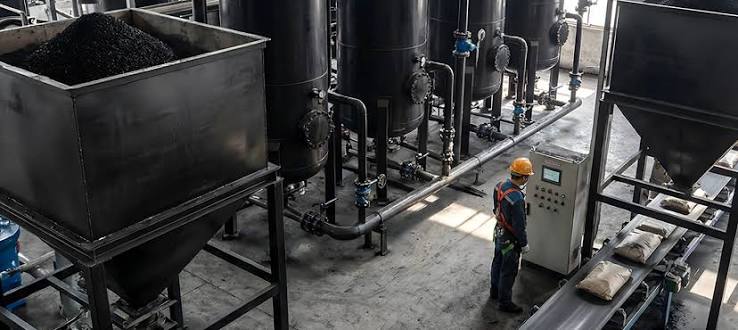
American Chemistry Council's Muted 2026 Growth Forecast Reflects Regulatory and Economic Headwinds
The American Chemistry Council's 0.3% U.S. chemicals growth forecast for 2026 points to a challenging operating environment for chemical manufacturers and downstream specialty-ingredient producers.
The outlook reflects a combination of weak demand, regulatory complexity, and broader economic pressures. For food ingredient companies, these conditions matter because many food, nutrition, and processing ingredients rely on chemical manufacturing, energy, transportation, and specialized production infrastructure.
A low-growth environment can therefore influence ingredient pricing, capacity decisions, inventory strategies, and supplier investment.

What the 0.3% Forecast Signals
A growth forecast of just 0.3% indicates that the U.S. chemical sector is expected to remain close to stagnant rather than entering a strong expansion cycle.
This can affect manufacturers through:
Lower capacity utilization
Cautious capital spending
Limited inventory rebuilding
Slower demand growth
Greater margin pressure
Delayed expansion projects
Increased focus on operating efficiency
For specialty chemical producers, weak overall market growth can make differentiated, higher-value applications more important.
Chemical-sector conditions can influence the sourcing economics of ingredients such as Citric Acid, Sodium Benzoate, Potassium Sorbate, Glycerin, Sorbitol, and Xanthan Gum, which are widely used across food formulation, preservation, texture, acidity control, and processing applications.

Citric Acid Monohydrate (E330)
Regulatory Complexity as a Headwind
Regulation remains another important factor affecting chemical-sector economics.
Companies may face costs associated with:
Environmental compliance
Chemical reporting
Product stewardship
Facility requirements
Testing
Documentation
State-level regulations
New restrictions on specific substances
The growing divergence between federal and state requirements can add another layer of complexity for manufacturers selling products nationally.
For food ingredient suppliers, regulatory requirements can extend into food-grade specifications, product documentation, food-contact applications, and customer qualification processes.
Weak Demand and Downstream Markets
Chemical demand is closely linked to broader industrial and consumer activity.
When economic growth remains weak, customers may:
Reduce inventories
Delay purchases
Operate plants at lower rates
Postpone expansion
Focus more heavily on cost reduction
Food ingredients can be somewhat more resilient because food consumption is relatively defensive, but suppliers can still experience pressure from cautious purchasing, inventory management, and customer efforts to reduce formulation costs.
Implications for Food Ingredients
The broader chemical outlook can affect food ingredients through several channels.
1. Manufacturing Costs
Chemical feedstocks, energy, utilities, and processing costs can influence ingredient economics.
2. Supply Availability
Weak demand can discourage new capacity investment, potentially affecting future supply growth.
3. Pricing
Lower chemical-sector utilization can increase competition among suppliers, although feedstock and logistics costs can offset some of that pressure.
4. Supplier Strategy
Producers may prioritize higher-margin specialty ingredients rather than expanding commodity capacity.
5. Inventory Management
Food manufacturers may continue to balance supply security against the cost of holding excess inventory.
Specialty Ingredients May Offer Greater Resilience
A low-growth chemical market does not affect every category equally.
Specialty ingredients can have greater resilience when they provide specific formulation or processing benefits.
Examples include ingredients used for:
Preservation
Acidity control
Texture
Viscosity
Moisture management
Stability
Nutritional formulation
This makes technical differentiation increasingly important when overall market growth is limited.
Competitive Intelligence
Companies tracking the U.S. chemical and food ingredient markets should monitor several indicators.
Chemical Production
Track capacity utilization, production volumes, and plant operating rates.
Capital Spending
Watch for new plants, expansions, and delayed projects.
Regulatory Developments
Monitor both federal policies and state-level restrictions.
Feedstock Costs
Changes in natural gas, petroleum, and other raw materials can influence ingredient manufacturing costs.
Inventory Trends
Monitor whether customers are rebuilding inventories or continuing to operate with lean stocks.
These indicators can provide a more complete picture than the headline growth forecast alone.
Procurement Considerations
Food ingredient procurement teams should prepare for an environment where suppliers may prioritize efficiency and margin protection.
Important considerations include:
Supplier financial stability
Manufacturing capacity
Geographic diversification
Raw-material exposure
Regulatory documentation
Inventory availability
Alternative suppliers
Contract flexibility
Maintaining qualified alternative sources can help protect against both supply disruption and unexpected changes in manufacturing economics.

Looking Ahead
The ACC's muted 2026 outlook suggests that the U.S. chemical industry is entering the year with limited room for broad-based expansion.
For food ingredient markets, the more important question is how individual specialty categories perform within this low-growth environment.
Companies with differentiated products, efficient manufacturing, strong customer relationships, and reliable supply chains may be better positioned than producers exposed primarily to weak commodity demand.
For food manufacturers, this reinforces the value of monitoring chemical-sector capacity, regulatory changes, feedstock costs, and supplier investment together rather than viewing ingredient prices in isolation.
Key Takeaways
ACC's 0.3% U.S. chemical growth forecast for 2026 signals a subdued market environment.
Weak demand can pressure capacity utilization, inventories, and capital spending.
Regulatory complexity adds cost and operational uncertainty.
Food ingredient markets can feel these pressures through manufacturing, feedstock, and logistics costs.
Specialty and formulation-intensive ingredients may prove more resilient than commodity chemicals.
Procurement teams should prioritize supplier resilience, regulatory readiness, and sourcing diversification.
觉得有用吗?