Competitive Landscape and Industry Developments
Specialty chemicals have become an increasingly important part of the global chemical industry, supporting manufacturing processes that require specific performance characteristics, technical precision and customised formulations. Unlike commodity chemicals, which primarily compete on volume and price, specialty chemicals often differentiate themselves through application expertise, product quality and technical support.
The specialty chemicals market serves a broad range of industries, including automotive, construction, agriculture, electronics, pharmaceuticals, personal care, water treatment and energy. Manufacturers increasingly invest in specialised formulations to improve product durability, efficiency, safety and environmental performance.
Competitive conditions are also changing. Established multinational manufacturers face pressure from regional producers, innovative technology companies and emerging suppliers offering cost-effective alternatives. For chemical traders, procurement managers and industrial buyers, understanding these developments is essential for identifying reliable suppliers and evaluating new sourcing opportunities.
Global Specialty Chemicals Market Overview
The specialty chemicals industry covers a diverse range of products designed to deliver specific functions in industrial and consumer applications.
These products include additives, surfactants, adhesives, catalysts, coatings, specialty polymers, water treatment chemicals, electronic materials and performance ingredients.
According to Mordor Intelligence, the global specialty chemicals market is estimated at approximately USD 1.26 trillion in 2026 and could reach USD 1.54 trillion by 2031, representing a projected compound annual growth rate of 4.09%.
Grand View Research provides another market assessment, estimating a value of approximately USD 1 trillion in 2025, with projected growth to USD 1.5 trillion by 2033.
The differences reflect variations in market definitions, product classifications and research methodologies. Both assessments indicate substantial commercial activity and continued demand for specialised chemical solutions.
What Makes Specialty Chemicals Different?
Specialty chemicals generally compete through performance and application value rather than production volume alone.
Their commercial characteristics include:
Application-specific performance: Products are developed to deliver particular properties such as adhesion, corrosion resistance, lubrication, dispersion or surface protection.
Technical differentiation: Formulations may require specialised manufacturing processes and proprietary technologies.
Customer qualification: Industrial buyers often evaluate performance through testing before approving a new supplier.
Technical support: Manufacturers frequently provide formulation guidance and application assistance.
Quality consistency: Small changes in composition or purity can affect the performance of finished products.
These characteristics create opportunities for manufacturers that combine technical expertise with dependable production and customer relationships.
Major Specialty Chemicals Segments and Their Industrial Applications
The industry includes numerous product categories serving different manufacturing requirements. Understanding these segments helps buyers identify potential suppliers and evaluate downstream demand.
Construction Chemicals and Performance Materials
Construction chemicals support modern infrastructure, residential development and industrial building projects.
Important products include:
Concrete admixtures that improve workability, strength and setting characteristics.
Waterproofing chemicals that protect structures against moisture penetration.
Construction adhesives and sealants used in building assemblies.
Protective coatings that improve resistance to corrosion and environmental exposure.
Grouts and repair compounds used in infrastructure maintenance.
Growing infrastructure investment in Asia-Pacific and the Middle East supports demand for specialised construction formulations.
Coatings, Adhesives, Sealants and Elastomers
The CASE segment is one of the most important specialty chemicals categories.
These materials support automotive manufacturing, industrial equipment, furniture, packaging, construction and consumer products.
Manufacturers use specialty additives, resins, solvents, pigments and dispersing agents to improve durability, adhesion, appearance and processing efficiency.
Agrochemicals and Agricultural Inputs
Agriculture represents an important market for specialised chemical products.
Key categories include herbicides, insecticides, fungicides, crop protection formulations, adjuvants and controlled-release products.
Manufacturers are also developing biological crop protection solutions and formulations designed to improve agricultural efficiency.
Mordor Intelligence identifies agrochemicals as a major specialty chemicals end-use segment, accounting for approximately 19.98% of market share in 2025 under its market classification.
Water Treatment Chemicals
Industrialisation and stricter wastewater management requirements support demand for water treatment products.
Important applications include:
Coagulants and flocculants.
Antiscalants and corrosion inhibitors.
Industrial cleaning chemicals.
Disinfection and oxidation products.
Membrane treatment additives.
Polyacrylamide, aluminium sulphate and polyaluminium chloride are examples of products used in different water treatment applications.
Electronics and Semiconductor Chemicals
The electronics industry requires high-purity specialty chemicals for semiconductor manufacturing, circuit board production and component processing.
Important product categories include electronic-grade solvents, photoresist materials, specialty gases, cleaning agents and etching chemicals.
As semiconductor manufacturing expands, suppliers with advanced purification capabilities and consistent quality systems may benefit from increasing demand.
Competitive Landscape of the Global Specialty Chemicals Industry
The specialty chemicals market contains multinational manufacturers, regional producers, independent formulators and specialised technology companies.
Competition depends on product differentiation, manufacturing efficiency, research capabilities, customer relationships and regulatory compliance.
Leading Global Specialty Chemical Manufacturers
Several multinational companies have established strong positions through product portfolios, research capabilities and international manufacturing networks.
BASF
BASF operates across industrial chemicals, performance materials, agricultural solutions and specialty formulations. Its broad portfolio supports automotive, construction, agriculture and consumer industries.
Dow
Dow supplies advanced materials, silicones, industrial intermediates and performance solutions. Its products serve packaging, infrastructure, mobility and consumer applications.
Evonik Industries
Evonik Industries focuses on specialty additives, performance materials, nutrition products and advanced industrial applications. Its differentiation strategy relies heavily on application expertise and technical innovation.
Clariant
Clariant operates in specialty chemicals, catalysts and additives. Its products support industrial processing, consumer applications and resource efficiency.
Solvay
Solvay maintains capabilities in advanced materials and specialty chemical solutions serving aerospace, electronics, automotive and industrial markets.
Other important competitors include DuPont, Arkema, Huntsman, Ashland, Lanxess, Croda, Nouryon and Eastman Chemical Company.
How Companies Compete
Manufacturers increasingly compete through several strategic capabilities:
Research and development: Developing specialised formulations that meet changing customer requirements.
Product differentiation: Offering materials with improved performance, durability or processing characteristics.
Customer partnerships: Working closely with industrial customers to develop application-specific solutions.
Manufacturing efficiency: Improving production reliability and controlling operating costs.
Geographic expansion: Establishing regional facilities and distribution networks to serve customers more effectively.
Acquisitions and partnerships: Accessing new technologies, intellectual property and specialised customer markets.
The competitive advantage increasingly comes from combining product performance with technical services and dependable supply.
Recent Industry Developments and Competitive Strategies in 2026
The specialty chemicals sector has experienced important strategic changes during 2026.
Companies are reassessing portfolios, investing in innovation and prioritising differentiated products as commodity chemical markets face overcapacity and uneven demand.
Merger and Acquisition Activity
Mergers and acquisitions remain an important route for specialty chemical companies seeking to strengthen their product portfolios.
A September 2026 assessment by MP Corporate Finance reported 98 transactions involving European specialty chemicals and ingredients companies during the first half of 2026.
The transactions covered industrial chemicals, food and beverage ingredients, feed and agriculture and beauty and care ingredients.
The report identified three important investment priorities:
Acquiring specialised technologies and differentiated products.
Improving portfolios through divestments and acquisitions.
Strengthening application expertise and regulatory capabilities.
Private equity and private equity-backed buyers participated in 37 transactions, compared with 29 during the first half of 2025.
Investment in Research and Development
Innovation remains a major competitive factor.
In March 2026, Evonik introduced an Innovation Factory initiative designed to accelerate the development and commercialisation of advanced specialty chemical solutions.
In April 2026, Atomgrid established a research and development centre in Bengaluru, India, to support specialty chemicals innovation.
These developments illustrate how established manufacturers and emerging companies are investing in research capabilities to improve product differentiation.
Expansion into Emerging Markets
Regional expansion is another important competitive strategy.
In January 2026, Saint-Gobain expanded its construction chemicals presence in Indonesia through a joint venture with Indocement involving the latter's mortar business.
Such investments demonstrate the commercial importance of local manufacturing, regional distribution and access to growing construction markets.
Regional Specialty Chemicals Market Analysis
Regional market conditions influence production economics, supplier competitiveness and international trade opportunities.
Asia-Pacific: Largest Regional Market
Asia-Pacific represents a major centre for specialty chemical manufacturing and consumption.
Mordor Intelligence estimates that the region accounted for 46.94% of global specialty chemicals revenue in 2025 and projects a compound annual growth rate of 4.58% through 2031.
China dominates several manufacturing categories, while India, Japan, South Korea and Southeast Asian countries contribute through different industrial specialisations.
Important regional opportunities include:
China: Specialty polymers, additives, electronic chemicals and industrial intermediates.
India: Agrochemicals, pharmaceutical intermediates, surfactants and construction chemicals.
Japan: Advanced materials, electronic chemicals and high-performance formulations.
South Korea: Semiconductor materials, battery chemicals and specialty polymers.
Southeast Asia: Oleochemicals, coatings, adhesives and water treatment products.
North America: Technology and Innovation
North America maintains a strong specialty chemicals industry supported by advanced manufacturing, research investment and established industrial customers.
The United States has important capabilities in agricultural chemicals, industrial additives, coatings, adhesives and advanced materials.
According to L.E.K. Consulting's May 2026 industry assessment, manufacturers are increasingly prioritising supply reliability, technically capable distribution partners and sustainability initiatives with measurable commercial benefits.
Europe: Advanced Formulations and Regulatory Standards
Europe remains an important market for specialty chemicals, particularly in coatings, automotive materials, industrial additives and advanced formulations.
European manufacturers face pressure from energy expenses, international competition and changing regulatory requirements.
However, established research capabilities and demand for specialised products support the region's competitive position.
Middle East: Industrial Diversification
The Middle East is expanding its chemical manufacturing capabilities through investment in petrochemicals, infrastructure and downstream industries.
Saudi Arabia's industrial diversification programmes create opportunities for construction chemicals, water treatment additives, oilfield chemicals and industrial formulations.
The region also offers opportunities for manufacturers seeking access to growing infrastructure and energy markets.
Key Growth Opportunities in Specialty Chemicals
Several industries are creating opportunities for manufacturers and international chemical traders.
1. Sustainable and Bio-Based Chemicals
Demand for environmentally improved formulations is encouraging manufacturers to explore renewable feedstocks, biodegradable ingredients and alternative chemical processes.
Bio-based surfactants, renewable solvents and lower-impact additives are attracting interest across consumer and industrial applications.
However, commercial competitiveness still depends on production costs, product performance and reliable raw material availability.
2. Electric Vehicles and Battery Materials
Electric vehicle manufacturing creates demand for specialised chemicals used in battery production and automotive components.
Opportunities include electrolyte solvents, battery additives, engineering polymers, coatings and thermal management materials.
Manufacturers with strong technical capabilities can access specialised supply chains through customer qualification programmes.
3. Construction and Infrastructure Chemicals
Infrastructure investment supports demand for concrete admixtures, waterproofing chemicals, industrial coatings and protective materials.
Growing urbanisation in Asia-Pacific and infrastructure development in the Middle East provide opportunities for regional suppliers and international distributors.
4. Agricultural Formulations
Agricultural manufacturers continue to invest in more efficient crop protection formulations, biological solutions and specialised agricultural additives.
This segment offers opportunities for suppliers of active ingredients, formulation intermediates and performance-enhancing additives.
5. Electronics and High-Purity Materials
Semiconductor and electronics manufacturing requires increasingly specialised chemicals.
High-purity solvents, electronic cleaning agents and advanced processing materials offer opportunities for manufacturers capable of maintaining stringent quality standards.
Challenges Facing Specialty Chemicals Manufacturers
Despite strong long-term opportunities, the industry faces several commercial and operational challenges.
Raw Material and Energy Cost Volatility
Specialty chemical production depends on feedstocks, solvents, intermediates and energy.
Changes in crude oil, natural gas and electricity prices can affect manufacturing expenses and profit margins.
Producers must manage these fluctuations through procurement planning, inventory control and efficient production operations.
Regulatory Compliance
Chemical manufacturers must meet increasingly complex environmental, health and safety requirements.
Regulations concerning chemical registration, hazardous substances, product labelling and industrial emissions can increase compliance costs.
International exporters must also understand destination-country requirements before shipping products.
Competition from Regional Manufacturers
Regional producers increasingly compete with established multinational companies.
Competitive pricing, manufacturing expansion and local customer relationships can create pressure on international suppliers.
Companies must differentiate themselves through quality, technical services and dependable delivery.
Supply Chain Reliability
Specialty chemicals often require specific production inputs and controlled transportation conditions.
Unexpected plant shutdowns, shipping disruptions and supplier concentration can affect product availability.
Maintaining alternative suppliers and transparent inventory planning can help buyers manage these risks.
Digitalisation and Technology in Specialty Chemicals
Digital transformation is becoming an important part of specialty chemical manufacturing.
Manufacturers are adopting technologies that improve production efficiency, quality control and customer engagement.
Artificial Intelligence and Predictive Analytics
Artificial intelligence can support production planning, equipment monitoring and quality management.
Predictive maintenance systems help identify potential equipment problems before they cause unexpected downtime.
Data analytics can also help manufacturers evaluate demand patterns and improve inventory management.
Advanced Formulation and Process Development
Digital laboratory systems and automated testing can accelerate formulation development.
Manufacturers can use improved analytical methods to evaluate product performance, optimise compositions and reduce unnecessary production trials.
These capabilities are particularly valuable in applications where customers require highly specific technical properties.
Supply Chain Digitalisation
Digital procurement and inventory systems improve visibility across suppliers, distributors and customers.
For chemical buyers, better information can support supplier comparisons, delivery planning and purchasing decisions.
What Chemical Buyers and Procurement Managers Should Monitor
For international chemical traders and industrial procurement teams, specialty chemicals require a more detailed purchasing approach than standard commodity products.
The following factors deserve particular attention:
Product specifications: Confirm concentration, purity, composition and relevant performance parameters.
Supplier qualifications: Review manufacturing capabilities, certifications and export experience.
Technical documentation: Request Safety Data Sheets, Certificates of Analysis and relevant technical data sheets.
Application compatibility: Confirm that the product meets the requirements of the intended industrial process.
Regulatory requirements: Check registration, labelling and import requirements in the destination market.
Commercial competitiveness: Compare quotations using total landed cost rather than product price alone.
Supply continuity: Evaluate production capacity, inventory availability and alternative sourcing arrangements.
Buyers should also distinguish between commodity-grade products and specialised formulations. Two products with similar commercial descriptions may have different compositions and application performance.
Developing relationships with technically capable manufacturers and distributors can improve sourcing reliability and reduce the risk of product substitution.
Specialty Chemicals Market Outlook for 2027 and Beyond
The specialty chemicals industry is expected to maintain its importance in global manufacturing as industrial customers seek materials that deliver higher performance and specialised functionality.
Market competition will increasingly depend on innovation, application expertise and the ability to serve customers across different regions.
Several developments are likely to shape the next phase of industry growth:
Expansion of specialty materials for semiconductors, batteries and advanced electronics.
Greater investment in construction chemicals and infrastructure-related formulations.
Continued development of sustainable and bio-based chemical products.
Portfolio restructuring and acquisitions involving specialised manufacturers.
Increasing demand for technically advanced water treatment and agricultural chemicals.
Wider adoption of digital manufacturing and predictive maintenance technologies.
Asia-Pacific is expected to remain a major manufacturing and consumption centre, while North America and Europe will continue to contribute through advanced technologies and specialised formulations.
For chemical traders and procurement managers, the most attractive opportunities will come from identifying reliable manufacturers, understanding downstream applications and monitoring changes in regional competitive conditions.
Businesses that combine strong supplier relationships with product knowledge, competitive sourcing and consistent quality management will be better positioned to participate in the expanding specialty chemicals industry.
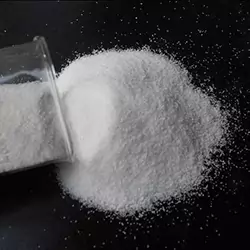
Polyacrylamide
觉得有用吗?