Yara and Northern Lights Launch a CO₂ Storage Chain for Low-Carbon Ammonia
Yara and Northern Lights have brought a major industrial carbon capture and storage (CCS) chain into operation, connecting ammonia production in Sluiskil, the Netherlands, with permanent geological storage beneath the Norwegian seabed. The facility can capture and liquefy up to 800,000 tonnes of CO₂ annually, creating a new pathway for managing emissions from an essential chemical production process.
For chemical traders, procurement managers and industrial buyers, this development extends beyond environmental performance. It highlights how investment in carbon management infrastructure could influence ammonia sourcing, product carbon footprints, supply chain reporting and the commercial value of lower-carbon chemical products.
The project also demonstrates how companies can divide the responsibilities of industrial decarbonization across national borders. Yara handles capture and liquefaction at its Dutch plant, while Northern Lights provides the shipping, receiving and storage infrastructure needed to move the CO₂ to Norway.
How the Yara and Northern Lights CO₂ Chain Works
The new chain connects an industrial emissions source with a dedicated offshore storage destination. Each stage requires specialized equipment, coordinated logistics and infrastructure capable of handling large volumes of liquefied carbon dioxide.
The process follows four main steps:
Capture at Sluiskil: Yara separates CO₂ generated during ammonia production. The project targets a maximum capture volume of 800,000 tonnes per year.
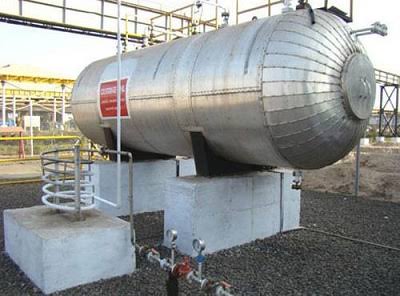
Liquefaction and temporary storage: The plant conditions the captured gas and converts it into liquid CO₂. Dedicated tanks hold the material before loading.
Marine transportation: Specialized vessels transport the liquefied CO₂ from the Netherlands to Northern Lights' receiving facilities in Norway.
Offshore storage: The Norwegian infrastructure transfers the CO₂ through a pipeline to a geological storage formation approximately 2.6 kilometres beneath the seabed.
This integrated model addresses a practical challenge for European industry. A company can capture emissions at an existing production site without requiring a suitable geological storage formation directly beneath or beside its factory.
The commercial arrangement also separates industrial production from downstream carbon management. That structure could support additional projects as more emitters seek access to transport and storage services.
Why Ammonia Production Is Suited to Carbon Capture
Ammonia is a fundamental feedstock for nitrogen fertilizers and serves as a potential carrier for hydrogen and a fuel for selected industrial and maritime applications. Its production also generates substantial CO₂, particularly in conventional processes that use natural gas as a feedstock and energy source.
In steam methane reforming, natural gas reacts with steam to produce hydrogen-rich synthesis gas. Further processing supplies hydrogen for ammonia synthesis and generates CO₂ as a by-product, creating a concentrated stream that industrial operators can capture.
Existing experience with CO₂ separation gives ammonia producers a useful starting point for CCS. Many facilities already capture, liquefy or use carbon dioxide in applications such as urea production, greenhouse enrichment and industrial gas supply.
Permanent storage creates another option for captured CO₂ that would otherwise return to the atmosphere. Instead of relying exclusively on commercial uses that eventually release the gas or have limited market capacity, producers can send eligible volumes into dedicated geological storage.
However, CCS does not eliminate every source of emissions associated with ammonia. Energy consumption, feedstock extraction, hydrogen production and other upstream activities still influence the overall carbon footprint.
Project Capacity and the European Carbon Storage Network
The Sluiskil project establishes a substantial industrial-scale route for moving captured CO₂ across national borders. Its maximum annual capacity of 800,000 tonnes provides a clear indication of the volumes that dedicated capture and storage infrastructure can handle at a major chemical production site.
Yara and Northern Lights have planned for approximately 12 million tonnes of CO₂ to be transported and stored over 15 years. The project therefore combines an immediate industrial application with a long-term commercial arrangement for carbon management.
The receiving infrastructure in Norway forms part of a broader effort to develop shared CO₂ transport and storage services. Norway's offshore geology offers potential storage capacity, while European industrial regions provide sources of emissions that need practical routes to permanent storage.
This model could prove relevant to producers in fertilizers, chemicals, refining and other sectors with concentrated emissions streams. Companies located far from suitable storage formations may be able to access infrastructure through shipping terminals and shared storage networks rather than building individual end-to-end systems.
What the Project Means for Ammonia Buyers and Chemical Traders
The availability of industrial CCS creates a potential distinction between conventional ammonia and ammonia produced with a lower reported carbon intensity. For buyers, the commercial significance will depend on how suppliers document emissions reductions, how customers value lower-carbon inputs and how contracts allocate additional costs.
Procurement teams should assess several factors when comparing offers:
Verified carbon intensity: Request emissions data that identifies the production pathway, reporting boundary and methodology used to calculate the product's footprint. A supplier's participation in a CCS project alone does not establish the footprint of every tonne it sells.
Product specifications: Confirm that ammonia meets the required purity, concentration and technical specifications for the intended application. Carbon management arrangements do not replace normal quality requirements.
Commercial premiums: Ask suppliers to separate the base product price from any additional costs associated with capture, transport, storage or certification. The final premium will depend on contractual terms and market conditions.
Supply continuity: Evaluate production reliability, shipping schedules, terminal access and contingency arrangements. A lower-carbon sourcing strategy must still meet delivery and inventory requirements.
Traceability: Establish how the supplier attributes captured and stored CO₂ to the relevant product volumes. Documentation should support customer reporting and applicable regulatory requirements.
Chemical traders may also find opportunities to connect producers with customers seeking lower-emission feedstocks. However, buyers should distinguish between physically delivered ammonia, contractual emissions attributes and any environmental claims associated with the transaction.
Clear documentation is essential when multiple intermediaries handle a product between the manufacturer and the end user. Contracts should define the relevant product volume, emissions methodology, verification arrangements and responsibility for maintaining records.
Supply Chain Logistics and Infrastructure Challenges
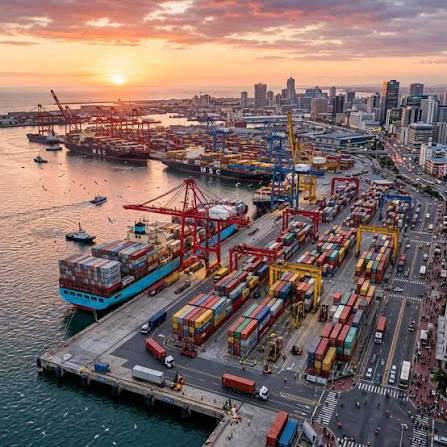
Moving hundreds of thousands of tonnes of liquid CO₂ requires more than a capture unit at the production site. The entire chain must coordinate storage capacity, loading operations, marine transport, receiving terminals and offshore injection facilities.
Yara's Sluiskil operation includes CO₂ liquefaction, temporary storage and ship-loading infrastructure. Northern Lights provides the transport and permanent storage link, allowing the two companies to manage different stages through a coordinated commercial arrangement.
Several operational factors will influence the performance of this model:
Shipping availability: Dedicated vessels must align with loading windows, terminal capacity and offshore delivery schedules. Delays at any point can affect temporary storage requirements and plant operations.
Storage and handling capacity: Tanks, transfer equipment and pipelines must accommodate planned volumes while maintaining safe operating conditions.
Cross-border coordination: Operators need compatible technical standards, reliable documentation and clear responsibility for custody transfers.
Long-term storage management: Storage operators must monitor injection operations and meet applicable requirements for site integrity and environmental protection.
These requirements create a specialized market for CO₂ logistics and handling services. They also underline why commercial agreements, infrastructure planning and operational coordination matter as much as capture technology itself.
For chemical buyers, the practical lesson is to assess lower-carbon supply options against the complete delivery chain. A supplier's emissions performance and production capacity are only part of the procurement decision.
Regulation, Carbon Accounting and Sustainability Claims
Carbon capture and storage sits at the intersection of industrial operations, environmental regulation and carbon accounting. As companies introduce lower-emission products, they need consistent methods to measure and communicate the results.
The Yara and Northern Lights chain illustrates how a cross-border arrangement can connect emissions generated in one country with permanent storage in another. Such arrangements require robust records showing how much CO₂ enters the chain, how operators transport it and how much they ultimately inject into the storage formation.
For procurement and compliance teams, three areas deserve particular attention.
First, companies should establish the emissions boundary used for product claims. A reduction in direct emissions at an ammonia plant does not automatically represent an equivalent reduction across the entire product life cycle.
Second, buyers should request evidence supporting claims such as "low-carbon ammonia" or "reduced-emission fertilizer." The documentation should identify the production route, relevant emissions calculations and any applicable certification or verification process.
Third, businesses should track changing requirements for emissions reporting, product sustainability disclosures and carbon management. Requirements may differ across jurisdictions and end-use markets, particularly where products move through several countries before reaching customers.
Strong carbon accounting can help prevent unsupported environmental claims and improve comparisons between suppliers. It also gives procurement teams a clearer basis for evaluating whether a price premium corresponds to a measurable reduction in product emissions.
What Buyers Should Do as Low-Carbon Ammonia Supply Develops
The start of the Sluiskil-to-Norway chain gives the chemical sector a practical example of how industrial CCS can support emissions management without immediately replacing existing production assets. Its planned annual capacity of up to 800,000 tonnes also shows why shared transport and storage infrastructure may become commercially important for energy-intensive industries.
Buyers should now incorporate carbon performance into supplier evaluations alongside price, quality, lead time and reliability. They can begin by requesting comparable emissions data, clarifying the evidence behind environmental claims and discussing whether lower-carbon product options meet their technical and commercial requirements.
Traders and distributors should also monitor new capacity, shipping arrangements and supplier partnerships that could expand access to lower-carbon ammonia. As the market develops, the ability to connect reliable product supply with credible emissions documentation may become an important point of differentiation.
For producers, the project demonstrates the value of coordinating capture infrastructure with a specialist storage provider. For buyers, it offers a reason to strengthen supplier engagement and prepare procurement processes for products with differentiated carbon footprints.
Ammonia Anhydrous
觉得有用吗?