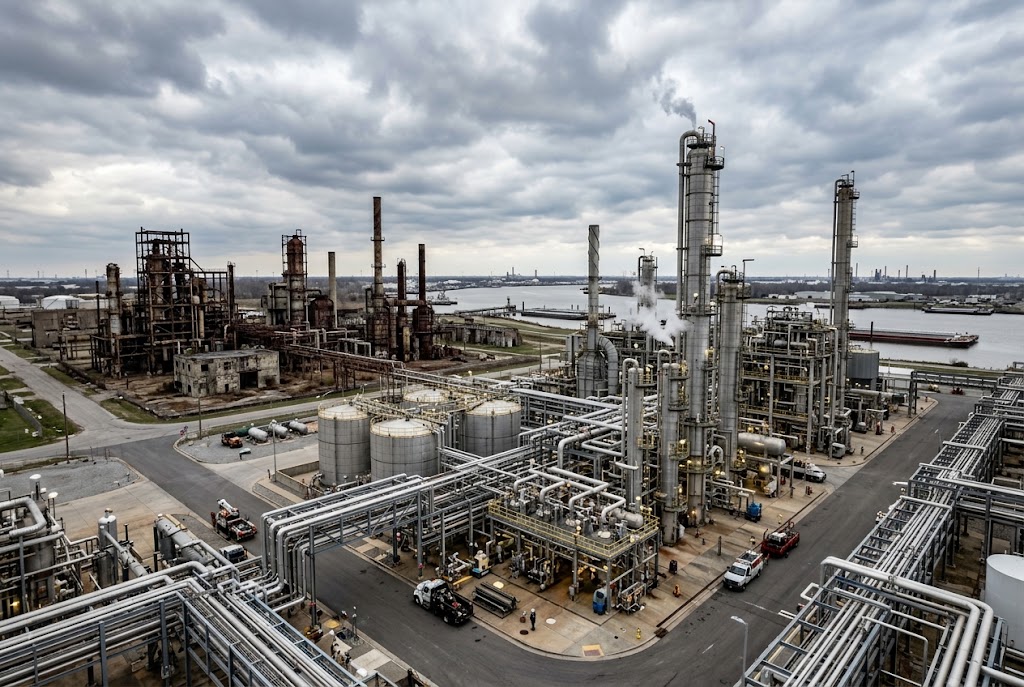
The global chemical industry is witnessing a pivotal moment in Europe. In May 2026, BASF CEO Markus Kamieth confirmed that full-time equivalent staff at the Ludwigshafen site dropped below 30,000 for the first time since 1954. This milestone is not merely an internal HR metric. It serves as a stark symbol of the broader lack of European industrial competitiveness now challenging the site that once made BASF the world's largest chemical company.
C&EN’s coverage frames this headcount decline against a backdrop of structural economic challenges. High energy costs, stringent regulatory burdens and sluggish demand growth are eroding the competitive advantage of European chemical production. For procurement managers and chemical traders, this signals a fundamental shift in global supply dynamics.
Buyers must recognize that the Ludwigshafen complex is no longer the unchallenged powerhouse it once was. The reduction in workforce reflects a strategic retreat from energy-intensive bulk production. Understanding this context is essential for developing resilient sourcing strategies in an increasingly fragmented global market.
The Symbolism of the 30,000 Threshold
The drop below 30,000 employees carries significant historical weight. Ludwigshafen has long been the engine of BASF’s global operations. Its Verbund system set the standard for integrated chemical production worldwide. Seeing its workforce shrink to levels not seen since the mid-20th century marks the end of an era.
This symbolism underscores the severity of the competitiveness crisis. It is not just about cost-cutting. It represents a fundamental reassessment of what can be economically produced in Europe. The site is transitioning from a volume-driven model to a value-driven one.
Procurement teams should view this milestone as a warning sign. The era of abundant, low-cost basic chemicals from Europe is fading. Buyers must prepare for a market where European supply is premium-priced and focused on specialty applications.
Drivers of Declining European Industrial Competitiveness
Several factors contribute to the lack of European industrial competitiveness affecting Ludwigshafen. Energy prices remain the primary culprit. Natural gas costs in Europe are significantly higher than in North America or the Middle East. This disparity makes energy-intensive processes like ammonia or ethylene production economically unviable.
Regulatory complexity: The European Union’s Green Deal and REACH regulations impose strict compliance costs. While environmentally necessary, these rules add administrative and financial burdens that competitors in other regions do not face.
Slow demand growth: Mature European markets show stagnant demand for many bulk chemicals. Emerging markets in Asia offer growth but require local production to be competitive.
Infrastructure aging: Maintaining older facilities requires significant capital investment. With lower margins, companies are hesitant to invest in legacy assets.
These drivers create a perfect storm for European producers. They are forced to choose between absorbing losses or exiting certain business lines. BASF’s choice to reduce headcount reflects the latter strategy.
Impact on Global Chemical Supply Chains
The decline in European competitiveness has profound implications for global supply chains. As Ludwigshafen scales back, the void must be filled by other regions. This shift increases reliance on imports from Asia and North America.
Buyers who previously relied on European supply for stability now face greater logistical complexity. Longer shipping routes increase lead times and exposure to geopolitical risks. Freight costs become a larger component of the total landed cost.
Supply diversification: Buyers must actively seek suppliers in multiple regions to mitigate risk.
Inventory management: Larger safety stocks are needed to buffer against longer lead times.
Quality consistency: Sourcing from new regions requires rigorous quality assurance protocols to ensure product specifications are met.
Procurement teams must adapt their strategies to this new reality. Flexibility and agility are now more valuable than ever.
Strategic Responses for Procurement Professionals
Navigating this landscape requires proactive measures. Buyers cannot simply continue with business as usual. They must rethink their sourcing models to account for the declining role of European bulk production.
First, conduct a thorough risk assessment of your current supply base. Identify which products are sourced from facilities facing competitiveness challenges. Develop contingency plans for each critical item. This might involve qualifying alternative suppliers or securing long-term contracts with flexible volume clauses.
Second, engage in open dialogue with your suppliers. Understand their strategic direction and investment plans. Are they shifting focus to specialties? Are they closing specific units? This intelligence allows you to anticipate changes before they impact your operations.
Third, consider total cost of ownership rather than just purchase price. A slightly higher price from a reliable supplier may be preferable to a lower price from a risky source. Factor in logistics, quality and inventory holding costs when evaluating options.
The Shift Toward Specialty Chemicals
As BASF and other European producers retreat from bulk commodities, they are doubling down on specialty chemicals. These high-margin products require advanced technology and expertise. They are less sensitive to energy costs and more driven by innovation.
For buyers, this means the European market will increasingly focus on high-value additives, performance polymers and custom formulations. Standard bulk chemicals will likely come from other regions. Procurement strategies must reflect this bifurcation.
Build strong partnerships with European suppliers for specialty needs. Leverage their technical expertise to drive innovation in your own products. For bulk needs, look to global suppliers with competitive cost structures. This hybrid approach balances innovation with cost efficiency.
Regulatory and Sustainability Pressures
The lack of competitiveness is partly self-inflicted through stringent environmental regulations. While these rules aim to protect the planet, they place European producers at a disadvantage. Buyers must navigate this complex regulatory landscape carefully.
Ensure that alternative suppliers meet equivalent environmental standards. Sourcing from regions with lax regulations introduces reputational and legal risks. Conduct thorough audits to verify compliance with global sustainability norms.
Sustainability is becoming a key differentiator. Suppliers that can demonstrate low carbon footprints and responsible practices will gain preference. Procurement teams should integrate ESG criteria into their vendor selection processes.
Looking Ahead to a Fragmented Global Market
The future of the chemical industry is likely to be more fragmented. Regional self-sufficiency will increase as countries prioritize security of supply. Europe will focus on high-value specialties. Asia will dominate bulk production. North America will leverage cheap feedstocks.
Buyers must operate in this multi-polar world effectively. This requires deep market knowledge and strong relationships across regions. Digital tools can help manage complexity by providing real-time visibility into supply chains.
Stay informed about geopolitical developments and trade policies. Tariffs and trade barriers can disrupt even the best-laid plans. Agility and adaptability are the keys to success in this new environment.
The Bottom Line for Procurement Teams
The BASF Ludwigshafen headcount drop below 30,000 is a powerful symbol of lacking European industrial competitiveness. It signals a permanent shift in the global chemical landscape. Procurement teams must respond with strategic foresight and operational flexibility.
Diversify your supply base, engage deeply with suppliers and prioritize total cost of ownership. Embrace the shift toward specialty chemicals in Europe while sourcing bulk materials globally. By adapting to these changes, you can turn potential disruptions into competitive advantages.
Ready to source styrene monomer from verified global suppliers? Explore competitive offers on our platform today.