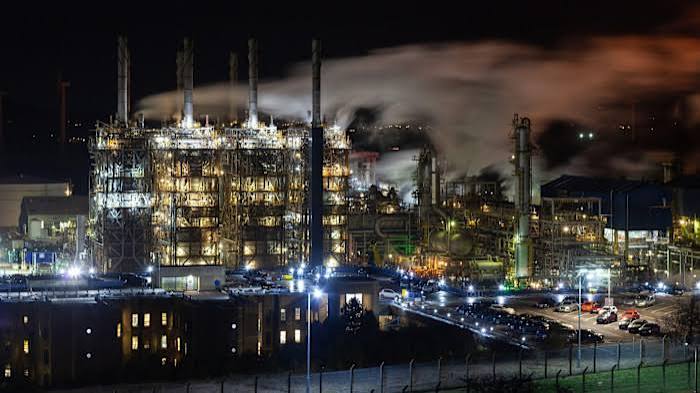
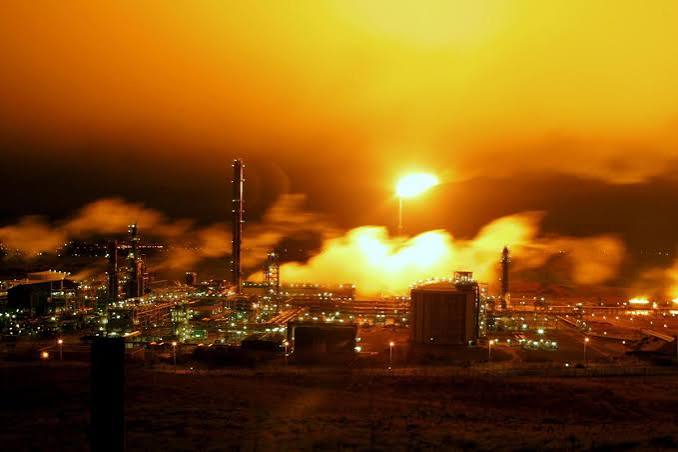
The closure of ExxonMobil's Fife Ethylene Plant in Scotland in February 2026 represents more than the shutdown of a single petrochemical facility. It is another indicator of the mounting pressure on the UK's domestic chemical manufacturing base, particularly for energy- and feedstock-intensive production.
ExxonMobil announced in November 2025 that it would close the Fife Ethylene Plant, citing high supply costs, weak market conditions and the UK's economic and policy environment. The decision is significant because the plant was part of one of the UK's established petrochemical clusters and supplied ethylene into downstream manufacturing.
Its closure therefore raises a broader strategic question:
How much globally competitive petrochemical production can the UK retain if operating costs remain structurally higher than those of competing regions?
Why the Fife Closure Matters
The Fife Ethylene Plant was not simply another industrial facility.
Ethylene is one of the world's most important petrochemical building blocks, feeding production of numerous downstream materials and chemicals.
Its importance extends into products including:
Polyethylene
Ethylene oxide
Ethylene glycol
Solvents
Surfactants
Plastics
Packaging materials
Industrial chemicals
When ethylene production capacity disappears, the impact can extend beyond the individual plant to downstream manufacturers that rely on local supply.
The Closure Came After a Difficult Period
ExxonMobil's decision was announced in November 2025, with the plant scheduled to shut in February 2026.
The company pointed to several factors rather than a single cause:
High supply costs + weak market conditions + UK economic and policy pressures.
This combination is important.
It suggests that the plant's economics were being challenged simultaneously by both market conditions and structural competitiveness issues.
Energy and Feedstock Costs Are Central
Petrochemical plants are highly sensitive to feedstock and energy costs.
Ethylene production requires substantial energy input, while the cost and availability of hydrocarbon feedstocks directly influence production economics.
If UK producers face higher costs than competitors elsewhere, their products can become less competitive even when the underlying technology remains effective.
This creates a fundamental problem:
A technically viable plant can still become economically uncompetitive.
The UK's Energy-Cost Disadvantage
Energy-intensive industries in the UK have increasingly faced concerns about electricity and broader industrial energy costs.
For petrochemical manufacturers, these costs can affect:
When margins are already under pressure from weak demand, elevated operating costs can accelerate closure decisions.
Weak Market Conditions Add Another Layer
The Fife closure also occurred against a challenging European chemical-market backdrop.
Weak industrial activity can reduce demand for petrochemical derivatives.
When demand falls, producers often face:
This can make older or higher-cost plants particularly vulnerable.
The UK Is Losing an Important Piece of Its Petrochemical Base
The closure matters because the UK's petrochemical industry is already much smaller than it was historically.
The country's chemical industry remains significant, but its upstream petrochemical infrastructure has contracted over time.
Each major closure therefore has a disproportionate strategic effect.
A smaller domestic production base means fewer locally available sources for critical chemical feedstocks.
Domestic Production Versus Import Dependence
The most important long-term question is what replaces the lost production.
If UK manufacturers continue to require ethylene-derived products, demand does not necessarily disappear when domestic production closes.
Instead, the supply may increasingly come from imports.
That changes the UK's position from:
Domestic production → domestic consumption
toward:
Imported feedstocks/products → domestic processing → finished goods.
This distinction is critical for industrial resilience.
Imports Can Fill the Gap—But Not Without Risk
Importing chemicals can be economically rational when overseas production is cheaper.
However, greater import dependence introduces exposure to:
The UK therefore needs to balance short-term cost competitiveness against long-term supply security.
The Fife Closure Has Downstream Implications
Ethylene is an upstream building block.
That means its availability affects multiple downstream value chains.
Potentially exposed sectors include:
Plastics
Packaging
Automotive
Construction
Pharmaceuticals
Textiles
Consumer goods
Agriculture
The closure therefore needs to be evaluated as part of the wider UK manufacturing ecosystem.
The Grangemouth Connection Is Important
Fife's petrochemical infrastructure is closely connected to Scotland's broader Grangemouth industrial cluster.
The region has historically represented one of Britain's most important concentrations of petrochemical and chemical manufacturing.
Changes affecting individual assets can therefore have implications for the broader industrial ecosystem.
When upstream capacity contracts, downstream businesses can face greater pressure to source materials from outside the region.
A Cluster Effect Can Work in Reverse
Industrial clusters normally create advantages through:
Shared infrastructure
Feedstock integration
Utilities
Logistics
Skilled labor
Technical services
Proximity to customers
But closures can weaken those same advantages.
If one major facility shuts, other businesses may face higher costs or reduced access to shared infrastructure.
That can create a negative feedback loop:
Closure → weaker cluster economics → higher costs for remaining plants → additional competitiveness pressure.
This Is Why the Fife Decision Matters Beyond ExxonMobil
The question is not whether ExxonMobil can operate one specific facility profitably.
The larger question is whether the UK's broader petrochemical ecosystem can remain competitive.
If multiple companies reach similar conclusions about operating costs, the UK could experience a gradual erosion of its upstream chemical manufacturing capabilities.
The European Context Makes the Signal Stronger
Fife's closure should also be viewed against wider European chemical restructuring.
European producers have been announcing significant capacity reductions as they contend with:
High energy costs
Weak demand
Global overcapacity
Chinese competition
Carbon costs
Regulatory requirements
The UK is therefore not facing an isolated problem.
However, Brexit and the UK's specific industrial-policy environment add another layer to the competitiveness discussion.
The Policy Environment Matters
ExxonMobil specifically cited the UK's economic and policy environment among the factors behind the closure.
For capital-intensive chemical companies, policy certainty can influence investment decisions over decades.
Companies considering major investments need to assess:
Energy policy
Carbon pricing
Industrial taxation
Environmental regulation
Infrastructure
Planning requirements
Trade policy
Government incentives
A plant may operate for decades, meaning today's policy environment can affect long-term investment decisions.
The Investment Signal May Be More Important Than the Closure
A plant closure removes existing capacity.
But a lack of new investment can create an even bigger long-term problem.
If companies conclude that the UK is not an attractive location for new petrochemical assets, existing plants may gradually age without being replaced.
The result can be:
Aging assets → limited reinvestment → declining competitiveness → further closures.
This creates a structural contraction rather than a one-time event.
New Projects Face a Higher Hurdle
New UK petrochemical investments must compete against projects in regions with potentially lower:
Energy costs
Feedstock costs
Construction costs
Operating costs
The UK's competitive proposition therefore needs to rely on more than low production costs.
Potential advantages include:
But these advantages must be sufficient to compensate for higher operating costs.
Could the UK Shift Toward Higher-Value Chemicals?
One possible response to petrochemical contraction is greater emphasis on higher-value chemistry.
Instead of competing directly in commodity production, UK chemical companies could focus on:
These products can potentially provide greater margins and rely more heavily on technical expertise.
But Specialty Chemicals Still Need Feedstocks
There is an important limitation.
Moving downstream does not eliminate the need for upstream chemical inputs.
Specialty chemical manufacturers still require:
If domestic upstream capacity disappears, specialty producers may become more dependent on imported feedstocks.
Therefore, downstream specialization cannot completely compensate for upstream erosion.
Supply-Chain Resilience Becomes More Important
UK chemical buyers should increasingly evaluate the resilience of their supply chains.
Key questions include:
Is the material produced domestically?
How many UK suppliers remain?
What are the main alternative origins?
How long would imported supply take?
Are there logistical bottlenecks?
Is the material easily substitutable?
Does the supplier have contingency inventory?
These questions become increasingly important as domestic production capacity shrinks.
Long-Term Contracts Could Become More Valuable
For critical chemical inputs, buyers may increasingly seek:
This can reduce exposure to sudden capacity losses.
The Closure Also Affects Industrial Employment
Petrochemical facilities support more than direct plant employment.
They also create demand for:
Maintenance contractors
Engineering companies
Logistics providers
Technical consultants
Equipment suppliers
Environmental services
Local businesses
The economic impact of a closure can therefore extend beyond the plant boundary.
The Strategic Autonomy Question
The Fife closure raises a broader industrial-policy issue:
How much chemical production does the UK need to maintain domestically for strategic resilience?
Not every chemical needs to be produced domestically.
Importing commodities can make economic sense where global supply is reliable and diversified.
But certain strategic materials may warrant domestic or regional production capabilities because shortages could disrupt critical manufacturing.
Not All Capacity Needs to Be Preserved
A competitive industrial strategy does not necessarily mean maintaining every existing plant.
Instead, policymakers and companies need to identify which capabilities are strategically important.
Potential priorities could include:
Critical feedstocks
Pharmaceutical chemicals
Advanced materials
Energy-transition materials
Defense-related chemicals
High-performance polymers
This could allow the UK to focus limited investment on strategically valuable production.
What the Fife Closure Signals
The Fife shutdown provides several signals for the UK's petrochemical industry.
Signal 1: Cost competitiveness is becoming decisive
High-cost facilities face increasing pressure even when they remain technically capable of operating.
Signal 2: Domestic petrochemical capacity is shrinking
The closure reduces an already limited upstream production base.
Signal 3: Imports will become more important
Downstream demand can increasingly be supplied through international markets.
Signal 4: Investment decisions matter
Future UK capacity will depend heavily on whether companies believe new projects can achieve competitive returns.
Signal 5: Industrial policy has become part of chemical strategy
Energy, regulation, trade and investment policies can directly influence plant economics.
What Procurement Teams Should Watch
UK chemical buyers should monitor:
Further UK petrochemical closure announcements
European ethylene and propylene capacity
Import volumes
UK port infrastructure
Global polymer pricing
European cracker utilization
Feedstock availability
Energy-price trends
Long-term supplier contracts
These indicators can provide early warnings of potential supply shortages or price volatility.
The Most Important Question Is What Comes Next
The Fife closure by itself does not prove that the UK's petrochemical industry is entering terminal decline.
But combined with broader European capacity reductions, it provides a clear warning.
If the UK continues to lose upstream assets without attracting replacement investment, its chemical industry could gradually become more dependent on imported feedstocks and intermediates.
That would fundamentally change the structure of the UK's chemical supply chain.
Looking Ahead
ExxonMobil's Fife Ethylene Plant closure illustrates the difficult economics facing UK petrochemicals.
High supply costs, weak market conditions and policy-related pressures combined to make continued operation unattractive.
The more consequential question is whether the closure represents an isolated portfolio decision or part of a broader trend toward UK petrochemical deindustrialization.
For manufacturers, the immediate issue is supply.
For policymakers, it is competitiveness.
For investors, it is capital allocation.
And for procurement teams, the lesson is clear:
As domestic petrochemical capacity contracts, UK manufacturers will need more diversified international sourcing strategies—but the country will also need to decide which chemical capabilities are too strategically important to lose.
Key Takeaways
ExxonMobil announced the closure of its Fife Ethylene Plant in November 2025, with shutdown scheduled for February 2026.
The company cited high supply costs, weak market conditions and the UK's economic and policy environment.
Ethylene is a critical petrochemical building block supporting numerous downstream value chains.
The closure further reduces the UK's already shrinking upstream petrochemical base.
Lost domestic production could increase reliance on imported petrochemical products and intermediates.
Greater import dependence introduces additional exposure to freight, geopolitical and supply-chain risks.
The closure is particularly significant because petrochemical clusters benefit from shared infrastructure and feedstock integration.
Further upstream contraction could weaken the economics of remaining UK chemical assets.
UK chemical investment will increasingly depend on energy costs, policy certainty and long-term competitiveness.
A shift toward specialty and higher-value chemicals could help preserve parts of the UK chemical industry, but these sectors still require upstream feedstocks.
Procurement teams should prioritize dual sourcing, supplier qualification and contingency planning for critical chemicals.
The Fife closure is an important signal for evaluating the future resilience of the UK's petrochemical manufacturing base.