Growth across the global chemical industry is becoming increasingly selective.
Rather than seeing broad-based expansion across every chemical subsector, the current market is creating a clearer divide between companies exposed to commoditized products and those positioned in higher-value, differentiated markets.
Among the companies attracting attention are Corteva and ICL, alongside a wider group of specialty and premium-chemistry producers.
Their positioning highlights an important shift taking place across the chemical industry:
Growth is increasingly being driven by differentiation, innovation, specialized applications, and exposure to resilient end markets rather than simply by production volume.
For investors, procurement teams, suppliers, and chemical-market professionals, identifying these growth leaders can provide valuable insight into where the industry's next opportunities may emerge.
Why Chemical Growth Is Becoming More Selective
The global chemical industry continues to face a complex operating environment.
Companies across the sector are dealing with:
Uneven industrial demand
Feedstock and energy-cost volatility
Global capacity additions
Margin pressure
Higher regulatory requirements
Supply-chain uncertainty
Changing customer preferences
Increasing demand for sustainable products
These conditions make it harder for commodity producers to generate consistent growth.
At the same time, companies with differentiated products, technical expertise, specialized formulations, and strong customer relationships can have greater opportunities to protect margins and capture new demand.
This is creating a widening gap between volume-driven growth and value-driven growth.
Corteva: Growth Through Agricultural Innovation
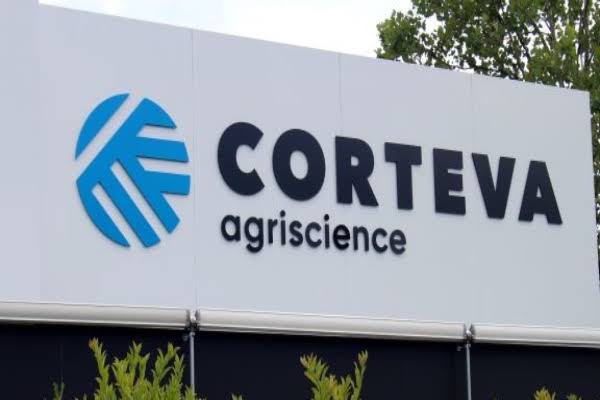
Corteva represents an important example of a company positioned at the intersection of agriculture, chemistry, biotechnology, and technology.
Its portfolio spans crop-protection products and seed technologies designed to improve agricultural productivity and help farmers manage increasingly complex growing conditions.
The company's growth opportunity is supported by several structural trends:
Global food demand
Agricultural productivity requirements
Crop-protection innovation
Biological solutions
Seed technology
Climate-related agricultural challenges
Increasing pressure to improve farm efficiency
Rather than competing solely through commodity chemical volumes, agricultural technology companies can create value through differentiated products and application-specific solutions.
Crop Protection Is Moving Toward Higher-Value Solutions
Agricultural chemicals are undergoing a significant transformation.
Farmers increasingly require products that can deliver:
Better efficacy
More targeted application
Improved crop protection
Resistance management
Lower application rates
Compatibility with modern farming systems
Improved sustainability profiles
This creates opportunities for companies with strong research capabilities and established agricultural distribution networks.
The competitive advantage is therefore shifting from simply producing more chemistry toward developing better chemistry and better agricultural solutions.
ICL: Specialty Minerals and Agriculture
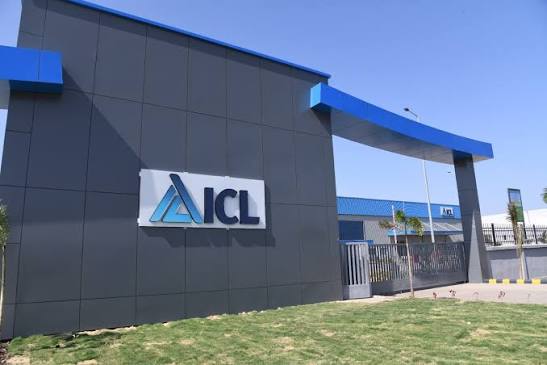
ICL Group provides another example of the premium-chemistry opportunity.
ICL operates across specialty minerals, fertilizers, industrial products, and specialty solutions.
Its exposure to agriculture gives the company a connection to global food-production trends, while its specialty-minerals activities provide exposure to higher-value applications.
This diversified positioning is important because it allows the company to participate in multiple chemical value chains rather than relying entirely on one commodity market.
Specialty Minerals Create Strategic Advantages
Specialty minerals can serve applications where technical performance is more important than simple price competition.
These applications can include:
When a chemical or mineral becomes an important part of a customer's formulation or production process, supplier relationships can become more strategic.
This can create greater customer retention and potentially stronger pricing resilience.
The Premium-Chemistry Advantage
The strongest growth opportunities in chemicals increasingly involve products that solve specific customer problems.
Premium chemistry can include:
Specialty additives
Performance chemicals
Electronic chemicals
Advanced materials
Specialty agricultural chemicals
High-performance polymers
Functional ingredients
Battery-related materials
These products generally compete on more than price.
Customers may also evaluate:
Performance
Consistency
Technical support
Regulatory compliance
Reliability
Application expertise
This creates barriers to entry that are often much higher than in basic commodity chemicals.
Commodity Chemistry Faces a Different Challenge
Commodity chemicals remain essential to global manufacturing.
However, they are generally more exposed to:
Capacity additions
Price competition
Feedstock costs
Energy prices
Inventory cycles
Global utilization rates
When new production capacity enters the market faster than demand grows, prices and margins can come under pressure.
This makes volume growth alone less attractive.
The more important question becomes:
How much value can a producer capture from each unit sold?
Margin Quality Matters More Than Revenue Growth
A company growing revenue rapidly is not automatically a growth leader.
Investors and industry analysts increasingly need to evaluate the quality of that growth.
Important indicators include:
Gross margin
EBITDA margin
Operating cash flow
ROIC
Free cash flow
Pricing power
Capital intensity
A premium-chemistry producer may grow more slowly than a commodity producer but generate significantly better returns on capital.
That difference can become critical over a full market cycle.
Innovation Is Becoming a Core Growth Engine
Research and development remains one of the most important competitive advantages in specialty chemistry.
Companies investing in innovation can develop:
New formulations
Higher-performance materials
More efficient crop-protection products
Sustainable alternatives
Low-carbon processes
Specialized industrial chemicals
New application technologies
The resulting products can create new markets rather than simply competing for existing commodity demand.
Agriculture Remains a Structural Growth Market
The agriculture-related chemical market benefits from several long-term trends.
The global food system must produce more output while facing constraints around:
Arable land
Water availability
Climate variability
Labor
Input efficiency
Environmental regulation
These challenges create demand for technologies that help farmers produce more efficiently.
Crop-protection chemistry, biological solutions, seed technology, and specialty fertilizers can therefore remain important areas for chemical innovation.
Premium Fertilizers Are Gaining Importance
Fertilizer markets are also evolving beyond basic nutrient supply.
Farmers increasingly seek solutions that improve:
Nutrient-use efficiency
Crop performance
Yield consistency
Soil productivity
Application efficiency
Specialty fertilizers and enhanced nutrient products can therefore offer a different growth profile from traditional commodity fertilizer markets.
Companies with differentiated fertilizer technologies can potentially capture greater value per unit of product.
Specialty Chemistry Benefits From Customer Relationships
One of the most important advantages of premium chemistry is the relationship between supplier and customer.
A specialty chemical may need to pass:
Technical qualification
Product testing
Regulatory approval
Production trials
Customer validation
Once a product becomes qualified, switching suppliers may involve significant time and cost.
This creates a degree of customer stickiness that is less common in commoditized markets.
Regulatory Expertise Is Becoming a Competitive Advantage
Chemical regulation continues to become more complex across major markets.
Companies must increasingly manage:
Product registrations
Environmental standards
Safety requirements
Chemical restrictions
Documentation
Traceability
Sustainability reporting
For premium chemical suppliers, regulatory expertise can become part of the value proposition.
A supplier capable of supporting customers through complex compliance requirements can become more valuable than a low-cost supplier without comparable technical support.
Sustainability Can Support Premium Positioning
Sustainability is increasingly becoming connected to product economics.
Customers are looking for solutions that can help reduce:
Emissions
Waste
Energy consumption
Water use
Material intensity
This creates opportunities for specialty chemical companies developing products that improve the sustainability profile of downstream applications.
However, sustainability investment must also demonstrate commercial value.
The strongest opportunities are likely to be solutions that combine:
Environmental benefits + measurable customer value.
Advanced Chemistry Is Expanding Into New Markets
Premium chemistry is increasingly connected to emerging industries.
Potential growth areas include:
These markets can require highly specialized products and stringent quality standards.
That creates opportunities for chemical companies with strong technical capabilities.
Supply-Chain Resilience Is Becoming More Valuable
The chemical industry has learned that low-cost sourcing alone is not always sufficient.
Customers increasingly care about:
Premium suppliers that can provide reliable supply may therefore gain an advantage even when their products are not the cheapest option.
For procurement teams, this is an important shift from lowest price toward total supply-chain value.
Geographic Diversification Matters
Global chemical producers are also reconsidering where production and sourcing should be located.
Companies are evaluating:
North America
Europe
China
India
Southeast Asia
The Middle East
Latin America
based on feedstock availability, manufacturing costs, market access, logistics, regulation, and geopolitical risk.
A diversified manufacturing footprint can help reduce exposure to individual regional disruptions.
M&A Can Accelerate Premium Chemistry Growth
Acquisitions remain an important strategy for chemical companies seeking to expand into higher-value markets.
A specialty-chemicals acquisition can provide:
This makes M&A activity an important indicator of where industry leaders expect future value creation.
What Makes a Chemical Company a Growth Leader?
A true chemical growth leader typically combines several characteristics.
1. Differentiated Products
The company sells products that are difficult to replicate.
2. Strong Customer Relationships
Customers depend on technical performance and reliable supply.
3. Attractive End Markets
The company operates in markets with structural demand growth.
4. Innovation Capability
R&D generates new products and applications.
5. Pricing Power
The company can protect margins when costs increase.
6. Capital Discipline
Growth does not require excessive capital investment.
7. Strong Balance Sheet
Financial flexibility allows the company to invest through market cycles.
Corteva and ICL Highlight Two Different Growth Models
The examples of Corteva and ICL demonstrate that premium chemical growth does not follow a single model.
Corteva is closely connected to:
ICL combines exposure to:
Specialty minerals
Fertilizers
Agriculture
Industrial applications
Specialty solutions
The common factor is exposure to differentiated products and structural demand drivers.
What Investors Should Watch
Investors evaluating chemical growth leaders should monitor:
Revenue Quality
Is growth coming from higher volumes, pricing, acquisitions, or new products?
Margin Expansion
Are premium products translating into stronger profitability?
ROIC
Is the company generating attractive returns from its investments?
R&D
Is innovation creating commercially successful products?
Capital Expenditure
Is management investing in attractive growth markets?
M&A
Are acquisitions strengthening the company's portfolio?
Free Cash Flow
Is growth translating into sustainable cash generation?
What Procurement Teams Should Watch
For procurement professionals, premium chemistry creates a different sourcing framework.
Instead of evaluating suppliers only on price, buyers should consider:
The cheapest supplier is not necessarily the lowest-cost supplier when production disruption or quality problems are considered.
Supplier Qualification Is Becoming More Strategic
As chemical products become more specialized, supplier qualification becomes increasingly important.
Procurement teams may need to evaluate:
Can the supplier maintain consistent specifications?
Can it support increasing demand?
Does it have adequate regulatory documentation?
Can it provide technical assistance?
Does it have alternative production capacity?
These questions become particularly important for specialty chemicals that are difficult to replace quickly.
The Next Generation of Chemical Winners
The next generation of chemical industry leaders may not necessarily be the companies with the largest production volumes.
Instead, growth may increasingly favor companies that combine:
This represents a fundamental shift in how chemical companies can create long-term value.
Looking Ahead
The global chemical industry remains cyclical, but its future growth opportunities are becoming more differentiated.
Commodity chemicals will continue to form the foundation of global manufacturing, yet premium chemistry is increasingly where companies can seek stronger margins, customer loyalty, and structural growth.
Corteva's agricultural innovation and ICL's combination of specialty minerals and agricultural solutions demonstrate how chemical companies can position themselves around long-term customer needs rather than simply commodity volumes.
At the same time, opportunities are expanding across:
For investors, the key question is no longer simply:
Which chemical companies are growing?
It is:
Which companies are growing in markets where differentiation can translate into sustainable profitability?
For procurement teams, the question is equally important:
Which suppliers can provide both premium performance and dependable long-term supply?
The companies best positioned to answer these questions could become the industry's next generation of growth leaders.
Key Takeaways
Chemical industry growth is becoming increasingly selective rather than broad-based.
Premium and specialty chemistry can provide stronger differentiation than commodity products.
Corteva demonstrates the growth potential of agricultural innovation and crop-protection technology.
ICL highlights the opportunities created by specialty minerals, fertilizers, and differentiated industrial applications.
Margin quality and ROIC are more important indicators than revenue growth alone.
Innovation can create new markets and reduce dependence on commodity pricing cycles.
Specialty products often benefit from stronger customer relationships and higher switching costs.
Regulatory expertise and supply reliability are becoming important competitive advantages.
Procurement teams should evaluate suppliers on total value rather than price alone.
Advanced materials, electronic chemicals, agriculture, recycling, and sustainable chemistry remain important areas to watch.
The strongest chemical growth leaders are likely to combine differentiation, innovation, resilient supply chains, and capital discipline.