The future of agricultural chemistry is increasingly moving from more inputs to smarter inputs.
For decades, crop protection and fertilizer strategies have often relied on broad, uniform applications across fields. But farms are not uniform environments. Soil conditions, crop health, pest pressure, moisture, nutrient availability, and weather can vary significantly within the same field.
Precision agriculture is changing this model.
By combining agrochemicals with sensors, satellite imagery, drones, field data, variable-rate application, artificial intelligence, and advanced analytics, farmers can increasingly target inputs where and when they are most needed.
The objective is not simply to use fewer agricultural chemicals.
It is to use the right product, at the right rate, in the right location, at the right time.
That shift is creating a new source of value for both farmers and agrochemical companies: the yield premium.
What Is the Yield Premium?
The yield premium refers to the additional economic value created when better-targeted agricultural inputs improve crop performance, reduce preventable losses, or increase input efficiency.
The value does not necessarily come from applying more chemicals.
It can come from:
Better pest detection
More accurate application
Improved timing
Reduced crop stress
Better nutrient management
Lower input waste
Reduced yield loss
More consistent crop performance
This changes the economics of crop protection.
Instead of measuring success only by the quantity of product sold, the industry can increasingly measure value through yield protected per unit of input.
Why Precision Agriculture Matters
Agricultural productivity faces several structural constraints.
Farmers must manage:
Limited arable land
Water availability
Weather volatility
Soil degradation
Pest resistance
Input costs
Labor constraints
Environmental regulation
At the same time, food production needs to become more productive and resource-efficient.
FAO describes sustainable intensification as producing more from existing land while improving resource efficiency and sustainability.
Precision agriculture directly supports this objective by allowing farm inputs to be adjusted according to field-level conditions.
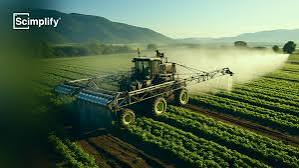
Traditional spraying can treat an entire field even when pests or weeds are concentrated in only certain areas.
Precision systems can use sensors, imaging, GPS, and automated equipment to identify areas requiring treatment.
This creates a fundamental shift:
Uniform application → Site-specific application
The technology can potentially reduce unnecessary pesticide use while maintaining crop protection.
A 2023 meta-analysis covering 239 research articles found that precision crop-protection technologies can substantially reduce pesticide use in some applications, with reported potential savings of up to 97% for herbicides and reductions in the area requiring insecticide treatment of up to 70%.
These figures are technology- and application-specific rather than universal farm outcomes, but they demonstrate the potential scale of precision crop protection.
Precision Does Not Mean Less Chemistry Everywhere
An important distinction is that precision agriculture does not automatically mean lower chemical use across every field.
A farm may reduce applications in areas with low pest pressure while increasing or maintaining treatment in areas where intervention is economically justified.
The objective is therefore better allocation.
This can create a more sophisticated relationship between agrochemical consumption and farm productivity:
Less waste + better targeting + timely intervention = higher value per application.
The Role of Sensors
Sensors provide the data required for precision agriculture.
Depending on the application, systems can measure:
Soil moisture
Soil nutrients
Temperature
Crop canopy conditions
Plant stress
Pest presence
Weed density
Disease indicators
These measurements can be combined with historical field data to create more detailed crop-management decisions.
The more accurately the farm understands field variability, the more precisely inputs can potentially be allocated.
Drones Are Expanding Crop Intelligence
Drones equipped with cameras and sensors can provide high-resolution information about crop conditions.
They can help identify:
Weed infestations
Disease symptoms
Crop stress
Water stress
Nutrient deficiencies
Uneven crop growth
This allows farmers to identify problems before they become visible across an entire field.
Recent research on drone-based crop protection has also highlighted the potential for timely treatment during critical crop-growth stages and for reducing yield losses through more targeted pest management.
Satellite Data Creates a Larger View
Satellite imagery provides another layer of agricultural intelligence.
Unlike ground-level observations, satellite systems can monitor large geographic areas.
When combined with farm-level data, satellite imagery can help identify changes in:
Vegetation
Crop health
Moisture
Canopy development
Field variability
This creates opportunities for more scalable precision agriculture, particularly where individual farms do not have extensive on-site sensing infrastructure.
Artificial Intelligence Can Turn Data Into Decisions
Collecting agricultural data is only useful if farmers can convert it into actionable decisions.
Artificial intelligence and machine learning can help analyze large datasets containing:
Weather
Soil conditions
Crop history
Pest pressure
Application records
Yield data
Satellite imagery
Models can then identify patterns associated with crop performance and potential yield losses.
This creates a decision-support layer between raw agricultural data and chemical application.
Precision Crop Protection
Crop protection is one of the most important applications of precision agriculture.
The objective is to identify pest or disease pressure early and respond before significant yield loss occurs.
Precision crop protection can involve:
A 2026 review of precision pesticide application found that targeted systems can potentially reduce pesticide inputs by up to 90% without reducing efficacy, although adoption, regulatory frameworks, equipment standards, and resistance management remain important challenges.
The Economics of Preventing Yield Loss
For farmers, the most important metric is ultimately economic return.
Suppose a pest outbreak threatens a high-value crop.
The value of a targeted treatment is not simply the cost of the pesticide.
It is the value of the yield that the treatment protects.
This creates an important economic equation:
Value of protected yield − cost of treatment = economic return
Precision agriculture can improve this equation by increasing the probability that treatment is applied where it has the greatest economic impact.
Timing Can Be as Important as Product Selection
A highly effective agrochemical may still produce poor results if applied at the wrong time.
Pest populations, disease development, crop growth stages, and weather conditions can change rapidly.
Precision systems can combine real-time observations with crop-development information to support better timing.
This can help farmers move from:
Calendar-based treatment
toward:
Condition-based treatment.
That shift can improve both efficacy and input efficiency.
Precision Fertilization Creates Another Opportunity
Precision agriculture is not limited to pesticides.
Fertilizer application can also be adjusted based on:
Soil nutrient levels
Crop requirements
Yield potential
Field variability
Weather
Crop-growth stage
This can improve nutrient-use efficiency and reduce unnecessary application.
Research on Pakistan has highlighted the importance of improving nitrogen-use efficiency through measures such as balanced nutrition, irrigation management, precision in-season nitrogen management, and enhanced-efficiency fertilizers.
The Pakistan Opportunity
Pakistan provides an important example of why precision agriculture matters.
Agricultural productivity is critical to the country's economy and food security, yet fertilizer efficiency, water management, pest control, and yield variability remain important challenges.
Research involving rice growers in Punjab has found significant potential for improving input efficiency through more optimized agrochemical and nutrient use.
More recent work using thousands of geo-referenced farms in Punjab has also explored machine-learning approaches for soil-health mapping and wheat-yield prediction, illustrating how farm-level datasets can support precision decision-making.
For Pakistan, precision agriculture could therefore represent not only a technology opportunity but also an input-efficiency opportunity.
Precision Chemistry Creates New Value for Agrochemical Companies
The rise of precision agriculture does not necessarily eliminate the need for agrochemicals.
Instead, it can change what customers value.
Farmers may increasingly prioritize products that deliver:
Higher efficacy
Consistent performance
Better target specificity
Lower application requirements
Compatibility with precision equipment
Improved resistance-management strategies
Strong technical support
This creates an opportunity for agrochemical companies to compete on performance per application rather than simply volume.
Premium Products Can Capture a Yield Premium
A premium agrochemical may cost more per unit but still provide greater economic value if it:
Protects more yield
Works at lower application rates
Provides longer-lasting control
Performs under difficult conditions
Reduces repeat applications
Improves crop quality
This creates a new purchasing equation.
Farmers increasingly need to ask:
What is my cost per unit of protected yield?
rather than simply:
What is my cost per litre or kilogram?
The Importance of Product Efficacy Data
As precision agriculture develops, evidence becomes increasingly important.
Agrochemical companies need reliable data showing:
Field performance
Application rates
Yield impact
Pest-control effectiveness
Crop safety
Resistance-management benefits
Environmental performance
Better data can strengthen the commercial case for premium products.
Resistance Management Becomes More Important
Precision application can also influence pesticide resistance management.
Repeatedly applying the same active ingredient or mode of action can increase selection pressure.
Precision systems can potentially help farmers identify where treatment is actually required, while integrated crop-protection strategies can combine:
Chemical control
Biological control
Resistant varieties
Crop rotation
Mechanical methods
Monitoring
The goal is to maintain product effectiveness over longer periods.
Smart Spraying Is Becoming a Competitive Technology
Modern sprayers can increasingly incorporate machine vision and sensor systems.
These technologies can distinguish between:
Crop
Weed
Bare soil
Pest-affected areas
The sprayer can then adjust application accordingly.
This can reduce unnecessary treatment and improve the precision of product placement.
For agrochemical companies, compatibility with smart application technologies could become an increasingly important product-development consideration.
Precision Agriculture Changes Procurement
Procurement teams buying agrochemicals traditionally focus on:
Price
Availability
Active ingredient
Formulation
Supplier reliability
The precision-agriculture model adds additional criteria:
This creates a more sophisticated procurement framework.
Supplier Intelligence Becomes More Valuable
As agricultural chemistry becomes more specialized, supplier reliability becomes increasingly important.
Procurement teams should evaluate:
Can the supplier maintain consistent quality?
Can it support seasonal demand?
Does it have sufficient production capacity?
Can it provide regulatory documentation?
Does it offer technical support?
Are alternative sources available?
These factors can have a direct impact on farm-level economics.
The Data Flywheel
Precision agriculture can create a continuous data cycle:
Application → Field response → Data collection → Analysis → Improved recommendation → Better application
Each growing season can provide additional information.
Over time, this can help farmers and suppliers understand:
This accumulated knowledge can become a significant competitive asset.
What Agrochemical Companies Should Invest In
Companies seeking to benefit from the precision-agriculture transition should consider investing in:
Product Innovation
Develop more effective and application-efficient chemistry.
Build platforms that translate farm data into recommendations.
Application Technology
Improve compatibility with smart sprayers and precision equipment.
Field Trials
Generate evidence connecting products to yield and economic outcomes.
Data Partnerships
Work with farmers, technology providers, equipment manufacturers, and research institutions.
Technical Support
Help farmers understand how to maximize product performance.
What Farmers Should Measure
The success of precision agrochemicals should be evaluated through measurable outcomes.
Important metrics include:
These metrics provide a better picture of value than product volume alone.
What Procurement Teams Should Watch
Procurement professionals should monitor:
The objective is to secure products that deliver both supply reliability and agricultural value.
The Future of Agrochemicals Is More Precise
The agricultural chemicals industry is moving toward a model where chemistry and technology increasingly work together.
The next generation of crop protection may combine:
This does not mean traditional agrochemicals disappear.
Instead, their role may become more targeted and data-driven.
Looking Ahead
The future of agricultural productivity will depend not simply on using more inputs but on using them more effectively.
Precision agriculture creates an opportunity to connect chemistry, data, equipment, and farm economics into a single decision-making system.
For agrochemical companies, this means developing products that deliver measurable value under increasingly precise application conditions.
For farmers, it means evaluating inputs according to the yield they protect and the efficiency they create.
For procurement teams, it means looking beyond price toward product performance, supply reliability, technical support, and total economic value.
The central opportunity is the yield premium:
more value from every application.
As precision technologies mature, the winners in agricultural chemistry may increasingly be the companies that can prove not simply that their products work, but that they deliver measurable yield, efficiency, and economic value.
Key Takeaways
Precision agriculture is shifting crop protection from uniform application toward targeted treatment.
The yield premium comes from protecting more crop value through better timing, targeting, and product performance.
Sensors, drones, satellite imagery, AI, and smart sprayers are becoming important tools for precision crop protection.
Precision application can potentially reduce unnecessary pesticide use while maintaining efficacy.
Premium agrochemicals can compete through efficacy and protected yield rather than price alone.
Fertilizer precision is equally important for improving nutrient-use efficiency.
Pakistan has significant potential for precision agriculture because of challenges around input efficiency and crop productivity.
Procurement teams should evaluate agrochemicals based on total value, not simply cost per unit.
Field-performance data can strengthen the commercial case for premium chemistry.
Resistance management and integrated crop protection remain essential.
The future of agrochemicals will increasingly combine chemistry, digital technology, and data.
The strongest products may be those that deliver more measurable crop value per application.