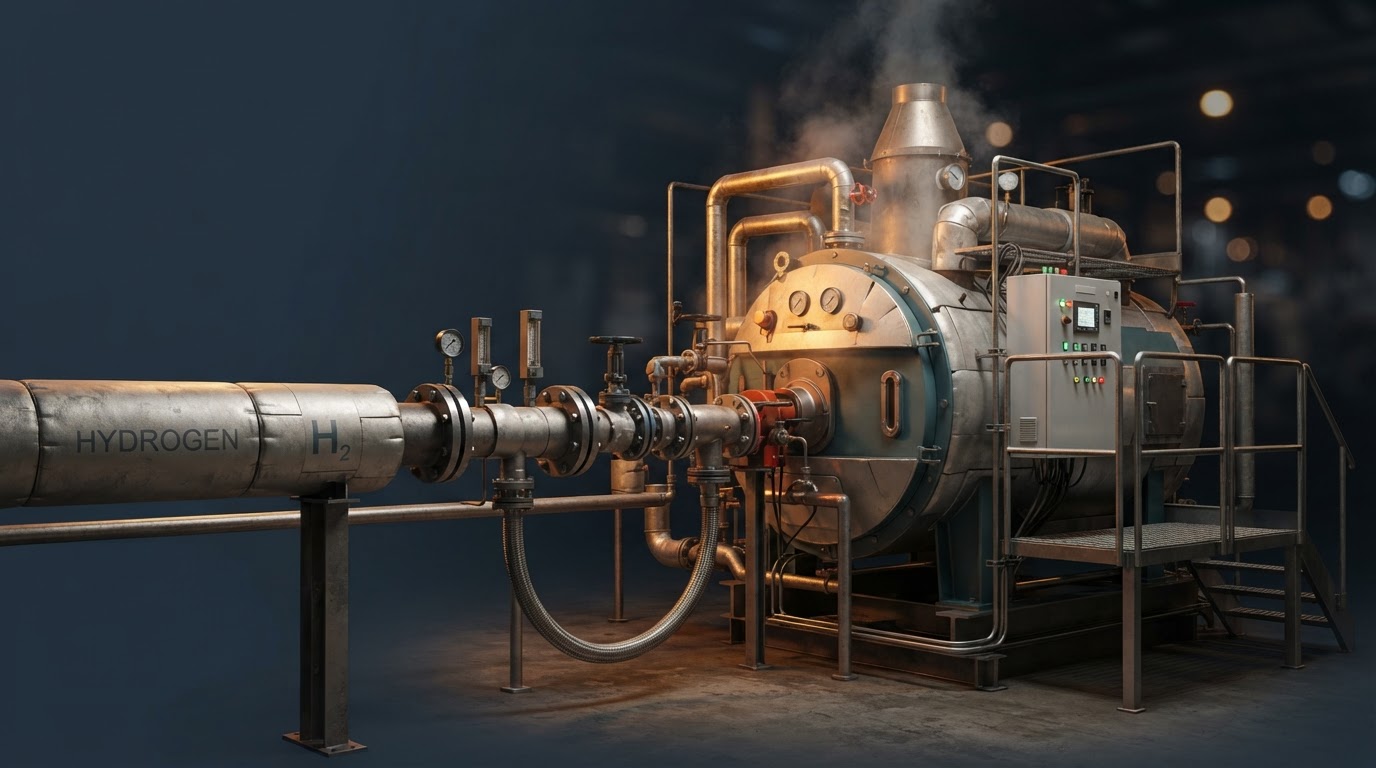
Lanxess's use of hydrogen at its Krefeld-Uerdingen plant highlights a practical shift in industrial decarbonization: replacing natural gas in an existing heat-intensive process without building an entirely new hydrogen production system. The company now uses hydrogen piped directly from Covestro's neighboring chlorine electrolysis plant to dry iron-oxide pigments.
The move cuts approximately 6,000 metric tons of CO2 emissions each year and represents one of Germany's first large-scale continuous industrial applications of hydrogen as a fuel. For chemical producers, pigment manufacturers and industrial buyers, the significance goes beyond one facility. It demonstrates how proximity between complementary industrial operations can create a workable route to lower-carbon manufacturing.
Why Hydrogen Is Becoming an Industrial Fuel Option
Industrial facilities rely heavily on high-temperature heat, and natural gas has traditionally supplied much of that energy. Processes such as drying, calcination, heating and thermal treatment can be difficult to decarbonize because they require consistent energy delivery at commercially viable operating conditions.
Hydrogen offers an alternative for selected applications because it can generate heat without direct carbon dioxide emissions at the point of combustion. The challenge lies in securing reliable hydrogen supply, transporting it safely and integrating it into equipment designed around conventional fuels.
The Lanxess example addresses part of that challenge through location. Instead of treating hydrogen availability as a completely separate infrastructure problem, the plant connects directly to an existing industrial source next door.
Lanxess and Covestro Create an Industrial Symbiosis Model
The Krefeld-Uerdingen setup demonstrates the value of industrial symbiosis, where one company's process stream or output becomes a useful input for another operation. In this case, hydrogen generated through Covestro's neighboring chlorine electrolysis plant provides fuel for Lanxess's pigment drying process.
This arrangement creates a direct connection between hydrogen production and industrial heat demand. The shorter physical distance can simplify supply compared with a model that depends on hydrogen being produced at a remote facility and transported over longer distances.
For chemical industry planners, the concept offers several practical advantages:
Existing production proximity: Hydrogen can move directly from a nearby production source to an industrial consumer.
Reduced infrastructure requirements: The model does not depend on creating an entirely new hydrogen production site specifically for the fuel application.
Continuous industrial use: The application demonstrates hydrogen operating as part of an ongoing manufacturing process rather than only in a temporary demonstration.
Shared industrial ecosystems: Clusters containing chemical producers and energy-intensive manufacturers may have opportunities to connect supply and demand more efficiently.
What the 6,000-Ton CO2 Reduction Means for Industry
Lanxess's reported reduction of approximately 6,000 metric tons of CO2 per year gives the project a clear industrial benchmark. More importantly, it shows how a fuel substitution at one process step can produce measurable emissions savings without requiring an immediate redesign of the entire manufacturing operation.
For procurement teams, the lesson is that decarbonization can involve changes to energy inputs as much as changes to chemical feedstocks. Companies evaluating lower-carbon production should therefore examine where hydrogen could replace fossil fuels in existing thermal processes.
The economics will depend on hydrogen availability, delivered cost, plant modifications and operating requirements. However, a nearby supply source can change the commercial equation by reducing some of the logistical challenges associated with external hydrogen procurement.
Why Colocation Matters for Hydrogen Procurement
Hydrogen's industrial potential depends not only on production capacity but also on the relationship between producers and consumers. A hydrogen user located close to an established source can potentially reduce transportation complexity while gaining access to a continuous supply.
This makes industrial clusters particularly important. Chemical parks, refinery complexes and manufacturing zones often contain multiple companies with complementary energy and material requirements.
For buyers assessing hydrogen as an industrial fuel, proximity should become part of the sourcing analysis. Key considerations include:
Distance between hydrogen production and the consuming facility
Availability of dedicated pipeline infrastructure
Continuity and reliability of supply
Hydrogen quality and specifications required by the process
Cost of converting existing burners or thermal equipment
Long-term supply agreements and pricing structures
A sourcing strategy that considers these factors together can reveal opportunities that a conventional commodity procurement approach might overlook.
Hydrogen Can Support Decarbonization Without a New Production Plant
One of the strongest signals from the Krefeld-Uerdingen application is that industrial decarbonization does not always require a standalone hydrogen production project at the point of consumption. Existing industrial hydrogen generation can sometimes provide an immediate pathway for nearby users.
That distinction matters because new hydrogen infrastructure can require significant capital, permitting, engineering and development time. Connecting an existing producer with an appropriate industrial consumer may offer a faster route to fuel substitution where infrastructure already exists.
This does not mean every industrial process can immediately switch to hydrogen. Equipment compatibility, fuel handling, safety requirements and hydrogen economics still determine whether the transition makes commercial sense.
Implications for Petrochemical and Chemical Manufacturing
The petrochemical sector faces significant pressure to reduce emissions from combustion-based operations. Hydrogen can potentially contribute to this effort in applications where high-temperature heat remains difficult to electrify or where existing thermal equipment can be adapted effectively.
The Lanxess model points toward a broader question for industrial clusters: Who already produces hydrogen, and who nearby needs industrial heat?
That question could identify new commercial relationships between chemical producers, refiners, pigment manufacturers and other energy-intensive facilities. Rather than viewing hydrogen only as a standalone commodity, companies can evaluate it as part of an interconnected industrial energy system.
For traders and exporters, this may also create demand for supporting products and services linked to hydrogen-compatible equipment, pipeline infrastructure, storage and process conversion.
What Buyers Should Evaluate Before Switching to Hydrogen
Hydrogen substitution requires more than comparing the price of hydrogen with the price of natural gas. Procurement teams need to assess the entire operating model, including supply security, infrastructure and process performance.
A structured evaluation should cover:
Supply reliability: Determine whether the hydrogen source can support continuous industrial consumption.
Delivered economics: Compare the complete cost of hydrogen supply with the existing fossil fuel system.
Equipment readiness: Assess burners, drying systems, controls and other components that may require modification.
Safety requirements: Review hydrogen handling, leak detection, ventilation and process safety requirements.
Contract structure: Consider volume commitments, delivery conditions and long-term price exposure.
Emissions performance: Quantify the expected reduction against the site's current fuel mix.
These factors can determine whether hydrogen becomes a commercially sustainable fuel rather than simply an attractive decarbonization concept.
A New Role for Industrial Clusters in Energy Transition
The Krefeld-Uerdingen example also highlights the strategic value of established chemical production hubs. Industrial clusters can provide the physical proximity, infrastructure and concentration of demand needed to support new energy relationships.
This could encourage manufacturers to map energy flows across neighboring facilities instead of evaluating decarbonization opportunities only within their own plant boundaries. A facility that produces hydrogen as part of its core chemistry may become an energy supplier to another company located within the same industrial zone.
Such relationships can create additional value from existing infrastructure while helping companies reduce exposure to fossil fuel consumption.
The Commercial Outlook for Hydrogen as an Industrial Fuel
Hydrogen's industrial fuel market will depend heavily on where supply and demand can connect efficiently. Projects with a clear physical relationship between hydrogen production and industrial heat consumption may have an advantage over applications that require extensive new transport infrastructure.
Lanxess's Krefeld-Uerdingen operation provides an early signal of this approach. The reported 6,000 metric tons of annual CO2 savings demonstrate the potential impact when hydrogen production and industrial fuel demand exist within the same local ecosystem.
For chemical traders, procurement managers and industrial buyers, the opportunity lies in identifying these emerging connections early. Hydrogen sourcing may increasingly involve regional industrial networks, direct pipeline relationships and long-term supply partnerships rather than a single standardized global purchasing model.
The Bottom Line for Procurement Teams
Lanxess's hydrogen application at Krefeld-Uerdingen shows how industrial decarbonization can begin with a practical fuel substitution supported by existing infrastructure. By using hydrogen piped from Covestro's neighboring chlorine electrolysis plant, the company has created a direct link between hydrogen production and industrial heat demand while cutting approximately 6,000 metric tons of CO2 annually.
For buyers, the broader lesson is clear: proximity can be a strategic advantage in hydrogen procurement. Companies should examine nearby chemical and industrial facilities for potential hydrogen supply relationships before assuming that decarbonization requires entirely new production infrastructure.
The model could become particularly relevant across chemical and petrochemical clusters where hydrogen producers and high-temperature industrial users operate side by side. Ready to source Hydrogen from verified global suppliers? Explore competitive offers on our platform today.