Ineos Enterprises has completed the sale of Ineos Calabrian, its ultra-pure sulfur dioxide and derivatives business, to Ecovyst Inc. in a deal worth 190 million dollars. The transaction closes a divestment process that started in May 2026 and hands control of two major North American production sites to a new owner. For chemical traders and procurement teams who rely on sulfur dioxide and its derivatives, the change matters more for who they now negotiate with than for what the plants actually produce.
What the Ineos Calabrian Deal Actually Covers
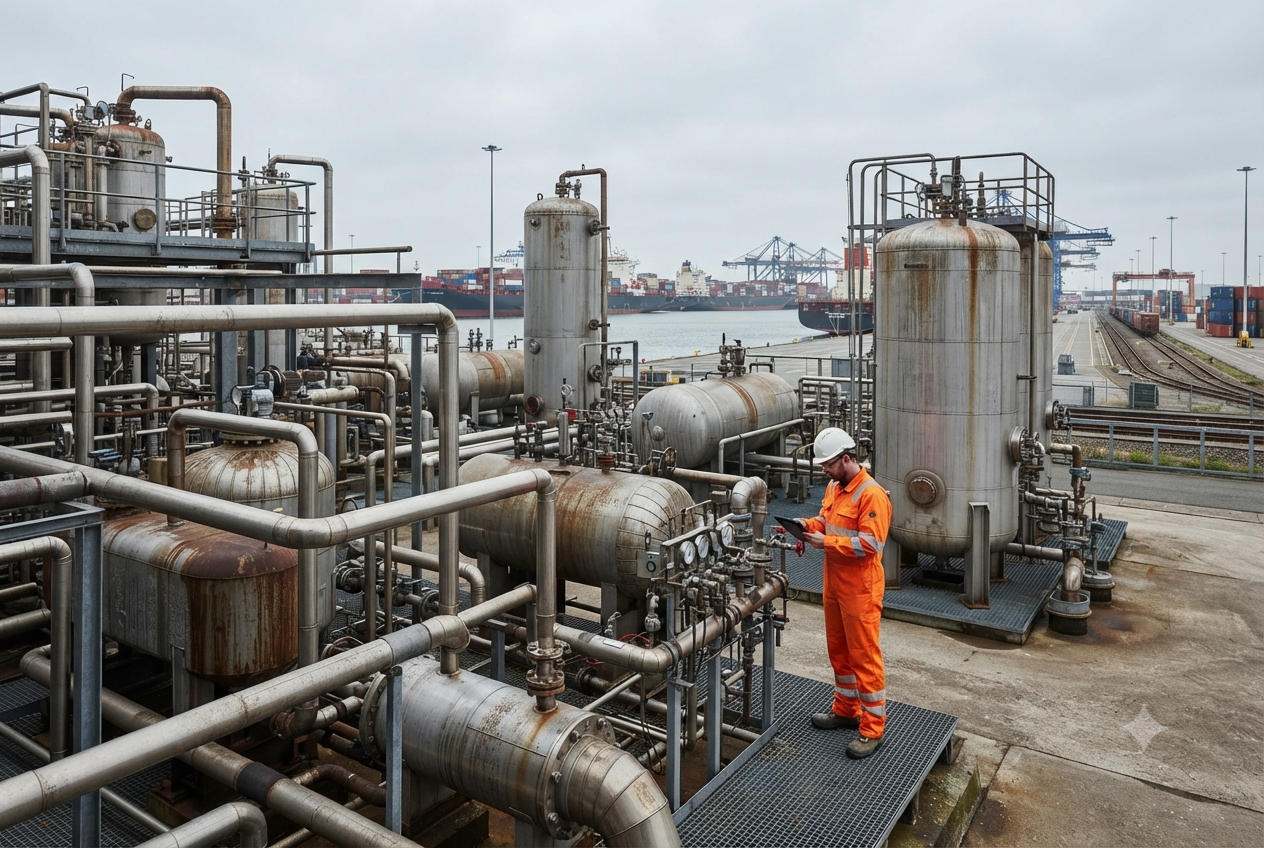
The business changing hands is not a small side unit. Ineos Calabrian runs manufacturing facilities in Port Neches, Texas and Timmins, Ontario, and both sites transfer to Ecovyst as part of the sale.
The product line stays intact under the new ownership structure. Buyers currently sourcing any of the following can expect the same production base going forward:
Sulfur dioxide, used across mining, water treatment and specialty chemical manufacturing.
Sodium bisulfite, a common water treatment and food processing input.
Sodium thiosulfate, widely used in mining for gold leaching and dechlorination.
Sodium metabisulfite, applied in water treatment, food preservation and industrial bleaching.
Ecovyst has confirmed the purchase price of 190 million dollars is subject to standard closing adjustments, and the deal was funded through a mix of cash reserves and new debt.
Why Ineos Chose to Sell Now
Ineos Calabrian had been part of Ineos Enterprises for close to a decade. During that period the business reportedly improved on safety, operational performance and financial results, which made it a more attractive asset to sell rather than a distressed one to offload.
Ineos Enterprises Chairman Ashley Reed described the sale as consistent with the company's broader portfolio strategy. The approach involves acquiring businesses, improving their performance and then realizing value through a sale once that value has been built. Calabrian had been categorized internally as a semi specialty chemicals asset rather than a long term core holding, which fits that pattern closely.
Why Ecovyst Wanted These Assets
Ecovyst already operates as a supplier of virgin and regenerated sulfuric acid products and services, so the Calabrian acquisition sits directly next to its existing business rather than pulling it into unfamiliar territory. Adding sulfur dioxide and its derivative product lines extends that footprint into adjacent chemistry without requiring a new sales or logistics network.
Ecovyst's Chief Financial Officer Mike Feehan pointed to the financial shape of the deal as a strong fit. Based on Calabrian's trailing twelve month adjusted EBITDA of roughly 23.7 million dollars, the acquisition is expected to bring the combined company's net debt leverage ratio to around 2x at closing. That is a manageable level for a company absorbing a new business line, and it suggests Ecovyst sees steady cash generation from Calabrian rather than a turnaround project.
What Changes for Buyers and What Does Not
Procurement teams sourcing sulfur dioxide or its derivatives should separate what is genuinely new from what simply looks new on paper.
Ownership changes, plants do not move. Port Neches and Timmins remain the production sites, so lead times tied to those locations should hold steady in the near term.
No stated changes to existing contracts. Ineos Enterprises confirmed that during the run up to closing, the business continued operating as usual with no changes to customer or supplier arrangements, and nothing in the completion announcements signals a shift now that the deal is done.
A financially stronger parent company. Ecovyst brings sulfuric acid expertise and an existing customer base in mining and water treatment, sectors that overlap heavily with Calabrian's own customer list.
Supply concentration is unchanged. Ultra-pure sulfur dioxide production in North America was already limited to a small number of facilities before this deal, and that concentration has not increased or decreased. Buyers who already treat this as a single source or dual source risk category should keep doing so under the new ownership.
Supply Chain Risk Considerations for Procurement Teams
Ownership transitions in specialty chemicals rarely cause immediate disruption, but they are still worth tracking closely over the following months. A few practical points are worth building into sourcing plans:
Watch for any announcements on pricing structure changes once Ecovyst has had a full quarter to integrate the business.
Ask current suppliers whether existing contract terms, delivery schedules or quality specifications are expected to hold through 2027.
Consider whether Ecovyst's sulfuric acid relationships could open the door to bundled supply arrangements for buyers who purchase both product families.
Keep contingency planning in place regardless of ownership, since the underlying production footprint for ultra-pure sulfur dioxide in North America remains narrow.
The Bottom Line for Procurement Teams
This deal is a straightforward change of ownership rather than a disruption to sulfur dioxide supply. Ineos exits an asset it had already optimized, and Ecovyst adds a business that fits neatly beside its existing sulfuric acid operations, financed at a leverage level it considers manageable.
For buyers, the immediate priority is confirming that contract terms, delivery commitments and quality specifications carry over as stated. The longer term question is whether Ecovyst's broader sulfur chemistry platform eventually translates into better pricing, tighter logistics or expanded capacity at Port Neches and Timmins. Ready to source sulfur dioxide derivatives from verified global suppliers? Explore competitive offers on our platform today.