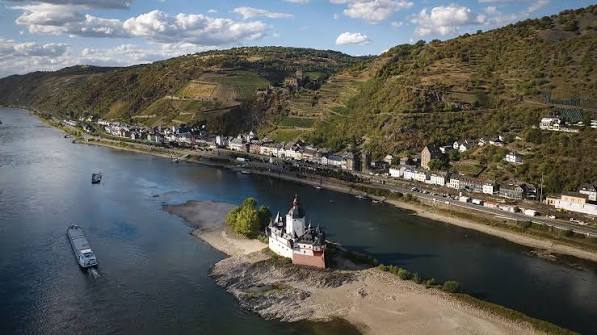
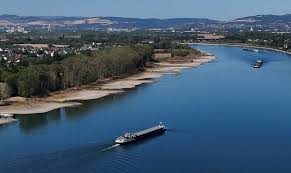
The Rhine is becoming an increasingly important supply chain risk indicator for Europe's chemical industry as drought pushes water levels toward historically low levels. C&EN's August 18 Business Watch identifies Covestro as the latest major chemical producer to report disruption, following BASF's force majeure earlier in the month.
For procurement professionals, the significance lies in the cumulative pattern rather than any single company's announcement. Each additional chemical maker affected by restricted barge traffic provides another signal that the Rhine disruption is moving from an isolated logistics problem toward a broader regional supply chain constraint.
The Chemical Maker Tally Is Growing
C&EN's latest report specifically identifies BASF and Covestro among chemical companies affected by the low Rhine.
BASF previously declared force majeure on various surfactants because of the logistics problems associated with the river's low water levels. Covestro has now taken a similar step, citing a shortage of propylene oxide at its Dormagen site that is preventing it from meeting supply obligations for selected polyether polyol products.
That makes the number of publicly identified major chemical makers at least two in the current C&EN tracking described in the August 18 report.
The important intelligence question is whether this number continues to rise.
Why Covestro's Disruption Matters
Covestro's situation demonstrates how a river logistics problem can move upstream into chemical production.
The company relies heavily on the Rhine for moving both raw materials and finished products. C&EN reports that more than 30% of Covestro's finished materials and 75% of its raw materials in Europe move on the waterway.
When water levels become too low for normal barge loading, companies can face a difficult choice between reducing cargo loads, shifting shipments to rail or road or drawing down inventories.
Each alternative can increase logistics costs.
Force Majeure Is the Critical Signal
The declaration of force majeure by a chemical producer is particularly important for procurement teams.
It indicates that logistics constraints have progressed beyond higher freight costs and are affecting a company's ability to meet certain supply obligations.
Covestro's force majeure applies to selected polyether polyol products, while BASF's earlier action affected various surfactants.
These are not necessarily broad disruptions across every product made by either company.
However, the announcements demonstrate that low Rhine levels can translate directly into commercial supply constraints.
The Rhine Connects Europe's Chemical Clusters
The Rhine is critical because it links major industrial and chemical production centres across Europe.
Raw materials, intermediates and finished chemicals move along the waterway between manufacturing sites, storage facilities, ports and customers.
A disruption therefore does not need to shut down the river completely to create problems.
Reduced water levels can lower the amount of material each barge can carry, increasing the number of trips required and reducing the efficiency of the entire logistics system.
Low Water Creates a Capacity Problem
Barges operating on shallow water cannot necessarily carry their normal cargo loads.
That creates a form of logistics capacity reduction.
The physical infrastructure remains available, but the effective carrying capacity of each shipment falls.
For chemical manufacturers, this can create a chain reaction:
Lower river levels → reduced barge loads → fewer raw materials arriving → inventory pressure → production constraints → customer supply risk.
This is why procurement teams should treat Rhine water levels as a potential production indicator rather than simply a transportation metric.
Companies Are Already Trying Alternatives
Covestro told C&EN that it has attempted to mitigate the disruption by shifting freight to rail and road, sailing partially loaded vessels and building raw material inventories before the drought intensified.
These measures can reduce immediate exposure, but they also have limitations.
Rail and road capacity can become constrained when many chemical companies attempt to switch modes simultaneously. Partially loaded vessels increase transportation costs, while inventory accumulation requires additional working capital and storage capacity.
The longer the drought continues, the more difficult these mitigation measures may become.
The Cumulative Cost Is More Important Than One Shutdown
A procurement team evaluating the Rhine disruption should avoid looking only at force majeure declarations.
The broader cost can include:
Higher freight rates.
Reduced barge utilization.
Increased rail and truck demand.
Additional inventory requirements.
Longer delivery times.
Emergency transportation.
Production interruptions.
Customer allocation.
Working-capital increases.
Even companies that have not declared force majeure can therefore be absorbing substantial additional logistics costs.
Why the Company Count Is a Useful Benchmark
Tracking the number of chemical makers publicly reporting Rhine-related impacts provides a simple intelligence benchmark.
A rising tally could indicate that mitigation strategies are becoming less effective as drought conditions persist.
A stable tally could suggest that companies are successfully absorbing the disruption through inventories, alternative transportation or reduced production schedules.
A declining tally would provide evidence that water levels and logistics conditions are improving.
The number itself does not measure the total economic cost, but it provides a useful signal for monitoring the direction of the disruption.
Procurement Teams Should Track Product-Level Exposure
The most important question is not simply how many companies are affected.
It is which products are affected and how easily customers can switch suppliers.
A disruption involving a commodity chemical with multiple global producers may be manageable.
The same logistics problem involving a specialized intermediate with limited qualified capacity can create a much larger procurement risk.
Buyers should therefore map Rhine exposure against supplier concentration and material criticality.
Inventory Can Become a Strategic Buffer
Companies with sufficient storage capacity may respond to Rhine disruption by increasing inventories before conditions deteriorate further.
This can provide a temporary buffer against transportation interruptions.
However, inventory cannot solve an extended logistics problem indefinitely.
Chemical storage capacity, working capital, shelf life and safety requirements all limit how much material companies can accumulate.
Procurement teams should therefore distinguish between short-term inventory protection and long-term supply diversification.
Alternative Transport Is Not Free
Moving chemicals from barges to trucks or rail can preserve supply continuity, but it can substantially change the cost structure.
Road transportation can be more expensive and may face capacity limitations.
Rail can provide an efficient alternative for certain routes, but available slots and infrastructure may constrain rapid switching.
The result is that even when customers continue receiving material, the supplier may face significantly higher delivered costs.
Those costs can eventually appear in contract negotiations and market pricing.
The current disruption also illustrates why water availability deserves greater attention in industrial supply chain risk management.
European chemical production has repeatedly faced logistical challenges when Rhine water levels fall sharply.
For procurement teams, this suggests that river conditions should be incorporated into seasonal risk monitoring for suppliers dependent on inland waterway transport.
The objective is not to predict every drought.
It is to identify which suppliers have significant exposure and determine how quickly they can switch to alternative logistics channels.
What Chemical Buyers Should Monitor Now
Procurement teams can establish a simple Rhine disruption dashboard around five indicators:
Company count: Track new chemical producers reporting disruption.
Force majeure notices: Identify when logistics problems become contractual supply issues.
Water levels: Monitor whether shipping restrictions are worsening or improving.
Alternative freight: Watch for rising reliance on road and rail.
Product availability: Track lead times, allocations and supplier delivery performance.
These indicators can provide a clearer picture than monitoring river levels alone.
The Bottom Line for Chemical Procurement
C&EN's August 18 Business Watch identifies Covestro as another chemical maker affected by the dry Rhine, following BASF's earlier force majeure. That gives procurement teams a publicly documented tally of at least two major chemical producers directly reporting disruption in the current C&EN tracking.
The more important intelligence signal is whether additional chemical makers join that list.
If the tally continues rising, the Rhine's low water levels could increasingly affect European chemical availability, logistics costs and supplier reliability.
For buyers, the appropriate response is to track the disruption at the company and product level, identify exposed materials and assess alternative transport and sourcing options before individual force majeure announcements become broader market shortages.