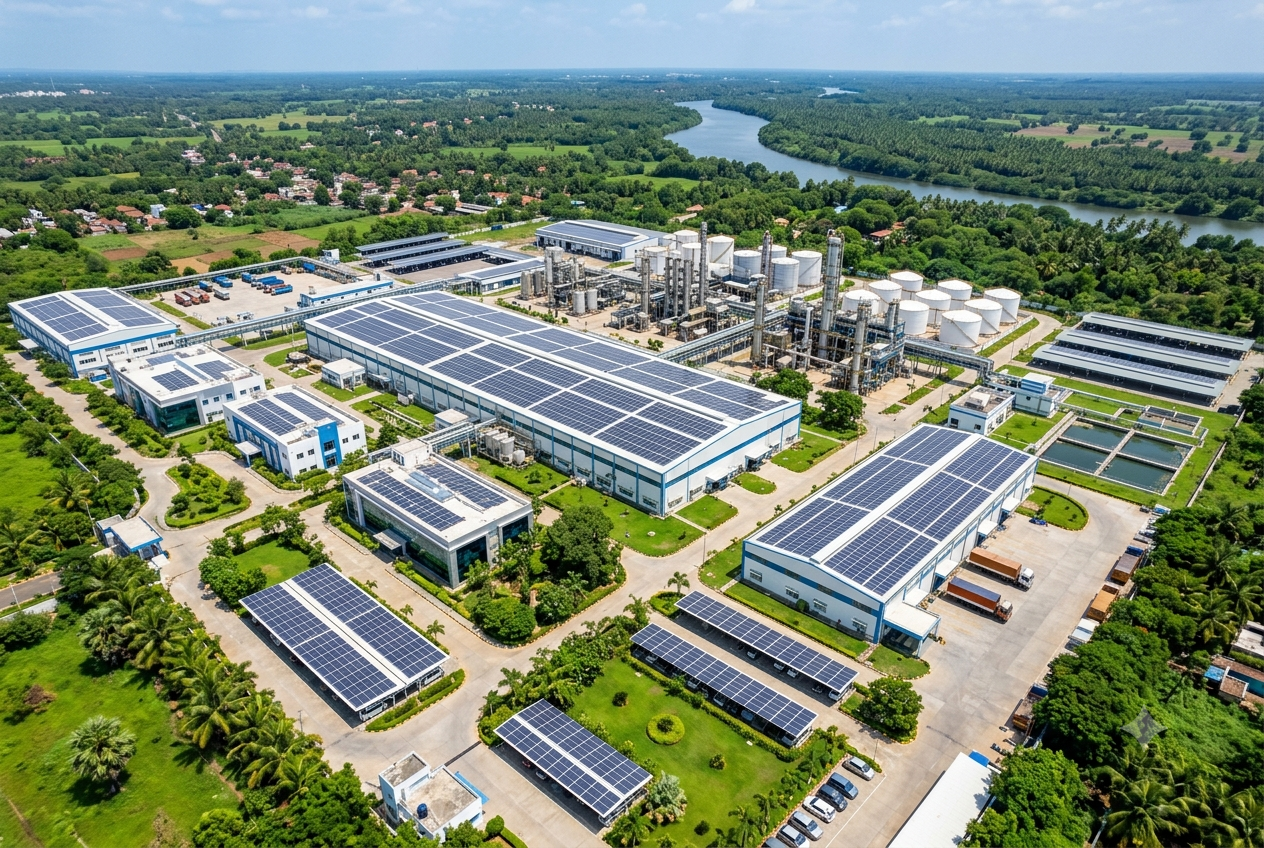
Japanese chemical companies spent decades building manufacturing footprints, joint ventures and supply relationships across China, viewing the market as essential for growth and regional competitiveness. That era is ending as a combination of regulatory unpredictability, geopolitical tensions, intensifying local competition and market access barriers push Japanese manufacturers to reconsider their China strategies. India has emerged as the primary alternative destination for new investment, particularly in solar materials where government incentives and demand growth create opportunities that China increasingly does not offer to foreign investors.
For chemical procurement teams managing supply chains across Asia, this geographic rebalancing carries immediate implications. Suppliers announcing capacity expansions in India rather than China signal shifting production footprints that affect lead times, logistics costs and supply reliability. Understanding why this pivot is occurring and which chemical categories are most affected helps buyers anticipate sourcing disruptions and identify emerging supply options.
What China Fatigue Actually Means
The term "China fatigue" among Japanese chemical executives reflects accumulated frustration rather than single dramatic events. Companies report increasing difficulty navigating regulatory environments where rules change without notice and enforcement appears selective. Foreign firms face disadvantages in permitting, environmental compliance timelines and access to government contracts that domestic competitors do not encounter.
Intellectual property concerns have intensified as joint venture partners or former employees launch competing businesses using technology and know-how developed through partnerships with Japanese firms. Legal recourse through Chinese courts rarely delivers satisfactory outcomes for foreign complainants, leaving companies with limited options to protect proprietary processes or formulations.
Market access barriers prevent foreign chemical producers from competing on equal terms even in segments where they hold technical advantages. Procurement preferences favoring domestic suppliers, standards and certifications that implicitly exclude foreign products and regulatory approvals that take years for foreign applicants but months for Chinese companies all tilt competitive dynamics against Japanese entrants.
The Solar Materials Opportunity in India
India's renewable energy ambitions create substantial demand for solar materials including high-purity polysilicon, ethylene vinyl acetate (EVA) for encapsulation, backsheet films, junction box materials and specialty adhesives. The country aims to install 280 gigawatts of solar capacity by 2030, requiring massive materials supply chains that currently depend heavily on imports.
Japanese chemical companies see opportunities to establish local production serving this growing market while benefiting from government incentives under India's Production Linked Incentive (PLI) scheme. The PLI program offers financial incentives for manufacturing solar components domestically, reducing India's dependence on Chinese supply chains and creating openings for foreign investors willing to build local capacity.
EVA copolymers represent a particularly attractive segment. These materials serve as encapsulants protecting solar cells from moisture and mechanical stress while maintaining optical transparency. Japanese producers including Mitsui Chemicals and others have announced or are evaluating Indian production capacity targeting solar applications.
Specialty films and backsheet materials offer similar opportunities. Japanese companies with expertise in polymer films, surface treatments and multilayer coatings can supply Indian solar module manufacturers seeking to qualify non-Chinese materials in response to government pressure and supply chain diversification objectives.
How Operating Conditions Compare
Japanese executives evaluate investment destinations based on regulatory predictability, intellectual property protection, ease of doing business and market access on competitive terms. India scores better than China on several dimensions despite well-documented challenges around bureaucracy, infrastructure and permitting complexity.
Regulatory frameworks in India operate under common law traditions with independent judiciary and legal recourse options that function more reliably than Chinese alternatives. Foreign investors can challenge regulatory decisions, enforce contracts through courts and expect outcomes based on legal merits rather than political considerations.
Intellectual property protection remains imperfect in India but has improved substantially over the past decade. Patent enforcement, trademark protection and trade secret laws provide meaningful recourse when violations occur. The gap between legal protections on paper and enforcement in practice has narrowed compared to earlier periods.
Market access in India generally allows foreign companies to compete on similar terms to domestic firms once they establish operations. While local content requirements and procurement preferences exist in some sectors, they are typically transparent and applied consistently rather than shifting unpredictably.
Geopolitical risk factors differently in India versus China. India maintains difficult relationships with China but positions itself as non-aligned in US-China tensions, reducing the risk that Japanese investments become collateral damage in great power competition. China's deteriorating relationships with Western economies create risks that trade restrictions or sanctions could disrupt supply chains in ways that affect Japanese companies operating there.
Which Chemical Categories Are Moving
The investment shift affects specific chemical categories more than others based on where growth opportunities and competitive dynamics favor relocation. Solar materials lead the movement as discussed, but other segments show similar patterns.
Specialty polymers for automotive, electronics and industrial applications increasingly get directed toward Indian capacity rather than additional China investment. Japanese producers see opportunities to serve Indian manufacturing growth while avoiding intensifying competition from Chinese domestic producers in their home market.
High-performance films for packaging, displays and industrial applications represent another category where Japanese companies hold technical advantages and where Indian demand is growing faster than China's mature markets allow.
Electronic chemicals including photoresists, etchants and high-purity solvents for semiconductor manufacturing are seeing cautious Indian investment as the country attempts to build domestic semiconductor capacity. These materials require extreme purity and technical support that favor established Japanese suppliers over Chinese competitors.
Specialty additives for plastics, rubber and coatings serve growing Indian manufacturing across automotive, construction and consumer goods sectors. Japanese additive producers with formulations optimized for tropical climates, cost-sensitive applications and specific performance requirements can differentiate versus Chinese commodity offerings.
Infrastructure and Logistics Realities
India's infrastructure challenges remain significant compared to China's highly developed industrial zones, ports and logistics networks. Japanese companies investing in Indian production capacity must factor longer lead times for raw material deliveries, higher logistics costs for finished product distribution and less reliable utilities including power and water.
However, the infrastructure gap is narrowing in key industrial corridors. Gujarat, Maharashtra and Tamil Nadu offer industrial parks with international-standard facilities, reliable power, water treatment and proximity to ports enabling raw material imports and finished product exports.
The Indian government has prioritized infrastructure investment including dedicated freight corridors, port modernization and industrial zone development. Japanese companies participating in this buildout through early investments position themselves to benefit as infrastructure improves rather than waiting for perfect conditions that may never fully materialize.
Logistics costs in India exceed China levels but the gap depends heavily on specific locations and supply chain configurations. A chemical plant in Gujarat serving customers in western India may achieve comparable or better logistics economics than serving the same customers from coastal China once ocean freight, port handling and inland distribution get factored completely.
What Japanese Companies Are Actually Announcing
Several Japanese chemical producers have announced Indian investments or are publicly discussing India strategies in ways that signal serious commitment beyond exploratory activities. These announcements provide concrete evidence of the strategic shift beyond anecdotal reporting about China fatigue.
Mitsui Chemicals has discussed expanding specialty materials production in India including materials for automotive and solar applications. The company views India as a priority growth market where local production enables better customer service and cost competitiveness than exporting from Japan or other Asian locations.
Mitsubishi Chemical Group has evaluated Indian opportunities in performance materials and has participated in partnerships exploring local production options. The company's statements emphasize India's growth trajectory and improving business environment as factors supporting investment consideration.
Toray Industries operates Indian facilities producing films and fibers and has indicated willingness to expand in segments where market growth and competitive positioning justify additional capital. The company's experience in India spans decades, providing institutional knowledge that reduces investment risk compared to greenfield entries in unfamiliar markets.
These announcements typically involve measured expansion rather than massive capital deployments, reflecting Japanese corporate culture of careful risk management and incremental commitment. However, the pattern across multiple companies and chemical segments indicates strategic intent beyond opportunistic individual projects.
Local Competition and Partnership Dynamics
Japanese chemical companies entering or expanding in India face different competitive dynamics than they encountered in China during earlier investment waves. India's domestic chemical industry includes large, sophisticated producers including Reliance Industries, Aditya Birla Group and others with technical capabilities, financial resources and market access that pose serious competitive challenges.
However, these Indian conglomerates also represent potential partners for technology licensing, joint ventures or commercial relationships that can accelerate market entry and reduce political risk. Japanese companies bring process technology, quality systems and R&D capabilities that Indian partners value, creating foundations for mutually beneficial partnerships.
The partnership dynamics differ from China where foreign technology transfer often led to domestic competitors emerging to displace foreign partners. Indian companies generally seek sustained relationships that provide ongoing technology access rather than one-time transfers, though individual experiences vary.
Japanese firms are approaching Indian partnerships more cautiously than they did in China, structuring agreements to protect intellectual property, maintain operational control and preserve options to exit if relationships deteriorate. This more defensive approach reflects lessons learned from China experiences.
How This Affects Regional Supply Chains
The investment shift from China to India reshapes Asian chemical supply chains in ways that procurement teams must navigate. Materials historically sourced from Japanese-owned facilities in China may increasingly come from Indian production as capacity comes online.
This geographic shift affects lead times, freight costs, currency exposure and supply reliability differently than established China-to-customer flows. Indian ports and logistics networks operate under different service levels and cost structures than Chinese alternatives. Procurement teams need to model these differences when evaluating suppliers announcing production shifts.
Currency dynamics change when sourcing shifts to India. The Indian rupee trades under different exchange rate regimes and volatility patterns than the Chinese yuan, affecting landed costs and pricing predictability over contract periods.
Regulatory compliance requirements differ between China and India including customs procedures, documentation standards and product registration processes. Buyers must ensure their procurement operations can handle Indian-origin materials including any certifications, testing or approvals that differ from China-sourced equivalents.
Supply reliability during the transition period when production shifts from mature Chinese facilities to ramping Indian capacity creates potential disruption risk. Buyers should work with suppliers to understand transition timelines, qualify Indian-produced materials where specifications might differ and maintain China supply options during transition periods.
Solar Industry Downstream Effects
The focus on solar materials has downstream implications beyond direct procurement of EVA, backsheet films or other module components. Japanese chemical companies investing in Indian solar materials production will source raw materials, solvents, additives and processing chemicals locally where possible to minimize import dependence and maximize PLI incentive qualification.
This creates opportunities for chemical suppliers who can establish Indian operations or distribution serving Japanese solar materials producers. Suppliers of vinyl acetate monomer, peroxide initiators, adhesion promoters, UV stabilizers and other inputs to solar materials production may find new customers as Japanese producers ramp Indian capacity.
The Indian government's emphasis on domestic value creation means foreign producers cannot simply import most materials and conduct minimal local processing to claim incentives. Meaningful local production including sourcing from Indian suppliers where feasible becomes necessary to maintain compliance and political support.
Chemical buyers serving solar supply chains should monitor which Japanese materials producers commit to Indian capacity and engage early to position as preferred suppliers of raw materials, processing chemicals or additives these producers will need.
What Procurement Teams Should Track
Chemical buyers managing Asian supply chains should monitor several indicators that signal the pace and extent of Japanese investment redirection from China to India. First, watch for capacity expansion announcements and facility groundbreakings that represent committed capital rather than exploratory discussions.
Second, track regulatory approvals and PLI incentive awards that indicate projects are advancing through bureaucratic processes and receiving government support necessary for successful execution. Projects that stall in permitting or fail to secure incentives may get delayed or canceled.
Third, monitor customer qualification activities where Japanese producers seek approvals from Indian manufacturers to supply materials into their production processes. These qualifications signal that commercial production is approaching and that material will soon flow through new supply chains.
Fourth, observe hiring announcements and technology transfer activities that indicate Japanese companies are building operational teams and deploying manufacturing know-how to Indian facilities. These activities demonstrate serious operational commitment beyond financial investment.
Fifth, watch for Chinese competitive responses. Chinese chemical producers may adjust pricing, improve terms or enhance services to retain Japanese customers who might otherwise shift sourcing to Indian alternatives. This competitive dynamic could create negotiating opportunities for buyers willing to play regional suppliers against each other.
The Limitations of India's Appeal
India offers advantages over China for Japanese chemical investors, but the country presents substantial challenges that limit how quickly and extensively the investment shift can proceed. Bureaucratic complexity, inconsistent policy implementation and infrastructure gaps slow project execution and increase costs compared to what companies achieve in more developed markets.
Skilled workforce availability in specialized chemical disciplines remains limited outside major industrial centers. Japanese companies must invest in training programs and may need to expatriate Japanese technical staff to support operations during initial years, adding cost and complexity.
The Indian domestic market for many specialty chemicals remains smaller than China's despite rapid growth. Producers building Indian capacity primarily for export may find cost structures less favorable than anticipated once infrastructure limitations and scale disadvantages get fully recognized.
Political and regulatory stability, while better than in earlier decades, still presents risks. Changes in government can bring policy shifts affecting incentive programs, environmental regulations or foreign investment rules. Japanese companies accustomed to stable regulatory environments find this unpredictability challenging even when it is better than Chinese alternatives.
The Broader Strategic Context
Japanese chemical companies' pivot from China to India reflects broader questioning about Asian manufacturing strategies across Japanese industry. Electronics, automotive and machinery companies are making similar geographic reassessments driven by related concerns about China risk concentration.
This broader pattern creates opportunities for Indian industrial development beyond individual chemical investments. As multiple Japanese manufacturers establish Indian operations, supporting ecosystems of suppliers, logistics providers and service companies develop in ways that reduce costs and improve operating conditions for subsequent investors.
The Japanese government supports this geographic diversification through financing, political engagement and trade policy mechanisms designed to reduce Japanese industry's dependence on China. Chemical companies making Indian investments often receive government financing at favorable terms or political support in negotiating with Indian authorities.
China's responses to Japanese corporate pullback remain measured so far, but the pattern could trigger more assertive actions to retain foreign investment or to penalize companies perceived as abandoning the Chinese market. Japanese companies must balance India opportunities against risks of Chinese retaliation affecting their remaining operations and sales in China.
Long-Term Implications for Asian Chemical Markets
The Japanese investment shift from China to India represents one element in broader reconfiguration of Asian chemical supply chains driven by geopolitics, economics and strategic risk management. Other patterns including Southeast Asian capacity growth, Korean companies' geographic diversification and Chinese domestic producers' expansion all contribute to more distributed regional production footprints.
For procurement teams, this evolution means supply options will expand as production capacity distributes across more countries and suppliers. However, it also means increased complexity managing multiple source countries with different regulatory regimes, logistics networks and commercial practices.
The competitive dynamics between Chinese domestic producers and foreign-invested operations in India and Southeast Asia will shape pricing, innovation and service levels across regional chemical markets for years to come. Buyers positioned to leverage this competition through informed supplier selection and negotiation will capture value that less sophisticated procurement operations miss.
Japanese chemical companies' experiences in India over the next five years will signal whether the country can genuinely serve as an alternative manufacturing base to China or whether infrastructure and execution challenges prevent realizing the opportunity at scale. Procurement teams should watch these developments closely because outcomes will affect supply chain options across numerous chemical categories into the 2030s.
Ready to source Ethylene Vinyl Acetate from verified global suppliers? Explore competitive offers on our platform today.