Novonor’s Braskem Exit Could Reshape Brazilian Agricultural Chemical Supply Chain Investment
Novonor’s exit from Braskem marks a major change in the ownership structure of Brazil’s largest petrochemical producer and could alter how capital is allocated across the chemical supply chain supporting agriculture, packaging, infrastructure and industrial manufacturing.
The change became effective in June 2026, when Novonor transferred its controlling stake in Braskem to IG4 Capital’s Shine Fund, resulting in IG4 and Petrobras becoming joint controllers of the petrochemical company. The transaction ended Novonor’s long-running control of Braskem and introduced a new ownership structure at a critical point for the company.
The immediate issue is Braskem’s financial recovery.
But the longer-term implications extend into Brazil’s broader chemical ecosystem, including the supply of polymers, feedstocks and materials used throughout agricultural value chains.
Novonor’s Exit Ends an Era for Braskem
Novonor, formerly Odebrecht, had been Braskem’s controlling shareholder for many years.
Its exit represents more than a shareholder change.
It removes a highly leveraged industrial conglomerate from the center of Braskem’s strategic decision-making and replaces it with an investment structure led by IG4, alongside Petrobras.
That could change the company's priorities.
A strategic industrial owner may emphasize long-term integration and market positioning.
A financial investor may place greater emphasis on:
These priorities could affect which Braskem projects receive funding.
Braskem's Financial Position Makes the Change Significant
The ownership transition comes at an unusually difficult moment.
Braskem entered an out-of-court restructuring process in August 2026 involving approximately US$10.9 billion in financial obligations. A Brazilian court accepted the company's restructuring request on August 28, 2026.
That means the new owners inherit a company where capital allocation is likely to be closely scrutinized.
Large expansion projects must compete with the immediate need to strengthen liquidity and reduce financial pressure.
For the agricultural supply chain, this matters because Braskem's products are important inputs for numerous downstream applications.
Agriculture Depends on More Than Agricultural Chemicals
When discussing agricultural supply chains, the focus is usually on fertilizers, pesticides and crop-protection products.
But agriculture also depends heavily on petrochemical-derived materials.
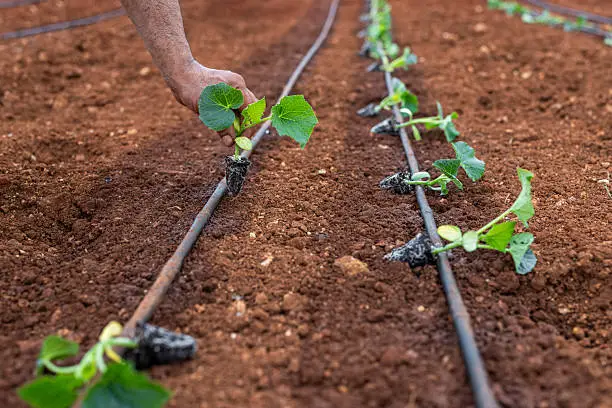
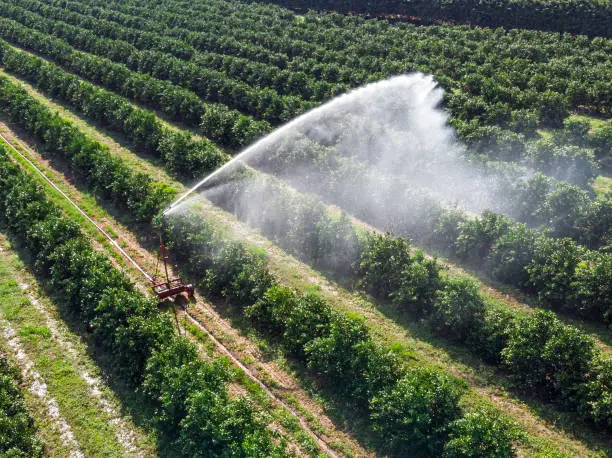
These include polymers used in:
Braskem is a major supplier of polyethylene and polypropylene, making its production decisions relevant to these downstream markets.
The company is therefore an agricultural-adjacent chemical supplier, even though it is not itself a conventional crop-protection producer.
Ownership Can Influence Investment Priorities
The most important question following Novonor’s exit is how IG4 and Petrobras will balance competing priorities.
Braskem needs to maintain its core petrochemical operations while simultaneously managing debt and evaluating longer-term growth opportunities.
That could produce a more selective investment strategy.
Rather than expanding capacity across every possible market, the company may prioritize projects with:
High utilization potential + strong margins + reliable feedstocks + low capital intensity
This could benefit downstream agricultural users if it results in greater reliability for strategically important polymer grades.
Petrobras Provides Feedstock Security
The continued involvement of Petrobras provides an important counterweight to the ownership change.
Petrobras and Braskem already have a substantial commercial relationship involving petrochemical feedstocks.
In December 2025, the companies agreed to long-term naphtha supply arrangements designed to improve Braskem’s access to critical raw materials through 2030.
The relationship became even more relevant in August 2026 when Petrobras increased Braskem’s credit limit for raw-material purchases from R$350 million to R$2.35 billion.
That arrangement can provide Braskem with additional operational flexibility during its restructuring.
Feedstock Security Has Downstream Effects
For agricultural markets, the importance is indirect but significant.
Consider a simplified chain:
Petrobras → Petrochemical feedstock → Braskem → Polyethylene/Polypropylene → Agricultural materials
If Braskem experiences feedstock shortages or production disruptions, downstream manufacturers can face higher prices or longer lead times.
Those costs can eventually reach agricultural producers.
Conversely, reliable feedstock supply can support more predictable production and pricing for downstream polymer users.
Novonor’s exit therefore takes place against a broader question of who will control and finance Brazil’s strategic chemical feedstock infrastructure.
Renewable Feedstocks Add Another Dimension
Braskem's business is not entirely dependent on fossil-based raw materials.
The company has developed its I'm green™ bio-based platform, which uses sugarcane-derived ethanol to produce renewable ethylene and bio-based polyethylene.
The industrial process is:
Sugarcane → Ethanol → Bio-ethylene → Bio-based polyethylene
Braskem has approximately 275,000 tonnes per year of green ethylene production capacity, making renewable feedstock a meaningful part of its portfolio.
The ownership transition could therefore influence investment decisions involving both conventional and renewable feedstock systems.
Why the Agricultural Feedstock Connection Matters
Brazil has an unusually strong agricultural and biofuel ecosystem.
Sugarcane provides ethanol at large scale, while Brazil's agricultural sector produces significant quantities of biomass and other renewable resources.
Braskem has positioned itself to convert some of these agricultural outputs into higher-value chemicals and polymers.
This creates a potentially valuable industrial loop:
Brazilian agriculture → Renewable feedstock → Chemical processing → Bio-based materials → Downstream agriculture and consumer markets
The future investment strategy of Braskem could determine how quickly this loop expands.
Novonor's Exit Could Change the Risk Appetite
One of the key questions is whether the new ownership structure will be more aggressive or more conservative.
IG4 is taking control while Braskem faces financial restructuring.
That environment generally increases the importance of capital discipline.
However, financial restructuring can also create an opportunity to simplify the portfolio and redirect resources toward businesses with stronger long-term economics.
For Braskem, that could mean prioritizing differentiated products over commodity capacity.
Agricultural-adjacent materials could benefit if they offer stronger margins or long-term customer relationships.
Specialty Products May Become More Important
Braskem's future does not necessarily depend on producing more commodity polyethylene and polypropylene.
One alternative is to increase the share of differentiated products.
These can include:
Specialty polymers
Renewable polymers
High-performance packaging materials
Advanced formulations
Customized polymer grades
Materials designed for specific industrial applications
For agricultural customers, differentiated materials can support applications where performance matters more than the lowest possible price.
The Restructuring Could Encourage Asset Optimization
Braskem's new owners may also review its global asset portfolio.
The company operates across Brazil, the United States, Mexico and Europe.
The restructuring environment could increase pressure to determine which assets provide the strongest returns and which require excessive capital.
That could lead to:
Such changes could affect regional supply availability for downstream chemical and agricultural-material manufacturers.
Brazil's Domestic Chemical Industry Is at Stake
Braskem is strategically important to Brazil because the country relies on domestic petrochemical production for a wide range of manufactured products.
A financially stronger Braskem could support domestic industrial competitiveness.
A prolonged period of financial weakness could increase reliance on imported polymers and chemical intermediates.
For agriculture, that distinction matters.
Greater import dependence can expose downstream manufacturers to:
Maintaining competitive domestic production can therefore have benefits beyond Braskem itself.
The New Ownership Structure Creates a Different Strategic Balance
The post-Novonor structure can be simplified as:
IG4 Capital → Financial and operational discipline
Petrobras → Feedstock and energy integration
Braskem → Petrochemical production and downstream markets
The combination could be powerful if the interests of the two controlling shareholders remain aligned.
IG4 can focus on financial restructuring and operational performance.
Petrobras can provide upstream feedstock support and strategic industrial integration.
Braskem can concentrate on restoring the competitiveness of its manufacturing platform.
Renewable Chemistry Could Face a Capital-Allocation Test
Braskem's renewable businesses may also face closer financial scrutiny.
Bio-based polyethylene can command differentiated pricing and offers customers a lower-carbon alternative to conventional polyethylene.
However, renewable production requires reliable agricultural feedstock and must compete with conventional petrochemical economics.
Under a financially constrained ownership structure, future renewable projects may need to demonstrate clear commercial returns.
That does not necessarily mean less investment.
It could mean more selective investment in projects with the strongest customer demand and economic fundamentals.
Agricultural Chemicals Could Be Indirectly Affected
The title refers to agricultural chemical supply chains, but the impact should be understood carefully.
Braskem does not primarily manufacture fertilizers or crop-protection active ingredients.
Its relevance lies in the materials and chemical infrastructure supporting agriculture.
For example, polymers are used throughout the agricultural value chain, while renewable feedstock projects can increase the connection between farming and chemical manufacturing.
The ownership transition could therefore influence agricultural markets indirectly through:
Polymer availability → Agricultural equipment and packaging costs
Feedstock prices → Chemical manufacturing costs
Renewable ethanol demand → Agricultural feedstock economics
Capital investment → Domestic chemical capacity
These links make Braskem strategically relevant to agricultural procurement even without being an agrochemical producer.
A Potential Shift From Expansion to Resilience
The most likely near-term priority may be resilience rather than aggressive expansion.
Braskem must navigate its debt restructuring while maintaining production and customer relationships.
That means ensuring:
Reliable feedstock supply
Adequate liquidity
Stable plant operations
Competitive production costs
Efficient working-capital management
Focused capital expenditure
Once those fundamentals stabilize, the company could have greater flexibility to invest in growth areas.
What Investors Should Watch
Several indicators will reveal how Novonor's exit changes Braskem's strategic direction.
1. Capital Expenditure
Will Braskem increase or reduce investment after restructuring?
2. Feedstock Agreements
Will Petrobras continue expanding its role as Braskem's key feedstock supplier?
3. Renewable Chemistry
Will Braskem continue investing in sugarcane-based polymers and other renewable technologies?
4. Asset Portfolio
Which plants and businesses will the new owners prioritize?
5. Downstream Integration
Will Braskem move further into higher-value specialty materials?
6. Agricultural Demand
Will demand for polymers used in irrigation, packaging and agricultural infrastructure provide a stable downstream market?
The Bigger Strategic Question
Novonor's departure creates an opportunity to rethink what Braskem should become.
For years, the company was primarily viewed through the lens of Brazil's petrochemical industry.
Under the new ownership structure, it could increasingly be evaluated as a strategic materials platform spanning conventional petrochemicals, specialty polymers and renewable chemistry.
That broader definition could make agricultural supply chains more relevant to its investment strategy.
Agriculture is not just a customer of chemicals.
It can also become a source of chemical feedstocks.
Braskem's sugarcane-based business demonstrates this transition.
Conclusion
Novonor's exit from Braskem represents a significant change in the ownership of Brazil's largest petrochemical producer.
IG4 Capital's acquisition of Novonor's controlling stake, combined with Petrobras's continued involvement, creates a new governance structure at a time when Braskem is facing substantial financial pressure.
The immediate priority is restructuring.
But the longer-term consequences could extend throughout Brazil's industrial and agricultural supply chains.
Petrobras's ability to support feedstock purchases, Braskem's role as a major polymer supplier and its growing renewable-chemistry portfolio all connect the company to agriculture in different ways.
The central question is therefore not simply whether Novonor's departure changes Braskem's ownership.
It is whether the new owners can turn that ownership change into a more financially resilient, feedstock-secure and strategically focused chemical platform.
If they succeed, the benefits could extend beyond Braskem's shareholders.
A stronger domestic petrochemical base could support agricultural infrastructure, packaging, irrigation and other downstream industries, while continued investment in renewable chemistry could create new demand for Brazil's agricultural feedstocks.
In that sense, Novonor's exit could mark the beginning of a broader shift in how Brazil connects energy, petrochemicals, agriculture and industrial investment.