The chemical industry's 2026 investment pattern is increasingly shifting toward specialty, formulation-intensive, and customer-facing businesses rather than simply adding bulk commodity capacity.
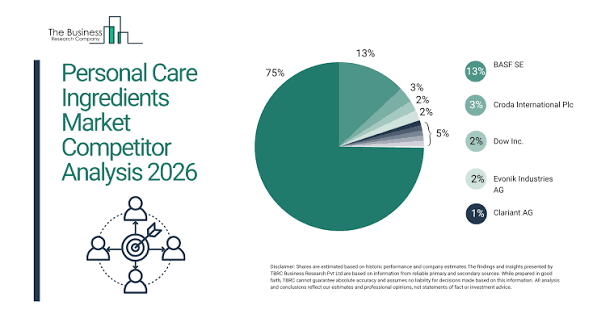
BASF's new Düsseldorf emollients plant is a useful example of this strategy. While the facility primarily serves personal-care applications, the broader investment logic also applies to food and nutrition ingredients, where manufacturers increasingly compete through formulation expertise, application support, product performance, and customer collaboration.
Taken together with other specialty investments across the industry, these projects provide useful intelligence on where chemical-sector capital is being allocated in 2026.
Commodity chemical producers often compete heavily on scale, feedstock costs, and operating efficiency. Specialty formulation businesses operate differently.
Customers may value:
This can create stronger customer relationships and greater opportunities for product differentiation.
Formulation-intensive food applications commonly use specialty ingredients such as Citric Acid, Glycerin, Sorbitol, Xanthan Gum, Propylene Glycol, and Sodium Benzoate, where ingredient selection can influence acidity, texture, moisture retention, viscosity, stability, preservation, and finished-product performance.
The 2026 Investment Pattern
BASF's Düsseldorf investment can be viewed as part of a wider specialty-chemical trend.
1. Personal Care
Emollients and other specialty ingredients are increasingly tied to formulation performance, sensory characteristics, and application-specific requirements.
2. Food & Nutrition
Food manufacturers similarly require ingredients that deliver specific properties such as texture, stability, acidity, preservation, solubility, or nutritional functionality.
3. Specialty Chemicals
Across coatings, adhesives, additives, personal care, and food-adjacent markets, companies are prioritizing products where technical expertise can create differentiation.
4. Customer-Facing Manufacturing
New investments increasingly combine production with technical and application capabilities, bringing suppliers closer to customers.
Why Food Ingredients Fit the Same Model
The food industry has increasingly moved toward more sophisticated formulations.
Ingredient suppliers can differentiate through their ability to help customers solve specific formulation challenges.
Applications can include:
Beverages
Bakery
Dairy
Confectionery
Sauces and dressings
Functional foods
Sports nutrition
Nutraceuticals
Processed foods
In these markets, the lowest-cost ingredient is not always the most commercially attractive option if a technically superior ingredient improves the finished product.
Ranking the Investment Trend
The specialty formulation trend can be evaluated through several indicators.
1. Capacity Expansion
New manufacturing capacity shows where companies expect future demand to develop.
2. Application Laboratories
Investment in technical centers indicates a focus on customer collaboration and formulation support.
3. Specialty Portfolio Expansion
Acquisitions and new product launches can show where companies see attractive formulation-driven growth.
4. Regional Manufacturing
Local production can shorten supply chains and improve customer responsiveness.
5. Technical Service
Investment in application scientists and technical teams can indicate a shift toward solution-based selling.
Together, these indicators provide a stronger picture of specialty-chemical capital allocation than simply tracking headline plant investments.
Market Implications
The continued flow of capital into specialty formulation businesses could have several consequences.
Potential effects include:
More specialized production capacity
Greater product differentiation
Increased technical-service capabilities
More customer-specific formulations
Greater investment in application development
Stronger competition among specialty suppliers
Potential consolidation in niche ingredient categories
For food ingredient buyers, this could expand the range of technically differentiated products available to manufacturers.
Competitive Intelligence
Food ingredient companies can use specialty investment activity to identify emerging competitive advantages.
Important signals include:
Tracking these indicators can reveal where major chemical companies expect higher-value demand to develop.
Procurement Considerations
Procurement teams should increasingly evaluate specialty ingredient suppliers on total value rather than price alone.
Important criteria include:
Ingredient quality
Formulation performance
Technical support
Regulatory documentation
Supply reliability
Production footprint
Innovation capabilities
Customer service
Product consistency
A supplier with stronger formulation expertise may provide value through better product performance, reduced development time, and fewer formulation problems.
Looking Ahead
BASF's Düsseldorf investment provides a useful example of where chemical-industry capital may be concentrating in 2026.
The broader pattern suggests that chemical companies continue to see opportunities in specialty, formulation-intensive, and technically differentiated categories, even while many commodity markets remain affected by overcapacity, energy costs, and margin pressure.
For food ingredients, this trend is particularly relevant because the sector increasingly rewards suppliers that can move beyond simple raw-material sales and participate directly in formulation and product development.
The key intelligence question for 2026 is therefore not simply how much chemical capacity is being added, but what type of capacity is attracting investment and why.
Key Takeaways
Specialty formulation businesses are attracting strategic investment across multiple chemical categories.
BASF's Düsseldorf emollients plant is a useful example of this broader capital-allocation trend.
The same investment logic applies to food and nutrition ingredients.
Technical support and formulation expertise can create stronger supplier differentiation.
Application laboratories, specialty capacity, and regional manufacturing are important competitive signals.
Tracking specialty investments can reveal where chemical companies expect higher-value demand to emerge.
Food ingredient procurement should evaluate technical value alongside price and supply reliability.