Regional Competitiveness, Ranked: How Oliver Wyman Scores Europe, Asia, and the Gulf for 2026
The global chemical industry enters 2026 with a competitive landscape that looks increasingly regional. Energy costs, feedstock availability, overcapacity, regulation, trade policy and access to growing markets are pulling investment toward different parts of the world.
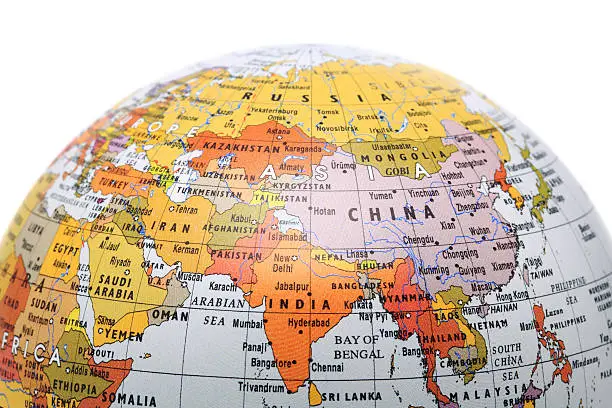
Oliver Wyman's 2026 chemical-industry outlook highlights this divergence clearly: Europe is struggling with structural cost disadvantages, Asia is gaining scale but dealing with overcapacity, while the Gulf continues to benefit from advantaged feedstocks and downstream expansion.
The result is not a simple winner-takes-all race. Each region has a different competitive advantage — and a different weakness.
Europe: High-Cost, High-Pressure
Europe enters 2026 from the weakest competitive position among the major chemical regions.
Oliver Wyman describes Europe's chemical downturn as increasingly structural rather than cyclical, with high energy prices, stringent regulation, carbon costs and global oversupply weighing on producers. Germany's chemical production, for example, was down as much as 18% between 2019 and Q2 2025, while the UK's fell 30%.
The energy disadvantage is particularly significant. Cefic reported that European natural-gas prices during January–April 2026 remained around 3.3 times higher than U.S. levels, while EU chemical capacity utilization remained near historically low levels of about 74%.
Europe's competitive score: Challenged
Europe's advantage lies less in low-cost commodity production and more in specialty chemicals, technology, R&D and high-value applications.
That means European producers are likely to continue moving away from structurally disadvantaged commodity assets while concentrating investment on businesses where technology, customer relationships and differentiation can compensate for higher operating costs.
Oliver Wyman nevertheless sees a possible longer-term recovery if China reduces capacity growth and demand improves. Its modeling suggests global ethylene utilization could return toward approximately 85% by 2035, potentially making some European production economically viable again.
Asia: The Scale Leader
Asia remains the center of global chemical production growth.
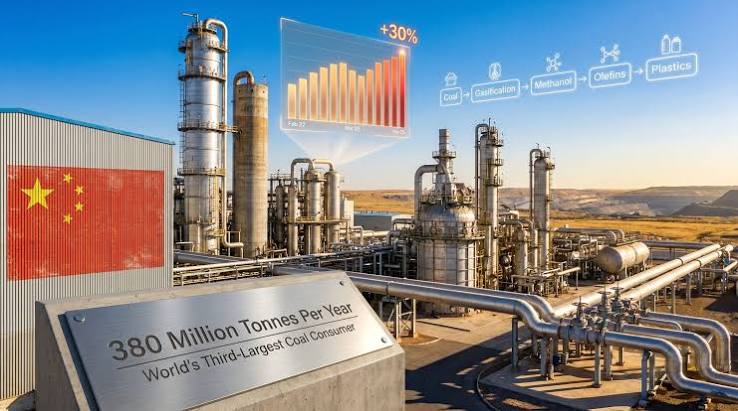
China alone now represents roughly 50% of global chemical capacity, compared with approximately 15% two decades ago. Oliver Wyman estimates that Chinese producers are responsible for around 70% of new chemical-capacity additions through 2027.
This gives Asia enormous advantages in:
But scale has created its own problem.
Asia's weakness: overcapacity
China's rapid capacity expansion has produced substantial oversupply in commodity chemicals such as olefins, polymers and intermediates. Producers are increasingly prioritizing market share, exports and downstream integration rather than maximizing short-term margins.
The result is a paradox: Asia is the world's strongest chemical manufacturing region by scale, but not necessarily by profitability.
South Korea and Southeast Asia are also under pressure from Chinese exports and changing feedstock economics. Several producers have responded through capacity reductions and a shift toward specialty chemicals.
Asia's competitive score: Scale leader, margin challenged
For chemical buyers, however, this environment can create opportunities. Excess capacity and aggressive competition can translate into attractive sourcing options for commodity chemicals, provided buyers carefully assess supplier economics, utilization and long-term reliability.
The Gulf: Feedstock Advantage Meets Downstream Ambition
The Gulf region occupies a different position.
Middle Eastern chemical producers continue to benefit from low-cost oil and gas feedstocks, giving them a structural advantage in energy-intensive commodity production. But the region is increasingly attempting to move beyond basic petrochemicals by expanding downstream integration and higher-value products.
Large-scale corporate restructuring and consolidation — including major developments involving ADNOC and Borouge — reflect this strategic shift.
The objective is straightforward:
Turn cheap feedstock into a broader portfolio of higher-value chemical products.
That could allow Gulf producers to capture more value from the same underlying energy advantage rather than competing solely in commodity markets.
Gulf's competitive score: Cost advantaged and rising
The region still faces challenges, including dependence on hydrocarbon-based feedstocks, evolving chemical regulation and exposure to geopolitical disruptions.
But its combination of feedstock economics, infrastructure investment and downstream integration makes the Gulf one of the regions best positioned to attract new chemical capacity.
A Three-Way Competitive Race
The three regions are therefore competing on very different terms.
Region | Primary Advantage | Biggest Weakness | 2026 Position |
|---|
Europe | Technology, specialties, R&D | Energy and regulatory costs | Challenged |
Asia | Scale, manufacturing ecosystem, demand | Overcapacity and margin pressure | Scale leader |
Gulf | Low-cost feedstocks, integration | Geopolitical and diversification risks | Rising |
The key point is that competitiveness is no longer determined by production cost alone.
Companies are increasingly evaluating the combination of energy, feedstocks, market access, logistics, regulation, resilience and investment incentives before deciding where to build or expand.
Why China Matters to Europe's Future
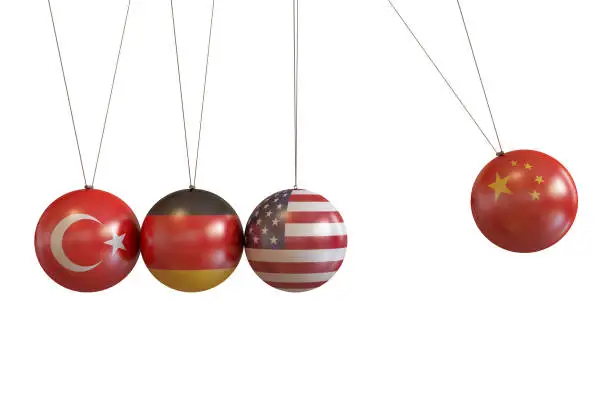
Perhaps the most important relationship in the global chemical market is no longer simply Europe versus the United States or Europe versus the Gulf.
It is Europe's relationship with China's capacity cycle.
Oliver Wyman estimates that China added more ethylene and propylene capacity between 2019 and 2024 than the entire existing capacity base of Europe, Japan and South Korea combined. China now represents roughly 23% of global ethylene capacity, while Europe's share has fallen to about 10%.
If Chinese capacity continues expanding faster than demand, European commodity producers will remain under pressure.
But if Chinese demand accelerates and new capacity additions slow, global utilization could recover. That would give higher-cost European assets a better chance of competing again.
What This Means for Chemical Buyers
Regional competitiveness is becoming increasingly important for procurement strategy.
Buyers should not simply ask:
“Which supplier offers the lowest price?”
They should ask:
Where is the producer's feedstock coming from?
How competitive are regional energy costs?
Is the plant operating at sustainable utilization?
Is the producer adding or cutting capacity?
How exposed is the supplier to trade restrictions?
What alternative supply routes exist?
Is the producer dependent on a single export market?
Does the supplier have downstream integration or differentiated products?
A low-cost producer operating in an oversupplied market may provide excellent short-term pricing but face margin pressure and restructuring. Conversely, a higher-cost European supplier with differentiated technology may offer greater long-term supply security for specialized products.
The Emerging Winner: Regional Diversification
The most important conclusion from Oliver Wyman's analysis is that the future chemical industry will probably not be dominated by one region.
Instead, production is likely to become more strategically distributed.
Commodity chemicals will continue gravitating toward regions with advantaged feedstocks and lower production costs. Specialty chemicals will remain more closely connected to technology-intensive ecosystems. Meanwhile, manufacturers and buyers will increasingly maintain multiple sourcing regions to protect against geopolitical and logistics disruptions.
This aligns with the broader 2026 shift toward supply-chain diversification, with companies reconsidering traditional centralized production models as tariffs, industrial policy and geopolitical risk reshape global manufacturing.
Outlook
Oliver Wyman's 2026 outlook points to a chemical industry where regional competitiveness is being fundamentally rewritten.
Europe has technology but a cost problem. Asia has scale but an overcapacity problem. The Gulf has feedstock economics but must continue moving up the value chain.
For chemical companies, the winning strategy may therefore be less about choosing one region and more about building the right regional footprint for each product, feedstock and customer market.
The chemical industry's next competitive map will not simply show where the most plants are located. It will show where companies can produce competitively, secure supply, protect margins and adapt fastest to a fragmented global market.