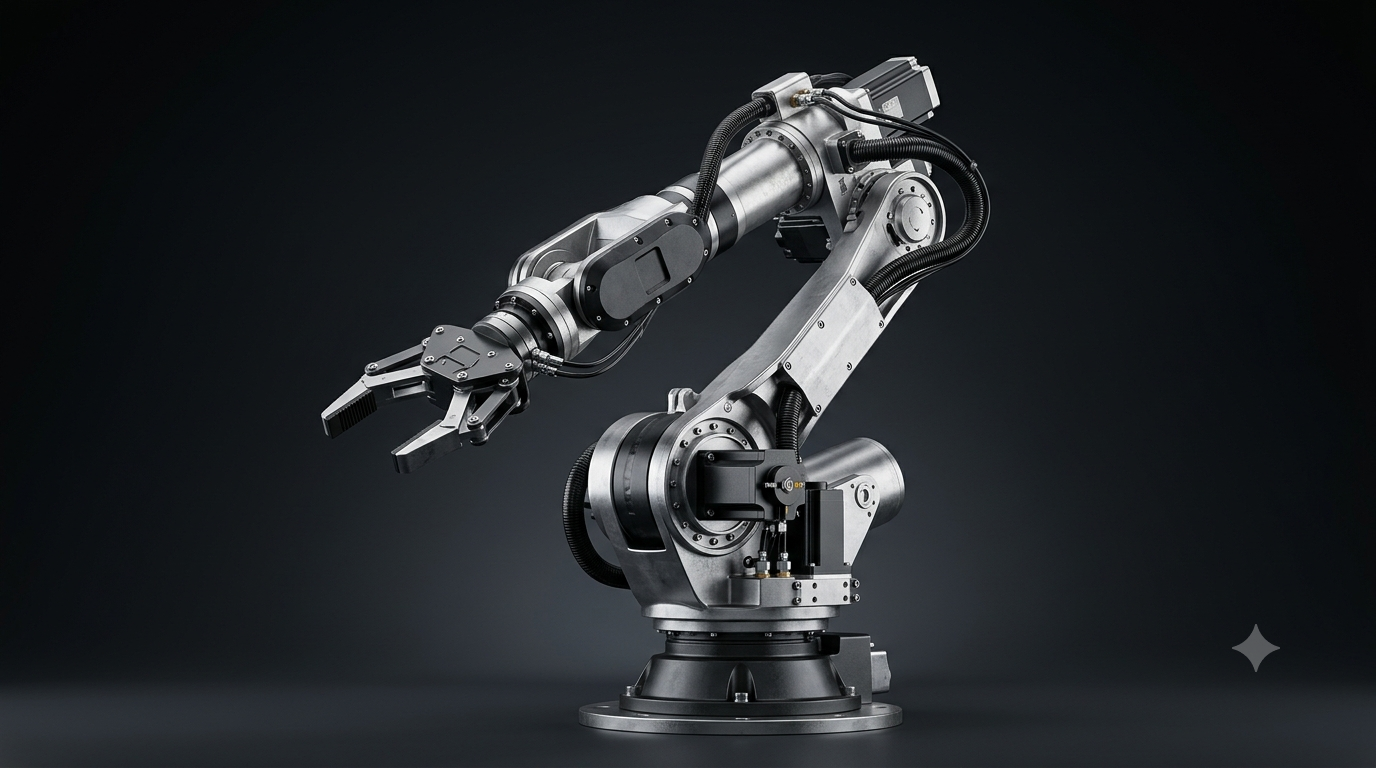
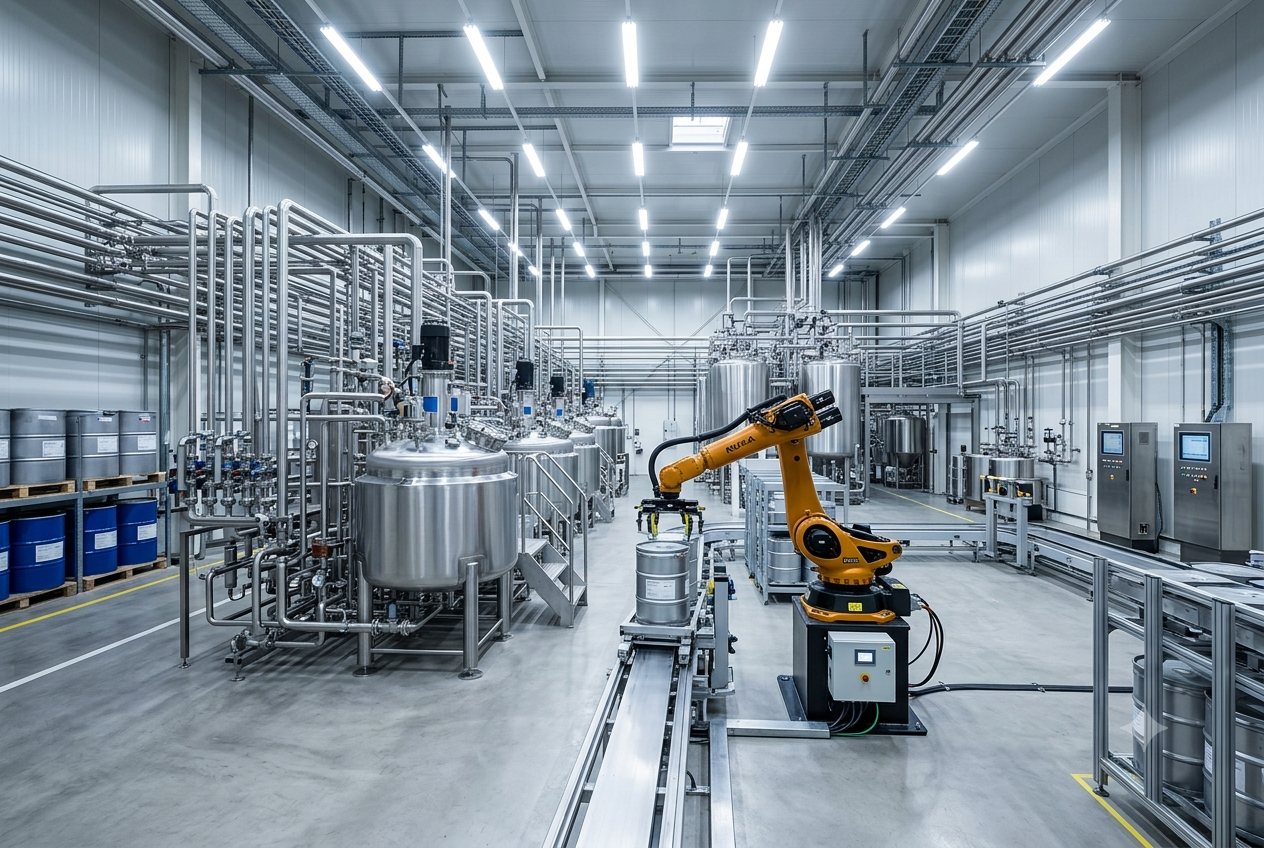
The 0.1% unit decline translates to roughly nine fewer robots purchased across all North American industries compared to Q1 2025. This figure sits well within normal quarterly variance and does not indicate a collapse in automation investment. The 6.4% revenue decline carries more weight because it signals that buyers either negotiated better pricing, shifted toward lower-cost robot models or reduced spending on peripheral equipment and integration services bundled with robot purchases.
For chemical plant buyers, this revenue gap matters because it suggests that companies are prioritizing basic automation functionality over advanced features. High-end collaborative robots with vision systems, force sensing and adaptive gripping capabilities command premium prices. Standard industrial robots designed for repetitive tasks such as palletizing, material transfer and packaging cost significantly less per unit but deliver proven reliability in process environments.
The first quarter typically sees lower capital equipment orders as companies finalize annual budgets and prioritize spending approved in the previous fiscal year. A marginal decline in Q1 does not necessarily forecast full-year performance, but it does provide an early indicator of how conservative or aggressive buyers feel about automation investment given current economic conditions.
Why Revenue Declined Faster Than Unit Sales
When revenue falls more sharply than unit volume, three factors usually drive the gap. First, average selling prices decreased either through manufacturer discounting or through buyers selecting less expensive models. Second, buyers reduced spending on installation, programming and system integration services that typically add 30% to 50% on top of hardware costs. Third, companies delayed or canceled purchases of ancillary equipment such as end-effectors, safety systems and conveyor interfaces that increase total project value.
Chemical plant automation projects often involve extensive customization to handle corrosive environments, explosive atmosphere ratings and cleanroom requirements. These customizations inflate project costs well beyond base robot pricing. If buyers in Q1 2026 focused on simpler applications with minimal environmental controls, total revenue per robot would decline even if unit counts remained stable.
Procurement teams managing multi-year automation rollouts should track this revenue-per-unit metric as a leading indicator of cost inflation or deflation. A widening gap suggests opportunities to negotiate better pricing or to defer premium features that do not immediately impact throughput or safety metrics.
Chemical Sector Automation Spending Patterns
The chemical manufacturing sector accounts for a meaningful but not dominant share of total North American robot orders. Automotive, electronics and food processing represent larger volume buyers. However, chemical applications demand specialized robots capable of operating in hazardous areas, handling corrosive materials and maintaining cleanliness standards that general manufacturing does not require.
This specialization creates a distinct procurement cycle. Chemical plant buyers replace aging automation equipment on scheduled turnarounds rather than continuous upgrades. A facility planning a major maintenance shutdown in Q3 2026 will concentrate robot orders in Q2 to allow time for delivery, integration and testing. This lumpy demand pattern means quarterly fluctuations in overall robot orders may not reflect chemical sector trends.
Buyers should interpret the Q1 2026 data in context with their own industry segment. A decline in automotive robot orders does not necessarily correlate with chemical plant automation budgets, which track more closely to capacity expansion projects, regulatory compliance mandates and labor availability constraints than to general manufacturing sentiment.
Capital Expenditure Timing and Budget Cycles
Many chemical companies operate on fiscal years ending in December, meaning Q1 represents the start of new capital budgets. Finance teams often slow discretionary spending in early quarters to preserve budget flexibility for unexpected needs later in the year. Automation projects that are not tied to production bottlenecks or regulatory deadlines frequently get pushed from Q1 into Q2 or Q3 once budget certainty improves.
The 0.1% unit decline in Q1 2026 may simply reflect this budget pacing rather than reduced overall demand for the year. Buyers who secured budget approvals late in 2025 may have issued purchase orders in December rather than waiting for January, shifting orders from Q1 2026 into Q4 2025 and creating an artificial year-over-year comparison gap.
Procurement managers should focus on full-year order trends rather than single-quarter snapshots when evaluating supplier capacity, lead times and pricing leverage. A supplier experiencing order backlogs in Q1 will offer less pricing flexibility than one entering the quarter with open production slots, regardless of industry-wide order volumes
Equipment Supplier Strategy and Lead Times
Robot manufacturers and system integrators adjust production schedules, inventory levels and pricing based on order flow trends. A 6.4% revenue decline in a single quarter does not typically trigger layoffs or capacity reductions, but it does give suppliers incentive to protect market share through competitive pricing or shorter lead times.
For chemical plant buyers planning automation projects in the second half of 2026, the Q1 softness creates potential negotiating leverage. Suppliers facing lighter order books may offer faster delivery, more flexible payment terms or increased engineering support to secure contracts. Buyers should test the market with requests for quote even if projects are not scheduled until late 2026, as pricing secured during slower order periods can deliver significant savings compared to quotes obtained during peak demand.
Conversely, buyers who delay procurement decisions expecting further price declines risk losing preferred delivery slots if orders rebound in Q2 or Q3. Automation projects in chemical plants require extensive planning, and delivery delays of even a few weeks can derail turnaround schedules and extend production downtime.
What Material Handling Automation Costs in 2026
Industrial robots suitable for chemical plant material handling, palletizing and packaging applications range from $35,000 to $150,000 depending on payload capacity, reach and environmental ratings. A standard six-axis robot with 50-kilogram payload and IP67 dust and water protection costs approximately $60,000 to $80,000 without integration.
Integration services including programming, safety systems, conveyor interfaces and facility modifications typically add $50,000 to $200,000 per robot depending on application complexity. A complete palletizing cell for 25-kilogram bags of granular product might total $150,000 to $250,000 installed and commissioned.
Buyers managing cost-per-unit-handled metrics should evaluate automation ROI based on labor cost avoidance, throughput improvement and quality consistency rather than upfront capital alone. A robot that reduces product contamination or minimizes repetitive-strain injuries delivers value beyond simple headcount reduction.
The Q1 2026 revenue decline suggests that buyers are becoming more selective about integration scope, potentially choosing to handle more engineering in-house or selecting simpler applications that require less customization. This trend benefits buyers with strong internal engineering teams but may increase project risk for those without automation expertise.
Regulatory Drivers That Sustain Automation Demand
Chemical manufacturing faces ongoing regulatory pressure around worker safety, emissions control and product traceability. Automation helps address these requirements by removing workers from hazardous environments, improving process control to reduce emissions and creating digital records for batch tracking and compliance reporting.
The U.S. Occupational Safety and Health Administration (OSHA) continues to emphasize process safety management in chemical facilities, which includes engineering controls to minimize manual handling of hazardous materials. Robots that transfer reactive chemicals, load corrosive liquids into vessels or handle dusty powders reduce worker exposure and support compliance with permissible exposure limits.
These regulatory drivers operate independently of quarterly economic fluctuations. A chemical plant required to reduce worker exposure to a hazardous substance will proceed with automation investment regardless of broader industry order trends. Buyers managing compliance-driven projects should prioritize technical specifications and delivery certainty over cost savings that might delay implementation.
How Macroeconomic Uncertainty Affects Automation Decisions
The modest Q1 2026 decline occurs against a backdrop of interest rate volatility, trade policy uncertainty and variable energy costs that affect chemical plant economics. Capital equipment purchases represent multi-year commitments, and buyers naturally hesitate when economic visibility is limited.
However, automation projects often improve cost structures in ways that make operations more resilient during downturns. Robots do not require overtime pay, do not call in sick and operate at consistent speeds regardless of shift or season. For chemical plants operating on thin margins, automation can transform fixed labor costs into controlled depreciation expenses that scale more predictably with production volumes.
Buyers evaluating whether to proceed with automation projects during uncertain periods should model scenarios that include both production growth and contraction. Projects that deliver positive ROI even at 70% capacity utilization provide downside protection that purely volume-driven investments do not.
Tracking the Data Points That Matter for Chemical Buyers
Procurement teams managing automation budgets should monitor several data series beyond quarterly robot order totals. Manufacturing Purchasing Managers' Index (PMI) readings indicate overall industrial activity and correlate with capital equipment spending. Chemical production volume indices published by the American Chemistry Council show sector-specific demand trends that drive capacity investment.
Robot supplier earnings reports and order backlog disclosures provide insight into delivery lead times and pricing pressure. A supplier reporting declining backlog and rising inventory will likely offer better terms than one with six-month lead times and capacity constraints.
Energy costs also influence automation ROI calculations. Robots consume electricity but eliminate labor costs that escalate with wages and benefits. When natural gas and electricity prices fall, the relative cost advantage of automation versus labor narrows. When energy costs rise, automation delivers greater savings by reducing overall energy consumption through improved process efficiency.
What Procurement Teams Should Do in the Current Environment
The Q1 2026 robot order data suggests a stable but not growing automation market. For chemical plant buyers, this environment offers opportunities to secure competitive pricing and favorable delivery terms without facing the supply constraints that characterized 2021 and 2022.
Buyers with approved automation projects should move forward with procurement, using the softer market conditions to negotiate better terms. Those still developing business cases should focus on applications that deliver the highest return through labor cost reduction, quality improvement or regulatory compliance rather than pursuing automation for its own sake.
Supplier relationships matter more in stable markets than in boom periods. Buyers who maintained consistent order volumes and payment performance during strong demand periods can leverage those relationships for preferential treatment when suppliers face lighter backlogs. New buyers entering the market should establish relationships with multiple integrators to compare technical approaches and pricing models.
Positioning for the Next Capital Cycle
Automation investment in chemical plants follows long cycles tied to facility age, technology obsolescence and competitive pressure. A modest quarterly decline in robot orders does not change the fundamental drivers pushing chemical manufacturers toward increased automation including labor shortages, safety requirements and the need for digital process data.
Buyers planning for 2027 and beyond should use the current period to refine project specifications, benchmark supplier capabilities and build internal consensus for multi-year automation roadmaps. Projects approved and scoped during slower periods typically execute more smoothly than those rushed during peak demand when engineering resources and equipment availability become constrained.
The Q1 2026 data point represents a moment in a longer trend toward greater automation across chemical manufacturing. Short-term fluctuations in order volume create tactical opportunities for better pricing and faster delivery, but they do not diminish the strategic imperative to automate repetitive, hazardous and quality-critical processes.
Ready to source Caustic Soda Pearls from verified global suppliers? Explore competitive offers on our platform today.