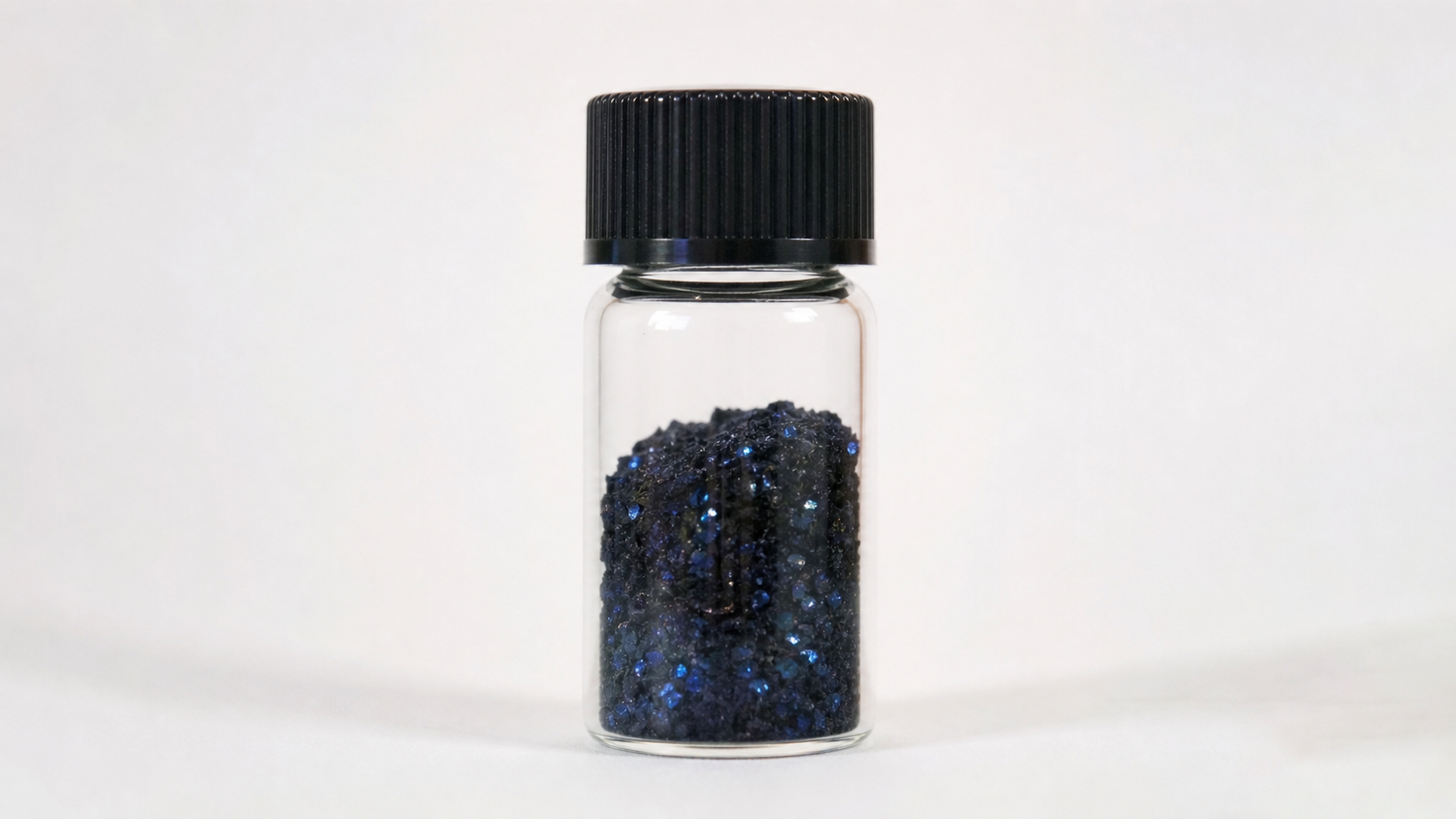
Battery technology continues to push material science toward structures that can combine conductivity, stability and efficient ion movement within the same platform. Semiconducting covalent organic frameworks, or COFs, are gaining attention as a potential battery material because their ordered porous architectures can offer more than conventional passive structural support.
The emergence of dopant-free semiconducting COFs adds another dimension to the growing family of porous framework materials being investigated for energy storage. For chemical traders, procurement managers and industrial buyers, the development signals a market area worth monitoring as researchers explore how these materials could support future battery designs.
Why Semiconducting COFs Matter for Battery Development
Covalent organic frameworks are crystalline porous materials built from organic building blocks connected through strong covalent bonds. Their structures can create networks with highly organized pores, giving researchers significant control over characteristics such as surface area, chemical functionality and molecular architecture.
The semiconducting category introduces an additional property that makes these frameworks particularly interesting for energy applications. Instead of treating the framework simply as a porous host, researchers can investigate how its electronic behavior interacts with ion transport, charge movement and electrode processes.
For battery developers, that combination could create several areas of interest:
Porosity: Organized pores can provide pathways for interaction between active material, electrolyte and ions.
Structural control: Researchers can design framework structures around specific chemical and physical requirements.
Electronic functionality: Semiconducting behavior creates opportunities to investigate charge transport within the framework.
Dopant-free design: Eliminating the need for conventional dopants could simplify material architectures in certain applications.
The importance of these characteristics depends on how individual COF structures perform under practical battery conditions. However, the broader direction is clear: porous frameworks are moving from niche research materials toward a wider energy storage toolkit.
Dopant-Free Semiconducting COFs Create a Distinct Research Path
Many advanced electronic materials rely on additional components to modify their electrical properties. A dopant-free semiconducting COF takes a different approach by seeking useful electronic characteristics from the framework itself.
This distinction matters because battery materials often involve multiple components working together. Every additional component can influence processing, compatibility, stability and cost, so researchers continue to investigate architectures that can deliver several useful functions within a more integrated material system.
Dopant-free semiconducting COFs could therefore attract attention where developers want to explore the relationship between ordered porosity and intrinsic electronic properties.
The commercial significance remains tied to performance. If a material can demonstrate useful conductivity, chemical stability and electrochemical behavior while maintaining its porous architecture, it could become more attractive for advanced battery research and potentially for future commercial applications.
How COF Architecture Could Support Battery Applications
Battery electrodes require materials that can accommodate electrochemical reactions while supporting efficient movement of ions and electrons. Conventional electrode systems already use a wide range of active materials, conductive additives, binders and structural components.
COFs offer another design route because their molecular structures can be deliberately organized. Researchers can adjust the building blocks and connectivity of a framework to investigate different pore sizes, chemical environments and electronic characteristics.
For battery applications, several potential roles stand out:
Electrode components: Semiconducting frameworks could be investigated as active or functional components within electrodes.
Host structures: Their pores may provide space for other electrochemically relevant species or materials.
Charge transport platforms: Semiconductor properties could support research into electronic movement through organized organic networks.
Interface engineering: Controlled chemical environments could help researchers study interactions between electrode materials and electrolytes.
The practical value of each role will depend on the chemistry of the specific COF and the battery architecture under development. That makes material selection especially important for procurement teams entering this emerging category.
Battery Research Could Expand the Market for Porous Framework Materials
The battery sector already drives substantial demand for specialized materials, from conductive components and electrode chemicals to electrolytes and processing additives. The development of new framework materials adds another layer to this ecosystem.
Porous materials have attracted increasing scientific interest because their structures can be engineered for specific functions. COFs are particularly notable because their organic building blocks allow researchers to approach material design through molecular architecture rather than relying only on conventional inorganic structures.
For traders, this creates a potential future market segment rather than an established high-volume commodity category. Early activity is more likely to center on research institutions, specialty chemical manufacturers, battery developers and advanced materials companies.
Procurement teams tracking the field should watch for changes in:
Pilot-scale production of selected COF materials.
Commercial availability of specialized COF building blocks.
Battery performance data from larger-scale testing.
Improvements in synthesis efficiency and material consistency.
Partnerships between advanced materials developers and battery manufacturers.
These indicators can help distinguish genuine commercial progress from purely laboratory-stage interest.
What Makes COF Sourcing Different From Conventional Battery Chemicals
Sourcing an emerging framework material requires a different procurement mindset from purchasing established industrial chemicals. Standard commodity procurement often focuses heavily on price, volume, logistics and routine quality specifications.
Specialty COF sourcing requires deeper attention to material identity and performance characteristics. Two materials that broadly fall within the same framework category may behave very differently because of differences in molecular building blocks, pore architecture, synthesis conditions and electronic properties.
Buyers should therefore evaluate:
Material specification: The supplier should clearly define the framework chemistry and relevant physical characteristics.
Batch consistency: Reproducibility becomes particularly important when a material moves from laboratory experimentation toward scale-up.
Purity and residuals: Synthetic residues can influence electrochemical behavior and should receive appropriate attention.
Particle characteristics: Size, morphology and surface properties can affect processing and interaction with other battery components.
Documentation: Technical data, analytical characterization and handling information can help procurement teams compare suppliers more effectively.
For traders, technical documentation can become a competitive advantage because buyers may prioritize reliable characterization over the lowest nominal price.
Supply Chain Considerations for Emerging Battery Materials
The supply chain for advanced COFs can differ substantially from the mature networks supporting common battery chemicals. Production may depend on specialized organic building blocks, controlled synthesis processes and equipment capable of maintaining precise reaction conditions.
This creates several potential sourcing challenges.
First, limited production capacity can make availability less predictable than for established industrial materials. Second, specialized manufacturing may concentrate supply among a relatively small number of producers, increasing the importance of supplier diversification.
Procurement teams should also consider whether a supplier can move beyond laboratory quantities. A material that performs well at gram scale may require significant process development before it becomes suitable for larger commercial programs.
Scale-up capability should therefore become a central sourcing question as battery developers move from material discovery toward prototype and pilot production.
The Commercial Opportunity for Chemical Traders
The rise of semiconducting COFs illustrates how emerging material technologies can create opportunities before they become mainstream commodities. Traders that understand the technical requirements early may be better positioned to connect specialized producers with battery researchers and industrial development teams.
The opportunity does not necessarily depend on immediate high-volume sales. Early markets can develop around small research quantities, customized specifications, technical sampling and supply agreements for development programs.
Chemical trading companies can add value by helping customers with:
Identifying suppliers capable of producing specialized framework materials.
Comparing technical specifications between different material grades.
Coordinating sample quantities for research and development.
Supporting international sourcing and logistics.
Monitoring production scale-up and changes in commercial availability.
As demand develops, suppliers that demonstrate consistent quality and scalable production could gain an advantage over companies that only serve small laboratory requirements.
Procurement Priorities as Battery Applications Develop
The biggest procurement question is not simply whether semiconducting COFs have potential. It is whether a specific framework can meet the technical and commercial requirements of a real battery application.
A disciplined sourcing process should therefore begin with performance requirements rather than supplier price alone.
Buyers can prioritize the following areas:
Define the intended battery role. Establish whether the COF will function as an electrode material, host, conductive component or another specialized element.
Set technical specifications early. Define purity, morphology, particle characteristics and relevant electrochemical requirements before comparing suppliers.
Evaluate reproducibility. Request evidence that the supplier can produce consistent material across multiple batches.
Assess production scalability. Determine whether the supplier can support larger quantities if development programs progress.
Compare total sourcing cost. Material price, shipping, packaging, testing and quality requirements all contribute to the effective procurement cost.
This approach can reduce the risk of selecting a material that performs well in an initial experiment but becomes difficult or expensive to source at higher volumes.
Looking Ahead to 2027: From Material Discovery to Battery Integration
The next stage for semiconducting COFs will depend on how successfully researchers translate their structural and electronic advantages into measurable battery performance. The focus will likely shift from demonstrating interesting material properties toward understanding durability, processing compatibility, scale-up and integration into practical cell architectures.
That transition could determine whether dopant-free semiconducting COFs remain a specialized research platform or become part of a broader commercial battery materials ecosystem.
For chemical traders and industrial buyers, monitoring this development early can provide useful visibility into future demand. The strongest opportunities are likely to emerge where material performance, scalable production and reliable international supply develop together.
The broader lesson for procurement teams is that emerging battery materials should be tracked before they reach full commercial maturity. Semiconducting COFs currently represent a promising addition to the expanding toolkit of porous framework materials being explored for energy storage, and their progress could create new sourcing requirements across the specialty chemicals value chain.
Ready to source Fumed Silica from verified global suppliers? Explore competitive offers on our platform today.