UK crude steel output has been shrinking for decades. Blast furnaces at Redcar, Llanwern and now parts of Port Talbot have gone cold while imported slab, coil and finished products fill the gap. The story usually gets told as one of jobs, regional inequality and industrial decline. Less discussed is how this structural slide in UK steel reshapes the economics of chemical feedstocks that once rode on the back of integrated steelmaking.
From benzene and coal tar to coke oven gas and surplus hydrogen, classic integrated steelworks generated a portfolio of byproducts that underpinned domestic chemical chains. As high costs and cheap imports hollow out that base, UK chemical buyers quietly inherit more exposure to global trade frictions, refinery decisions and European carbon policy.
The Long Slide in UK Steel and Why It Matters to Chemicals
UK crude steel production has trended downward since the 1970s. In broad terms, three forces drove the decline:
Cost disadvantage versus regions with cheaper power and raw materials
Global overcapacity with waves of new Chinese and later Indian and Turkish steel
Policy uncertainty around carbon pricing, energy and industrial support
For chemicals, the simple volume loss matters less than the type of capacity disappearing. Integrated blast furnace–basic oxygen furnace (BF–BOF) sites produced:
Metallurgical coke from coking plants
Coke oven gas rich in hydrogen, methane and ammonia
Coal tar and light oil streams yielding benzene, toluene and naphthalene
Blast furnace gas usable for power, heat or synthesis gas
As BF–BOF lines shut or convert to electric arc furnaces (EAFs), these byproduct streams shrink or vanish. EAF mini-mills melt scrap, they do not carbonise coal. That change cascades into domestic feedstock availability for a range of UK chemical segments.
From Blast Furnaces to Benzene: How Steel Generates Chemical Feedstocks
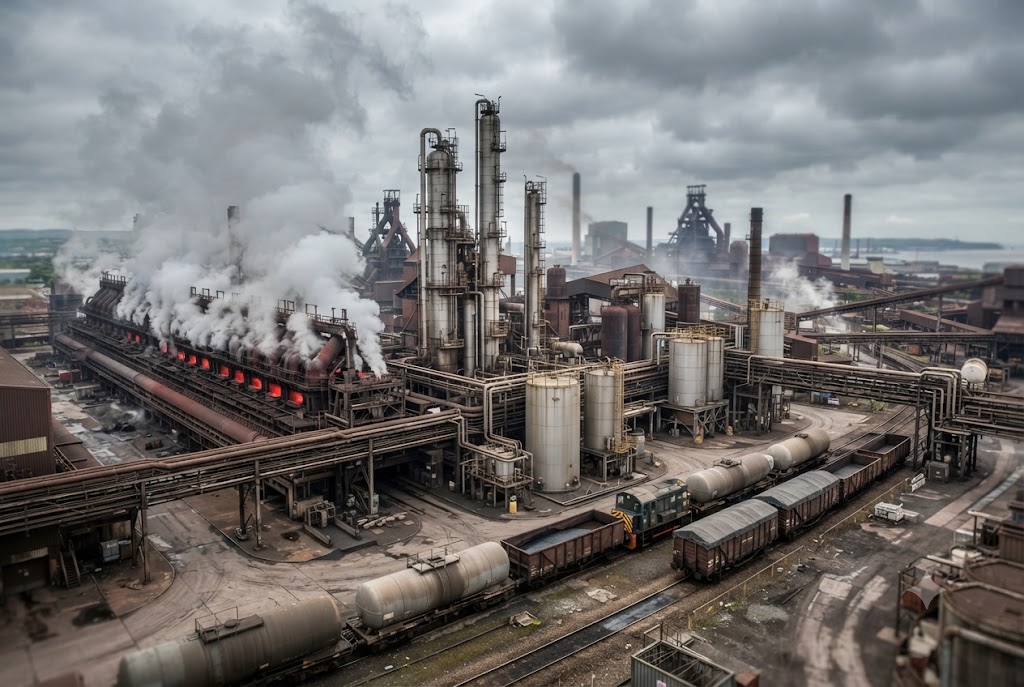
Classic integrated works behave as chemical plants built around iron. Several key streams once supported UK chemicals:
Coal tar from coke ovens, distilled into pitch, naphthalene, phenol, creosote and specialty aromatics
Coke oven light oil containing benzene, toluene and xylenes, further refined into solvents and intermediates
Ammonia recovered from coke oven gas, feeding ammonium sulfate and other nitrogen products
Coke oven gas and blast furnace gas used directly as fuel or upgraded into synthesis gas, hydrogen or methanol precursors
These routes pre-date oil-based petrochemicals. Over time, naphtha crackers and reformers displaced much coal-derived chemistry. Yet for some UK producers, steel byproducts still represented competitively priced incremental feedstock, especially when integrated on shared sites.
As those steel units go offline, companies that quietly relied on coal tar or coke oven benzene face a new reality: replace local streams with imported aromatics from refineries or crackers, or exit certain product lines entirely.
Trade Policy, Imports and Hidden Feedstock Costs
Declining domestic steel left the UK more dependent on imported semi finished and finished steel from the EU, Turkey, India and above all China. That shift carries hidden consequences for chemicals:
Lost co-product value: Imported slab or coil arrive without coke, gas or coal tar streams. The UK imports metal but not the chemical byproducts that once offset steel costs.
Increased import exposure for benzene, naphthalene and pitch that used to piggyback on UK coking capacity.
Sensitivity to trade remedies: Anti dumping or safeguard measures on steel can shift upstream raw material prices, which in turn influence refinery and cracker utilisation that chemical buyers rely on.
The UK’s post Brexit trade policy adds further layers. Independent trade remedies can target steel, while the EU’s Carbon Border Adjustment Mechanism (CBAM) will influence routing and cost of both steel and some carbon intensive chemicals into and out of Great Britain.
Chemical producers that thought of themselves as downstream and insulated from steel politics now discover that trade decisions on metal reach back into their feedstock bills.
What Declining UK Steel Means for Aromatics and Coal Tar Derivatives
One of the clearest signals of steel’s retreat lies in coal tar and associated aromatics.
Historically, UK coking plants supplied coal tar to local distillers who produced:
Naphthalene for phthalic anhydride, plasticisers and surfactant intermediates
Pitch for aluminium anodes, roofing and specialty binders
Light oil aromatics including benzene and toluene for solvents and intermediates
As steel output fell, domestic coal tar volumes dropped. Remaining distillers increasingly:
Import coal tar from Poland, Germany or Spain, adding freight and currency risk
Compete with aluminium smelters and overseas buyers for limited high quality pitch
Face more volatile benzene and toluene pricing tied to refinery and cracker cycles rather than steady coke plant byproduct flows
That shift has three practical effects for UK chemical buyers:
Pricing becomes more volatile because coal tar availability now depends on continental steel cycles and logistics, not local integration.
Supply security weakens as a force majeure at a single continental coke plant or distillery can significantly tighten UK availability.
Smaller users get squeezed when large global buyers can secure long term import contracts, leaving only spot barrels for mid tier UK customers.
In short, declining UK steel forces aromatics and tar reliant businesses to play on a more global, less forgiving field.
Gases and Fertilizer Links: Ammonia, CO₂ and Hydrogen
Steel byproducts extend into the gas and fertilizer space, though these links often stay hidden in site specific integration schemes.
Three examples show how:
Ammonia from coking: Some classic works stripped ammonia from coke oven gas, feeding local ammonium sulfate plants or nitric units. As coking disappears, that byproduct ammonia goes with it, pushing more dependence on natural gas based ammonia imports.
CO₂ streams: Blast furnace and reformer gases offered concentrated CO₂ for food grade or industrial markets. When these sources close, CO₂ suppliers must lean harder on ammonia plants or fermentation streams, both under their own pressures.
Hydrogen: Coke oven gas and reformer offgas once provided low cost hydrogen for hydroprocessing, desulfurisation or specialty hydrogenation in adjacent chemical sites.
When steel turns off these taps, gas and fertilizer players must:
Secure more merchant ammonia and CO₂ often from overseas
Invest in stand alone hydrogen production or pay refinery prices
Absorb higher costs tied to methane and power rather than “free” byproduct gas
For fertilizer importers, that reinforces a trend already underway: swap relatively diversified upstream nitrogen sources for a portfolio where fewer big ammonia exporters and more volatile gas hubs set the tone.
Carbon Policy, CBAM and Feedstock Competitiveness
Environmental policy, particularly carbon pricing and border adjustments, now sits at the intersection of steel and chemical feedstock economics.
Key developments:
The EU’s CBAM will impose carbon based levies on imports of steel, cement, aluminium and eventually some chemicals into the EU. UK exports of steel and possibly carbon intensive chemicals will face this adjustment unless Britain mirrors equivalent carbon pricing.
In response, the UK is considering its own CBAM like measures. These may cover steel first, but pressure will build to extend coverage to basic chemicals whose production often moves with steel and refining.
For UK chemical buyers, this matters in two ways:
Imported aromatics and intermediates may carry embedded carbon costs if CBAM style mechanisms spread, reducing any feedstock cost advantage from buying overseas.
Domestic low carbon projects at former steel sites, such as hydrogen or CCUS hubs, could create new feedstock options but will likely come with premium pricing.
Trade policy and climate policy now combine to redefine what “cheap” benzene, toluene or hydrogen really means once carbon risk gets priced or regulated.
Supply Chain Risk: More Nodes, Longer Chains, Thinner Buffers
The net effect of declining UK steel and shifting trade policy is a longer, more fragile supply chain for several critical feedstocks.
Risk elements include:
Concentration risk: Fewer coke plants and coal tar distillers globally mean disruptions hit harder and spread faster.
Route risk: More feedstock arrives by sea from continental Europe, the US Gulf or North Africa, exposing buyers to port congestion, strikes and freight spikes.
Policy risk: Tariffs, sanctions and CBAM like mechanisms can change delivered costs quickly and asymmetrically between origins.
Inventory risk: Just in time models built around local integrated sites look less safe when supply must cross borders, yet expanding storage ties up cash and demands new infrastructure.
Chemical buyers that once took domestic steel proximity for granted must now actively manage feedstock portfolios like traders do: thinking in origins, routes, policy regimes and currency exposures.
How UK Chemical Buyers Should Respond Now
The decline of UK steel is not reversing, and policy debates will not bring back large BF–BOF complexes at historic scale. Chemical and fertilizer buyers therefore need to adapt around this structural reality.
Practical steps include:
Map exposure to steel linked feedstocks: coal tar, benzene from coke ovens, ammonium sulfate, byproduct CO₂ or hydrogen. Identify which of your materials once depended on local steel integration.
Diversify origins where possible: for benzene, pitch or naphthalene, qualify at least one non EU origin if volume allows, even if immediate pricing is similar.
Use contracts to manage volatility: build pricing formulas that reflect global benzene or sulfur benchmarks rather than purely local bargains that may not last.
Engage early with new hydrogen and CO₂ projects: former steel sites repurposed as industrial hubs may offer future feedstock options. Early offtake discussions can secure capacity before markets tighten.
Track trade and carbon policy together: follow CBAM developments, UK trade remedies and carbon floor price debates as integrated drivers of future feedstock cost.
The core insight is simple but uncomfortable. The UK’s steel story tells chemical buyers that local, integrated byproduct streams are no longer a given. Feedstock strategies built on those assumptions must evolve toward more global, policy aware and risk managed models.
Ready to source Benzene from verified global suppliers? Explore competitive offers on our platform today.