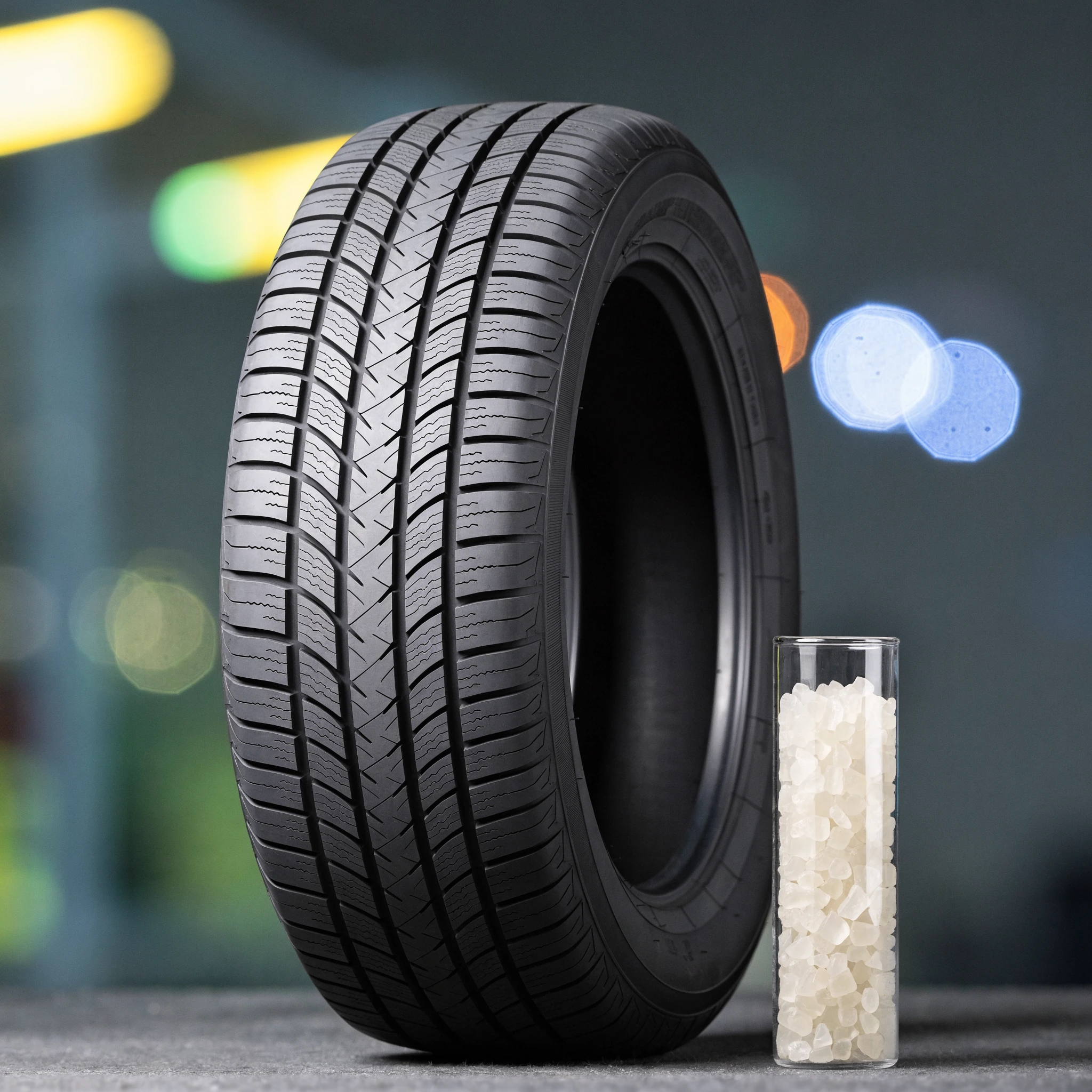
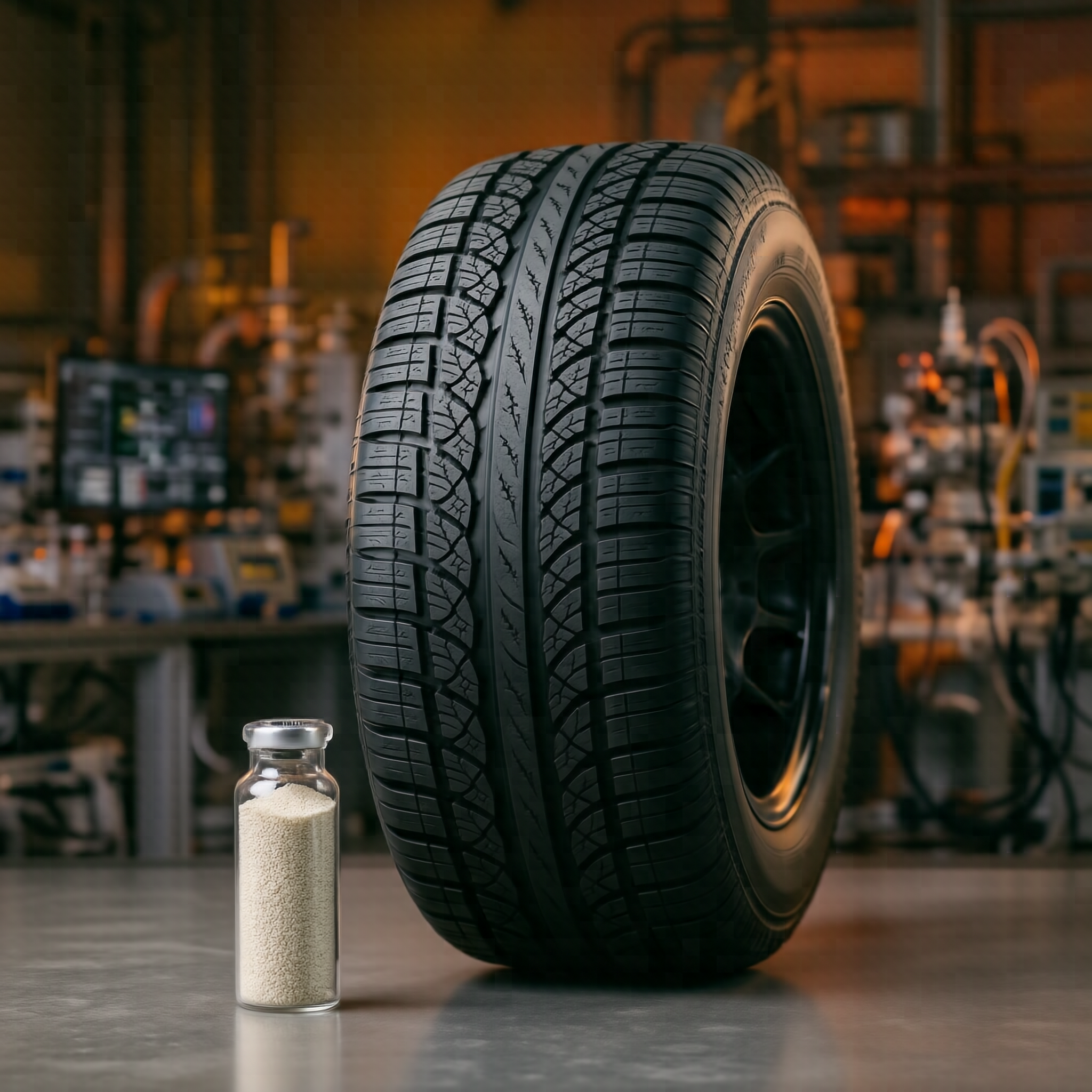
The race to replace 6PPD is moving from a niche research question toward a major issue for the global tire and rubber supply chain. The chemical has long played a critical role as an antiozone agent, helping rubber resist degradation caused by ozone exposure and extending the functional life of tires.
The problem comes after 6PPD performs its protective role. Its transformation into a breakdown product has raised serious environmental concerns because the resulting compound can be highly toxic to salmon and other aquatic organisms. For tire manufacturers, chemical suppliers and procurement teams, the challenge now involves finding an alternative that can protect rubber just as effectively while reducing environmental harm.
Why 6PPD Matters to the Global Tire Industry
6PPD belongs to a group of rubber additives that protect tire compounds from ozone and oxidation. Tire surfaces encounter oxygen, ozone, sunlight, heat and mechanical stress throughout their service life, creating multiple pathways for rubber deterioration.
Without effective protection, rubber can develop cracks that weaken tire performance and shorten product life. This makes antiozonants an important part of tire formulation rather than a minor additive that manufacturers can easily remove.
For procurement teams, that creates a difficult replacement equation. A potential alternative needs to provide more than a favorable environmental profile. It must also fit established rubber-processing systems and maintain the performance standards expected from modern tires.
The Environmental Pressure Behind 6PPD Replacement
The central issue surrounding 6PPD is not simply its use in tires. The concern focuses on what happens after the chemical reacts with ozone and forms a transformation product that can enter the environment through tire wear particles and runoff.
This has made the tire sector a focus of environmental research and regulatory attention. The challenge becomes particularly significant near waterways where runoff from roads can carry tire-related contaminants into aquatic ecosystems.
For chemical traders and buyers, the environmental dimension is changing how rubber additives may be evaluated. Performance, regulatory positioning and environmental impact are increasingly connected procurement considerations.
The shift also creates an opportunity for chemical producers developing alternatives that can meet tire manufacturers' technical requirements without creating the same environmental concern.
What Makes Finding a 6PPD Alternative Difficult
Replacing an established rubber additive requires much more than identifying a molecule with similar protective properties. Tire formulations involve tightly controlled combinations of polymers, fillers, sulfur systems, accelerators, stabilizers and other additives.
A replacement must work within that formulation without creating new problems during processing or use. Manufacturers also need confidence that a new additive can perform consistently across different tire types and operating conditions.
Several factors make the transition particularly demanding:
Ozone protection: The alternative must defend rubber against ozone-related cracking over the expected service life of the tire.
Oxidation resistance: Tire compounds face heat and oxygen as well as ozone, so a replacement may need broader protection against degradation.
Processing compatibility: A new chemical must work within existing mixing, curing and manufacturing processes without disrupting production efficiency.
Long-term performance: Tire makers need evidence that protection remains effective under demanding road, weather and storage conditions.
Commercial scalability: Even a technically strong candidate has limited value if suppliers cannot produce it consistently at industrial scale.
These requirements explain why the transition could take time even as pressure to find alternatives increases.
Emerging Alternatives Enter the Race
Research into 6PPD alternatives is expanding as chemical developers and rubber researchers look for ways to combine tire durability with improved environmental performance. Several candidate approaches are being explored, although the market still faces a critical question: can alternatives reach commercial readiness quickly enough?
The search is not simply about replacing one chemical with another. Developers must consider how candidate additives behave inside complex rubber formulations and how their degradation products interact with the surrounding environment.
That creates a broad development pathway involving:
New antioxidant and antiozonant chemistries designed to provide protection with a lower environmental burden.
Modified rubber formulations that may reduce dependence on conventional protection systems.
Alternative additive combinations that divide protective functions among several ingredients.
Materials designed to reduce the formation or environmental persistence of harmful transformation products.
For chemical suppliers, this emerging field could create a new specialty market. Producers that demonstrate reliable performance, scalable manufacturing and a clear environmental advantage may gain attention from global tire manufacturers.
Why Commercial Readiness Could Be the Biggest Hurdle
The strongest technical candidate does not automatically become a viable replacement. Tire manufacturers operate highly optimized production systems, and changing a core additive can affect formulation costs, processing behavior and finished-product performance.
Manufacturers also need extensive testing before introducing a new material across major product lines. This can include laboratory evaluation, formulation trials and long-duration performance testing.
That means the industry could face a gap between scientific progress and commercial deployment. C&EN has raised the question of whether emerging alternatives will become ready quickly enough to meet the growing pressure around 6PPD.
For buyers, this distinction matters. A chemical may appear promising during research while remaining years away from dependable commercial supply.
Procurement Challenges for Rubber Chemical Buyers
The transition could reshape purchasing strategies across the rubber chemical supply chain. Buyers will need to assess not only today's availability but also whether a supplier can support long-term production requirements.
Procurement teams evaluating emerging antiozonant technologies should pay close attention to:
Technical documentation: Request clear information on rubber compatibility, recommended dosage and performance testing.
Supply capacity: Determine whether the producer can support pilot quantities today and larger commercial volumes later.
Consistency between batches: New additives must deliver predictable performance if manufacturers plan to integrate them into standardized formulations.
Total formulation economics: Compare the full cost impact rather than focusing only on the price per kilogram of the replacement chemical.
Environmental profile: Examine the chemical's degradation behavior and potential impact rather than assuming that a new additive is automatically a safer option.
Early supplier engagement can help procurement teams understand which alternatives are moving beyond laboratory development and toward industrial production.
The Impact on Chemical Trading and Global Supply Chains
A successful move away from 6PPD could create new trade flows for specialty rubber additives. Producers with access to advanced chemical manufacturing capabilities may find opportunities to supply tire makers and compounders seeking alternatives.
At the same time, established 6PPD supply chains are unlikely to disappear immediately. The chemical remains important to tire performance, and manufacturers cannot switch formulations simply because a replacement candidate has entered the market.
This creates a potentially complex transition period where traditional antiozonants and emerging alternatives may coexist. Chemical traders can support customers during this phase by maintaining access to established materials while monitoring new technologies entering commercial supply.
For importers and exporters, product qualification will become especially important. A buyer may need samples, technical documentation and formulation data before considering a new supplier for production-scale purchasing.
What Tire Manufacturers Need From Alternative Suppliers
Chemical producers seeking a position in the emerging market will need to demonstrate more than novelty. Tire manufacturers require evidence that a new additive can solve a real formulation problem without introducing unacceptable commercial or technical risks.
The most attractive suppliers are likely to combine:
Consistent industrial production capabilities
Strong technical support for rubber compounders
Reliable international logistics
Clear product specifications
Competitive long-term economics
Evidence supporting environmental performance
This could favor suppliers that treat the transition as a technical partnership rather than a simple commodity transaction.
For chemical traders, the opportunity also extends beyond selling a product. Buyers may increasingly value suppliers that can identify emerging materials, arrange samples and connect them with manufacturers capable of supporting qualification programs.
Market Outlook for 6PPD and Its Alternatives
The replacement race is likely to develop gradually rather than through a single immediate substitution event. 6PPD remains deeply integrated into tire manufacturing, while alternatives must prove that they can match its protective role under real-world conditions.
The market could therefore move through several stages. Research candidates may first gain attention, followed by laboratory testing, pilot production and customer qualification before broader commercial adoption.
The pace will depend on how quickly developers can solve the technical and commercial barriers surrounding replacement chemistry. Environmental pressure may accelerate research, but manufacturers still need dependable performance and supply before making large-scale formulation changes.
For the chemical trading sector, this makes 6PPD alternatives a market worth monitoring closely. Early developments could influence future demand for specialty rubber additives, supplier relationships and international trade patterns.
What Buyers Should Do Now
Procurement teams do not need to wait for a complete replacement market before preparing. The most practical strategy involves tracking emerging alternatives while maintaining a reliable supply of established rubber chemicals required for current production.
Buyers should consider building a supplier pipeline that includes both established producers and developers working on next-generation antiozonant technologies. This can reduce the risk of scrambling for qualified materials if regulatory, customer or environmental requirements change rapidly.
It also makes sense to evaluate suppliers based on their ability to provide technical cooperation rather than price alone. The cheapest additive is not necessarily the lowest-cost choice if it requires major reformulation, creates processing problems or cannot scale with production demand.
The race to replace 6PPD therefore represents both a challenge and a commercial opening for the rubber chemicals market. Manufacturers need effective protection, environmental concerns are pushing the industry toward change and chemical suppliers have an opportunity to develop materials that satisfy both priorities.
For traders and procurement professionals, the key is to follow the technology pipeline while assessing suppliers through performance, scalability, consistency and long-term commercial viability. Ready to source 6PPD from verified global suppliers? Explore competitive offers on our platform today.