INEOS Idles Hull Acetyls Plants as European Gas Costs Hit 12× US Levels
INEOS Idles Hull Acetyls Plants as European Gas Costs Hit 12× US Levels
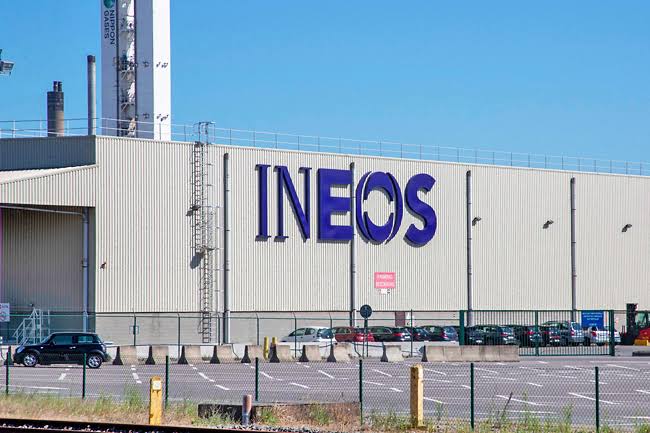
INEOS has idled all three of its world-scale acetyls plants at Hull in the United Kingdom. The decision, reported in late September 2026, is attributed primarily to natural gas costs that have reached approximately twelve times equivalent US levels, rendering continued operation uneconomic under current market conditions. The move is one of the clearer recent examples of cost-driven capacity rationalisation in Europe’s chemical industry, where elevated energy prices continue to force difficult choices on older or energy-intensive assets.
Acetyls—acetic acid and related derivatives—are fundamental building blocks for vinyl acetate monomer, solvents, PTA-related chains and a wide range of downstream formulations. Taking three world-scale units offline simultaneously removes a meaningful block of European supply and signals that even large, integrated producers are prepared to halt production rather than absorb sustained negative margins.
The Hull Decision in Context
Hull has long been a significant European acetyls hub. Idling the full slate of world-scale plants is not a minor rate cut; it is a temporary or open-ended cessation of production driven by variable cost. When gas prices diverge so sharply from those available to US Gulf Coast competitors, European operators face an immediate cash-cost disadvantage that product prices have been unable to offset. INEOS’s action reflects that arithmetic.
The timing coincides with a broader pattern of European plant closures, mothballing and deferred restarts across several chains. High energy and carbon costs, combined with global overcapacity in many basic chemicals, have eroded the competitiveness of a growing list of European assets.
Energy Cost as the Binding Constraint
Natural gas is both a fuel and, in some acetyls and related processes, a direct or indirect feedstock input. A twelve-fold cost differential versus the United States is extreme by historical standards and leaves little room for efficiency improvements or short-term hedging to close the gap. Until European gas markets normalise or policy measures materially reduce the industrial energy burden, similar decisions are likely at other gas-intensive sites.
The Hull idling therefore functions as a real-time indicator of how severe the European cost gap has become for energy-sensitive chemical production.
Supply and Market Implications
Removing three world-scale acetyls plants from the European operating slate tightens regional availability of acetic acid and downstream acetyls. Buyers that relied on Hull will need to secure alternative European or import sources, potentially at higher delivered cost and with longer logistics chains. Global acetyls balances are not uniformly tight, so the impact will be felt most acutely in European and nearby markets rather than as a worldwide shortage.
Competitors with lower-cost positions—particularly those with US or Middle East energy advantages—stand to gain relative market share or pricing power in regions that Hull previously served.
Part of a Wider European Rationalisation
INEOS’s move sits alongside other recent European capacity actions: cracker closures or rate reductions, delayed restarts, and selective exits from commodity chains. The common thread is structural cost disadvantage rather than purely cyclical demand weakness. Companies are choosing to idle or close assets that cannot cover cash costs, preserving capital and management attention for more competitive positions.
This process is gradually reshaping the European chemical footprint—fewer operating tonnes in high-cost locations, greater reliance on imports for some basic intermediates, and a shift in investment toward specialties, circular projects or regions with better energy economics.
What Operators and Buyers Should Watch
Key variables going forward include European gas price trajectories, any policy support for energy-intensive industry, and the duration of the Hull outage. A relatively swift restart would suggest the decision was tactical; a prolonged shutdown would point to a more structural reassessment of the site’s role. Parallel announcements from other European producers will indicate whether Hull is an isolated case or the leading edge of a broader wave of idling.
Outlook
INEOS’s decision to idle its three world-scale acetyls plants at Hull because of gas costs running at roughly twelve times US levels is a stark illustration of Europe’s chemical cost crisis in action. It removes significant acetyls capacity from the regional market and reinforces the message that energy economics, not only demand, are now deciding which European plants run. Until the gas-cost gap narrows materially, further rationalisation of energy-intensive chemical assets across the continent remains a central risk—and a central feature—of the industrial landscape.
Sources

Basic Chromium Sulphate
Found this useful?