INEOS-Led Greensand Opens the EU's First Full-Scale Permanent CO₂ Storage Site
The Greensand CO₂ storage project has entered commercial operation in Denmark, marking a major development for Europe's carbon capture and storage infrastructure. Led by INEOS Energy with Harbour Energy and Nordsøfonden, the project began operations on September 18, 2026, with an initial capacity of up to 400,000 tonnes of CO₂ per year.
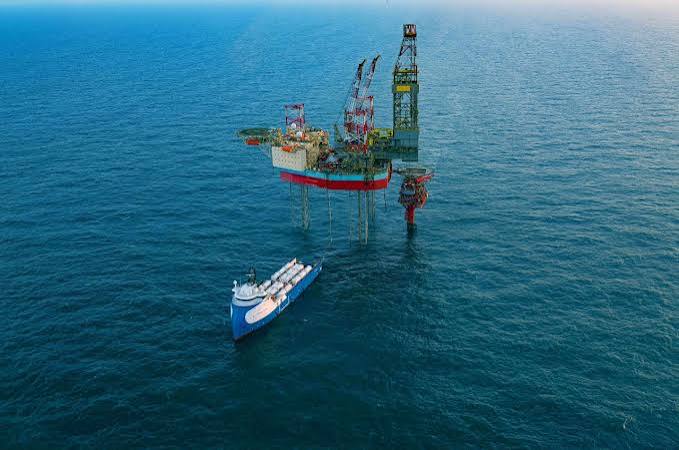
The facility stores liquefied CO₂ in the Nini West reservoir, a depleted oil field approximately 250 kilometres offshore in the Danish North Sea and around 1,800 metres beneath the seabed. The project has been designed to expand toward 4 to 8 million tonnes of annual storage capacity as additional CO₂ volumes become available.
Greensand Moves CCS From Demonstration to Commercial Operation
Greensand builds on earlier Project Greensand work that demonstrated the technical feasibility of capturing, transporting and storing CO₂ offshore. The 2023 demonstration involved CO₂ captured in Belgium, transported across borders and stored beneath the Danish North Sea.
The new phase moves beyond demonstration activity by establishing an operational carbon storage value chain. This includes CO₂ capture, liquefaction, road transport, temporary storage at the Port of Esbjerg, marine transportation and permanent offshore injection.
For industrial buyers, this matters because carbon storage increasingly depends on the availability of an integrated logistics network rather than storage geology alone.
How the Greensand CO₂ Storage Chain Works
The Greensand model connects several stages into one supply chain. CO₂ from the first commercial sources, primarily Danish biomethane plants, enters the system after capture and is liquefied for transportation.
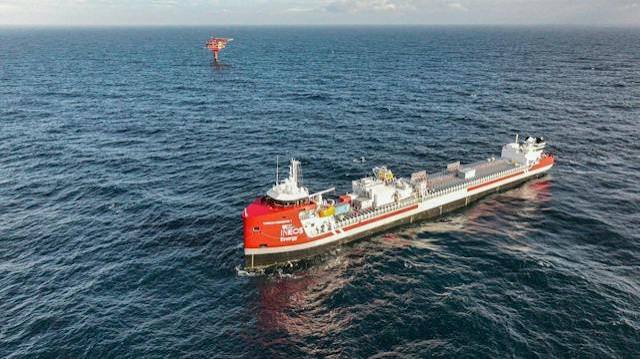
The liquefied CO₂ then moves by truck to a dedicated terminal at Port Esbjerg. From there, the project ships the material offshore aboard Carbon Destroyer 1, a purpose-built CO₂ carrier, before injecting it into the Nini West reservoir.
This structure provides a practical example of how future carbon management networks could operate across national and industrial boundaries.
Why the 400,000-Tonne Initial Capacity Matters
Greensand's first commercial phase can store up to 400,000 tonnes of CO₂ annually. The project has been designed with substantially higher capacity in mind, with potential expansion toward 4 to 8 million tonnes per year as the supply of captured CO₂ increases.
The expansion opportunity is particularly important for industrial sectors where eliminating residual emissions remains difficult. Cement, chemicals, refining, waste processing and other energy-intensive industries can generate concentrated CO₂ streams that may require permanent storage alongside other decarbonisation measures.
The European Commission's CINEA describes Greensand as Europe's first commercial-scale, fully integrated value chain for CO₂ capture, transport and permanent offshore storage. The project aims to store approximately 2.4 million tonnes of CO₂ over eight years in the Nini West field under its supported development plan.
A New Supply Chain for Industrial Carbon Management
The launch creates a new commercial service around permanent CO₂ storage. Industrial emitters can increasingly view carbon management as a supply-chain requirement involving capture equipment, conditioning, transportation, storage terminals and long-term geological storage.
This creates several procurement categories for chemical and industrial companies:
CO₂ capture systems: Facilities need equipment and process materials capable of separating CO₂ from industrial gas streams.
Compression and liquefaction: Captured CO₂ must meet transportation requirements before it enters the logistics network.
Storage and transport infrastructure: Terminals, pipelines, ships and injection facilities create demand for specialised industrial equipment and materials.
Monitoring and verification: Permanent storage requires technical monitoring and verification of the underground reservoir and injection operations.
Long-term storage contracts: Emitters need predictable access to storage capacity when designing carbon-management strategies.
For chemical producers, access to permanent storage could become increasingly relevant as carbon costs and emissions requirements influence investment decisions.
The Role of Depleted Offshore Reservoirs
Greensand stores CO₂ in the Nini West reservoir, a depleted oil field located beneath the Danish North Sea. Repurposing existing offshore energy infrastructure can provide a potential pathway for developing carbon storage while making use of established geological and operational knowledge.
Harbour Energy, which holds a 40% interest in Greensand, said the project demonstrates how existing offshore infrastructure can support carbon storage.
The reservoir has undergone integrity testing by the Geological Survey of Denmark and Greenland, while Greensand has received safety approval from independent verifier DNV.
For buyers and project developers, the approach highlights the importance of storage-site qualification. Geological capacity alone does not create a commercial storage service. Operators also need injection infrastructure, monitoring systems, transportation links and regulatory approval.
CO₂ Shipping Becomes Part of the European Supply Chain
One of the most important features of Greensand is its use of marine transportation. Instead of requiring every emitter to connect directly to an offshore storage reservoir, liquefied CO₂ can move through a dedicated logistics network.
The project uses Carbon Destroyer 1 to transport CO₂ from Esbjerg to the offshore storage location. This creates a model that could potentially accommodate CO₂ from multiple capture sites as storage capacity expands.
For chemical traders and logistics companies, this opens another area of potential industrial activity. CO₂ handling requires specialised storage tanks, loading systems, transportation equipment and safety procedures, creating opportunities across the wider carbon-management supply chain.
European CCS Capacity Could Expand Through Connected Networks
The European Commission has positioned Greensand as an example of infrastructure that can be replicated and scaled across Europe. The project received €41 million from the EU Innovation Fund to demonstrate industrial-scale transport and permanent storage of captured CO₂.
Greensand's future expansion depends partly on the availability of additional captured CO₂. The project partners intend to increase storage volumes as more capture projects come online, potentially connecting Greensand with a broader European CO₂ transport and storage network.
This network approach could eventually allow industrial companies in different locations to access offshore storage without developing individual storage sites themselves.
What Greensand Means for Chemical Industry Buyers
The development has implications beyond the carbon-storage sector. Chemical manufacturers and other industrial emitters may increasingly need to evaluate permanent CO₂ storage alongside energy efficiency, electrification, renewable energy and process changes.
For procurement teams, several factors deserve attention:
Storage availability: Buyers should assess whether future CO₂ storage capacity will match their planned emissions-management requirements.
Transport infrastructure: Storage is only useful when captured CO₂ can reach the injection site reliably and at an acceptable cost.
CO₂ specifications: Captured CO₂ may require treatment and conditioning before it can enter a transportation or storage system.
Contract structures: Long-term storage agreements could become an important part of industrial carbon-management planning.
Expansion schedules: Greensand's planned increase from 400,000 tonnes per year toward several million tonnes could create additional capacity for future industrial customers.
These considerations could become increasingly important as European industries develop strategies for managing residual emissions.
What to Watch as Greensand Scales
The initial commercial operation is only the first stage of the project's longer-term development. The ability to move from hundreds of thousands of tonnes toward several million tonnes annually will depend on additional CO₂ supply, infrastructure investment and demand for permanent storage.
The project also provides a commercial reference point for other European CCS developments. CINEA describes the integrated value chain as an important demonstration of how capture, transport and permanent storage can work together at industrial scale.
For chemical traders, the wider opportunity lies in the supporting supply chain. As more carbon capture facilities connect with storage networks, demand could increase for industrial gases, process equipment, specialised materials, transport services and carbon-management technologies.
The Bottom Line for Procurement Teams
Greensand's move into commercial operation establishes a new piece of European carbon infrastructure, with an initial storage capacity of up to 400,000 tonnes of CO₂ per year and potential expansion to 4 to 8 million tonnes annually.
For chemical and industrial buyers, the key development is the emergence of an integrated CCS supply chain rather than a standalone storage facility. As more European emitters pursue permanent CO₂ management, access to reliable capture, transportation and storage services could become an increasingly important procurement consideration.
Ammonia Anhydrous
Found this useful?