PI Advanced Materials Wins KPCA Award for World-First 4µm Unstretched Polyimide Film
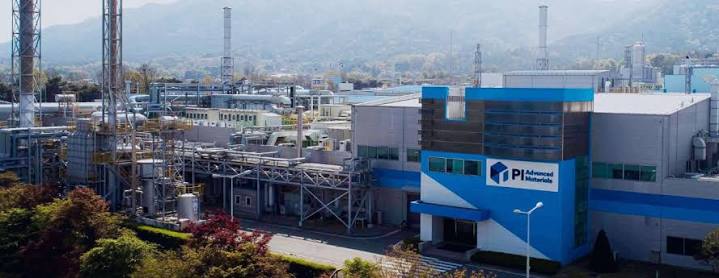
PI Advanced Materials has received the 2026 KPCA Industry Award for its contribution to the mass production of what it describes as the world's first 4µm ultra-thin polyimide film produced through an unstretched process.
The technology highlights an important trend in South Korea's specialty chemicals sector: advanced materials are increasingly competing on precision, performance, and miniaturization, rather than simply production volume.
The 4µm film was commercialized in 2024 and is approximately one-third the thickness of conventional 12.5µm polyimide film while maintaining comparable mechanical, thermal, and adhesion performance.
Why 4µm Polyimide Matters
Polyimide films are important materials for applications requiring a combination of thermal stability, mechanical performance, insulation, and thin-film processing.
Reducing film thickness from approximately 12.5µm to 4µm can support manufacturers pursuing:
Thinner electronic components
Lighter devices
Greater packaging density
Improved space utilization
More compact flexible circuits
Advanced semiconductor packaging
The technology is therefore relevant to industries where material thickness can directly influence product design.
The Unstretched Manufacturing Advantage
The significance of PI Advanced Materials' development is not simply the final thickness.
Producing ultra-thin film through an unstretched process requires precise control over polymerization, film casting, winding, and thickness uniformity.
PI Advanced Materials says its development involved optimization of a T-DIE-based film-casting process and precise process-control technologies. The company also reports low and consistent loop stiffness, supporting improved processability.
This illustrates how advanced-material competitiveness increasingly depends on manufacturing know-how as much as on the underlying polymer chemistry.
Electronics Applications
The 4µm technology is positioned for applications across several advanced industries.
Potential applications include:
Flexible printed circuit boards (FPCBs)
Displays
Semiconductor packaging
Electric-vehicle batteries
FPCBs are particularly relevant because thinner substrates can support increasingly compact and lightweight electronic designs.
For semiconductor packaging and displays, the technology similarly aligns with the broader industry movement toward thinner, denser, and higher-performance components.
South Korea's Advanced-Materials Position
The award also highlights South Korea's role in advanced electronic-material development.
South Korea has a significant ecosystem spanning:
Semiconductors
Displays
Batteries
Flexible electronics
Electronic components
Specialty materials
This creates a strong domestic customer base for high-performance materials.
For specialty chemical producers, proximity to advanced electronics manufacturers can support faster customer qualification, application development, and co-development opportunities.
Competitive Intelligence
The PI Advanced Materials development provides several indicators for tracking advanced-material markets.
1. Thickness Reduction
Monitor how material suppliers reduce thickness while maintaining performance.
2. Process Innovation
Manufacturing improvements can become as strategically important as new chemical formulations.
3. Customer Qualification
Advanced electronics materials often require extensive testing and qualification before commercial adoption.
4. Application Expansion
A material initially developed for FPCBs may find opportunities in displays, semiconductor packaging, batteries, and other high-performance applications.
5. R&D Intensity
Continuous investment in polymerization, casting, and process control can create meaningful barriers to competition.
Procurement Considerations
For electronics and advanced-material buyers, purchasing decisions should extend beyond price.
Important criteria include:
Thickness consistency
Thermal performance
Mechanical properties
Adhesion performance
Processability
Production scalability
Quality consistency
Technical support
Supply reliability
For ultra-thin materials, manufacturing consistency can be particularly important because small variations may affect downstream processing and product performance.
Why This Matters for Specialty Chemicals
The PI Advanced Materials case illustrates a broader shift in specialty chemicals.
Value increasingly comes from materials that solve a specific engineering problem — in this case, achieving extreme thinness while maintaining key performance characteristics.
That can create stronger differentiation than conventional commodity chemistry and potentially support higher-value customer relationships.
The award also demonstrates how manufacturing process expertise can become part of a specialty chemical company's competitive moat.
Looking Ahead
PI Advanced Materials' 4µm unstretched polyimide film reflects the direction of advanced materials markets: thinner, lighter, more precise, and increasingly application-specific.
As electronics manufacturers continue pursuing higher density and smaller form factors, demand for materials capable of meeting increasingly narrow performance specifications is likely to remain strategically important.
For specialty chemical companies, the broader lesson is that competitive advantage can increasingly come from the combination of polymer chemistry, manufacturing precision, process control, and customer application expertise.
Key Takeaways
PI Advanced Materials received the 2026 KPCA Industry Award for its contribution to 4µm unstretched polyimide film mass production.
The film is approximately one-third the thickness of conventional 12.5µm PI film while maintaining comparable mechanical, thermal, and adhesion performance.
The technology targets FPCBs, displays, semiconductor packaging, and EV batteries.
Precise film casting and process control are central to the technology.
The development highlights the growing value of highly differentiated advanced materials in South Korea's specialty chemical sector.
Ultra-thin, application-specific materials can create competitive advantages beyond traditional chemical scale.
Sources
: https://chemxplore.com/news/pi-advanced-materials-polyimide-film-award
Found this useful?