The Contradiction Index: Tracking the Gap Between Diplomatic Signals and Physical Reality in Hormuz
The Contradiction Index: Tracking the Gap Between Diplomatic Signals and Physical Reality in Hormuz
The most dangerous mistake procurement professionals can make during geopolitical crises is believing headlines faster than reality.
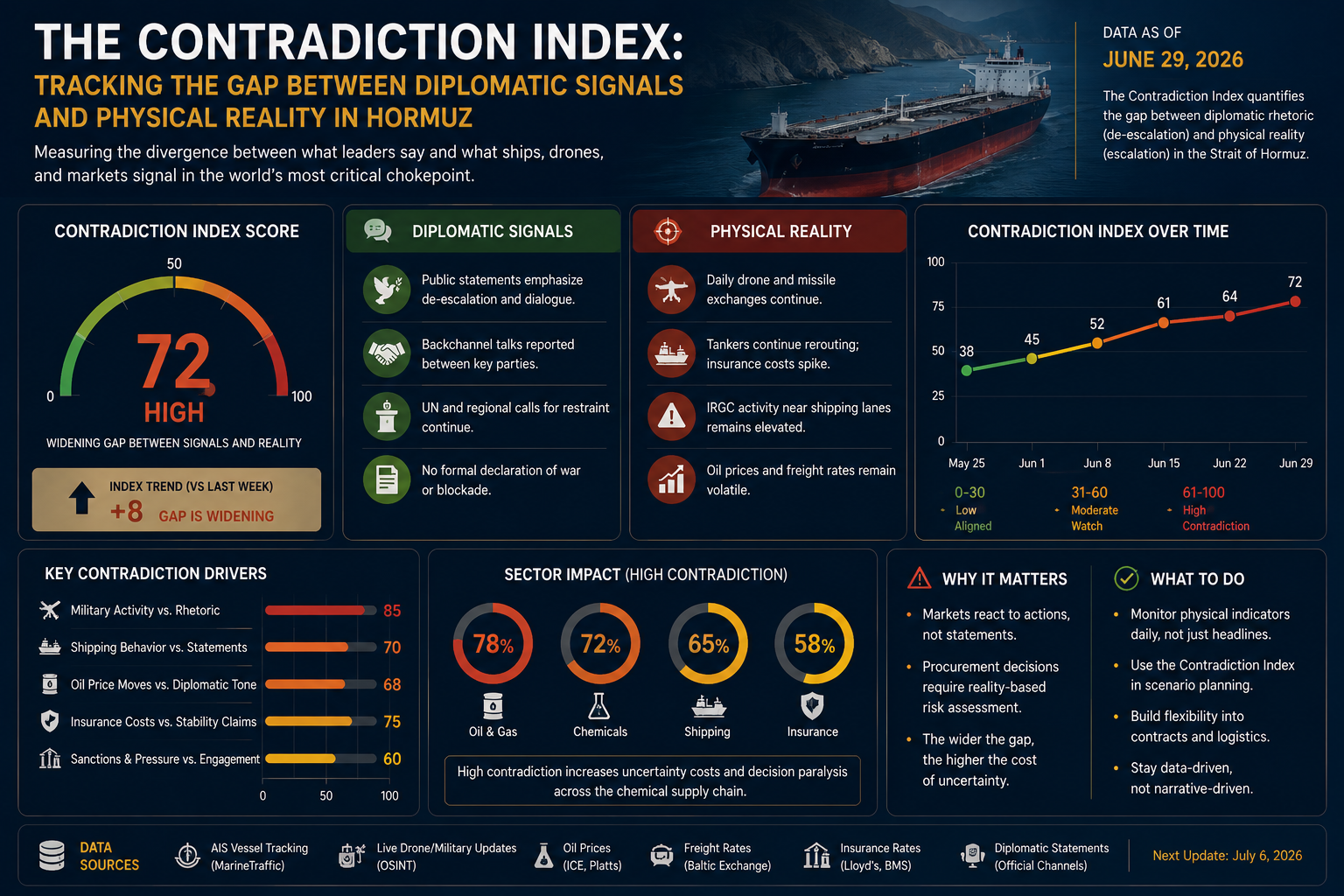
On July 1, 2026 — Day 123 of the Hormuz crisis — global chemical markets are experiencing the widest disconnect yet between diplomatic optimism and physical supply chain reality. Political leaders are signaling progress, negotiations are accelerating, and public statements increasingly suggest de-escalation is underway.
Yet the shipping data tells a completely different story.
This widening gap between what officials say and what the physical logistics system shows has quietly become the single most important intelligence framework for procurement professionals managing chemical supply risk throughout 2026.
We call this framework The Contradiction Index.
Simply put: the gap between diplomatic signaling and physical supply chain reality.
For chemical buyers, understanding this gap matters because procurement decisions made using political headlines rather than operational data often lead directly to incorrect sourcing assumptions, delayed purchasing decisions, and unnecessary supply chain exposure.
How Procurement Professionals Should Read Diplomatic Signals Versus Physical Market Data

On the diplomatic side, the market appears increasingly positive. Several developments suggest de-escalation is progressing. Recent political signals include: President Trump claiming Iran has requested a Doha meeting Senior Iranian officials describing negotiations as “intense and generally positive” The Bürgenstock petrochemical export waiver framework formally remaining in effect Oman confirmed as the primary diplomatic back-channel mediator A multinational naval coalition forming to support shipping stabilization efforts If viewed in isolation, these signals imply the crisis is entering final resolution. But physical reality remains far less encouraging. The operational shipping system continues showing severe disruption. Current logistics data shows:
Only 5 ships transiting Hormuz per day Normal pre-crisis daily transit volume averaged approximately 93 vessels per day War risk insurance remains roughly 8x pre-crisis pricing Six major P&I clubs have withdrawn marine coverage entirely Approximately 485 vessels remain anchored waiting for movement clarity Brent crude at $73.05 is stable — but supply flows remain nowhere near normal operational levels This creates the contradiction. Diplomacy suggests resolution. The physical supply chain shows continued paralysis. This is precisely why procurement professionals need structured decision frameworks. The Contradiction Index works by separating information into two layers.
Layer 1: Diplomatic Signal Layer (Low Reliability for Procurement Decisions) Diplomatic headlines influence sentiment. But they do not immediately restore physical supply. Monitor: Political negotiation announcements Government public statements Diplomatic meeting confirmations Military de-escalation announcements Treaty frameworks and negotiation roadmaps These signals matter for long-term direction. But they do not mean immediate supply normalization.
Layer 2: Physical Reality Layer (Highest Reliability for Procurement Decisions) Physical market data determines actual supply chain conditions. Monitor: Daily vessel transit counts AIS vessel movement data Marine insurance pricing changes Active P&I insurance market participation Port congestion and anchored vessel counts Export terminal loading activity Actual cargo movement confirmation These signals determine whether supply has actually recovered. Not whether officials hope it will recover. The lesson from the Hormuz crisis has been consistent. Political optimism often moves faster than physical infrastructure recovery. The smartest procurement teams throughout H1 2026 were the ones trusting operational data rather than diplomatic narratives. Several information sources have consistently proven highest value: Highest Trust Sources AIS vessel tracking systems Kpler cargo movement intelligence IMO Updates maritime operational bulletins Xeneta Freight Analytics freight benchmark data Marine insurance market updates from active P&I clubs Lower Trust Sources for Immediate Procurement Decisions Political press conferences Diplomatic framework announcements Government “progress” statements without operational confirmation Military de-escalation claims without shipping recovery evidence The practical procurement rule is simple. Do not assume supply normalization until physical market data confirms it. Right now, July 1 presents the clearest contradiction of the entire crisis. Diplomats are speaking as if resolution is close. The shipping system is behaving as if the crisis remains active. That gap matters. Because procurement teams making decisions based on diplomacy alone risk assuming market recovery weeks before supply chains are physically ready to deliver. The crisis will eventually end. But physical recovery always lags political announcements. And in global chemical procurement, operational truth matters far more than political optimism.
Found this useful?