A Mexican Air Separation Project Hits a Quiet but Important Milestone
A Mexican Air Separation Project Hits a Quiet but Important Milestone
A major air separation project in Mexico has reached a milestone that may not attract the same attention as a new megaproject announcement, but is important for the project's eventual operation.
The 50,000 Nm³/h Cryoinfra air separation unit (ASU) installation project has achieved intermediate handover, marking progress from construction and equipment installation toward completion and commissioning. The project is being jointly delivered by CNCEC-CC6 and Hangyang Group and represents their first overseas project undertaken together.


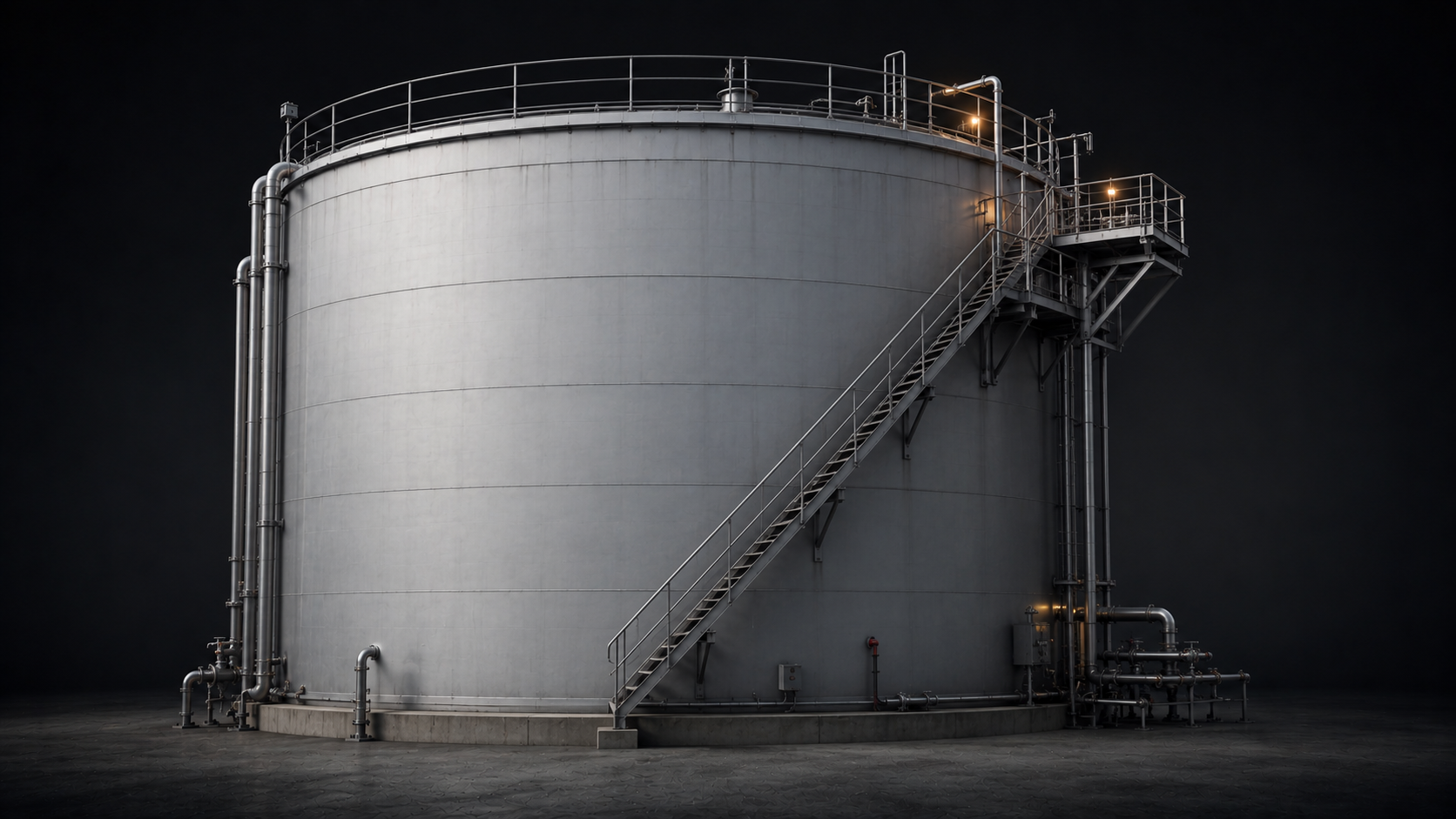
Image: Representative air separation unit equipment and industrial gas infrastructure.
What Is an Air Separation Unit?
An air separation unit separates atmospheric air into its main components, primarily:
Oxygen
Nitrogen
Argon
Industrial-scale ASUs commonly use cryogenic technology. Air is cooled to extremely low temperatures until it becomes liquid, after which the different components can be separated based on their different boiling points.
The resulting gases are essential for industries ranging from steelmaking and chemicals to refining, healthcare and energy.
The Mexican Project
The Cryoinfra project involves the installation of a 50,000 Nm³/h air separation cold box and an atmospheric storage tank.
The project began in May 2024, with installation activities continuing into 2026. According to project information published in September 2026, the installation has now reached intermediate handover.
This is an important construction milestone because handover indicates that a defined portion of the installation work has been completed and transferred from the construction phase toward the next stage of project execution.
Why the Cold Box Matters
The cold box is one of the most recognizable and technically important pieces of equipment in a cryogenic air separation plant.
It contains key low-temperature equipment used to separate air into its individual components.
Because the separation process operates at extremely low temperatures, the cold box needs specialized insulation and carefully controlled process equipment.
Installing such equipment is therefore considerably more complicated than simply placing a conventional storage tank or process vessel at an industrial site.
From Installation to Operation
Intermediate handover does not necessarily mean that the entire ASU is commercially operational.
Several activities normally remain between mechanical completion and full operation, including:
Completion of remaining construction activities
Equipment inspection
Piping and electrical checks
Instrumentation testing
Commissioning
Cold testing and process startup
Performance verification
The exact remaining schedule for the Cryoinfra project will depend on the project's commissioning and acceptance requirements.
A First Overseas Collaboration
The project has another significance for its contractors.
According to project information, the Mexican installation is the first overseas project jointly undertaken by CNCEC-CC6 and Hangyang Group.
For companies involved in industrial-gas equipment and engineering, international projects can provide an opportunity to establish relationships with new customers and demonstrate their ability to deliver complex cryogenic infrastructure outside their domestic markets.
Why Air Separation Capacity Matters
ASUs are often described as supporting infrastructure because they do not necessarily produce the final product that consumers see.
But oxygen and nitrogen can be fundamental to large industrial processes.
Oxygen can support combustion, gasification and chemical reactions, while nitrogen is widely used for inerting, blanketing, purification and other industrial applications.
In large chemical or energy projects, a reliable supply of industrial gases can therefore be essential to maintaining continuous production.
Mexico’s Growing Industrial-Gas Market
The project comes against a backdrop of growing investment in Mexico's industrial and chemical infrastructure.
One example is Pacifico Mexinol, a major methanol project planned in Sinaloa. Its proposed configuration includes an ASU as part of the wider production complex. The International Finance Corporation describes the planned facility as including air separation units, hydrogen production and other major process infrastructure.
Separately, SIAD was selected in 2025 to provide a 3,500 metric-ton-per-day oxygen ASU for Pacifico Mexinol. The unit is intended to provide oxygen for gasification and carbon-capture processes. These projects illustrate how air separation technology is becoming increasingly important within Mexico's expanding industrial and low-carbon infrastructure.
The Significance of a “Quiet” Milestone
Major industrial projects usually receive the most attention when companies announce investments, sign contracts or reach final investment decisions.
Construction milestones such as intermediate handover are less visible—but they can be just as important.
For the Cryoinfra project, reaching intermediate handover means that the 50,000 Nm³/h ASU installation has moved another step toward completion. The next major focus will be commissioning and demonstrating that the installed equipment can perform according to its required specifications.
If successful, the project will add another piece of advanced industrial-gas infrastructure to Mexico's growing manufacturing and chemical ecosystem.
Sources

Hydrochloric Acid (33%) - India
Found this useful?