
Again's AI Molecule Design Platform Aims to Compress Discovery-to-Scale Timelines
Again says the AI platform it now controls following its Genomatica acquisition will dramatically compress the timeline from de novo pathway design to industrial execution. That is a significant claim in an industry where getting a lab-stage molecule to commercial-scale production has historically taken years, and where far more projects fail during scale-up than during initial discovery.
The claim is worth examining carefully, both for what the combined platform actually does and for how much of it is proven versus still aspirational.
What the Combined Platform Actually Brings Together
Again describes the acquisition as creating an end-to-end AI and computation stack spanning the full arc of biomanufacturing, from initial molecule discovery through commercial deployment.
Genomatica contributes two decades of in-silico pathway and strain design experience, along with predictive machine learning analytics built up across nearly 30 years of fermentation process development.
Again contributes its own AI-driven bioprocess design suite, focused on scale-up modeling and the engineering execution needed to move a design from simulation into a working plant.
The combined data set spans experimental results, structural insights and development outcomes collected across Genomatica's entire commercial history, which now feeds directly into Again's computational engines.
Again has framed the distinction this way: simulating a molecule is the easier problem. Scaling it into reliable industrial production is the harder one, and that is the piece the company says its engineering and execution expertise addresses.
Separating the Track Record From the Forward-Looking Claim
Genomatica's technology does have a genuine commercial track record behind it. Its licensed Bio-BDO process has been running at a Novamont plant in Italy since 2016, and more recently scaled up further at Qore's Eddyville, Iowa facility, the largest plant of its kind in the world. That history demonstrates the underlying fermentation chemistry works at industrial scale.
What has not yet been demonstrated is the newly combined AI platform itself compressing a project's timeline from design to production. The acquisition only just closed, and no molecule developed under the merged computational stack has reached commercial scale yet. Again has said it is already in discussions with potential customers but has not identified which molecules are under consideration.
This distinction matters for anyone evaluating the claim. A proven fermentation process and an unproven AI acceleration layer are two different things, even when they now sit inside the same company.
Where This Fits in the Broader AI-for-Molecule-Design Trend
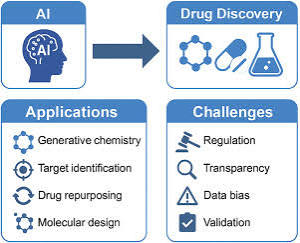
Again and Genomatica's approach sits within a wider pattern across chemistry and biotech, where AI-driven design tools are increasingly paired with experimental validation rather than replacing it outright.
In pharmaceutical protein design, AI models now enable computational exploration of vast structural possibilities before a single lab experiment takes place, cutting down the years of trial-and-error screening that used to define early discovery.
Even the most advanced generative platforms in this space still rely on human expertise to interpret results and prioritize which computationally generated candidates are actually worth synthesizing and testing.
Full automation of the discovery-to-production pipeline remains an open question across the field, not something any single company has fully achieved yet.
Again's pitch, positioning itself as a company that "designs and scales" rather than one that only simulates, is essentially a bet that combining Genomatica's design depth with its own scale-up execution closes a gap that pure AI-only labs have struggled with.
Three Business Models Riding on This Platform
Again has outlined three ways it plans to commercialize the combined platform going forward.
Licensing its technology to other manufacturers, following the same model Genomatica used with the Qore and Novamont facilities.
Codeveloping production pathways directly with commercial partners on specific molecules.
Selling chemicals produced at its own manufacturing assets, building on its existing acetic acid production in Texas.
Each of these paths depends on the platform actually delivering faster development timelines, since speed to commercial viability is the core value proposition Again is selling to potential partners and customers.
What Buyers Should Watch For
For chemical buyers and potential licensing partners evaluating claims about compressed development timelines, a few markers are worth tracking over the coming months.
Named partnerships or codevelopment deals, since Again has said discussions are underway but has not disclosed which molecules or partners are involved.
Any new facility announcement tied to a molecule developed under the newly combined platform, which would be the clearest evidence the compressed timeline claim is holding up in practice.
Comparisons to Genomatica's historical development timelines, since the company's own past projects offer a real baseline to measure any claimed improvement against.
How the platform handles feedstock flexibility, given Again's stated goal of expanding into new renewable feedstocks including sugars beyond its current CO2-based process.
The Bottom Line for Buyers Tracking This Platform
Again's claim about compressing discovery-to-scale timelines is grounded in a real combination of capabilities, decades of pathway design experience paired with hands-on scale-up execution. But the claim itself remains unproven until a molecule actually moves through the combined platform and reaches commercial production faster than Genomatica's historical projects did on their own.
Buyers evaluating Again or Genomatica as a technology partner should treat the underlying fermentation track record as established and the AI-driven speed claim as a thesis still waiting on its first real test.
Glacial Acetic Acid (99,8%) - China
Found this useful?