India Deepens Its Comprehensive Partnership With Uzbekistan
India Deepens Its Comprehensive Partnership With Uzbekistan
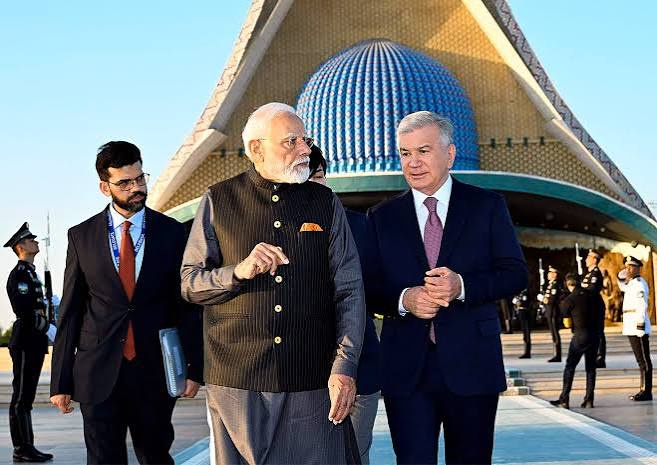
India and Uzbekistan moved their relationship to a comprehensive strategic partnership in late August 2026, formalizing a broader framework for trade, investment, critical minerals, defence, digital infrastructure and other areas of cooperation. The upgrade builds on an existing strategic partnership and sets an ambitious bilateral trade target of $5 billion annually by 2030, up from current levels of roughly $1 billion or less. The economic dimension of the relationship already displays clear complementarity: Indian exports of pharmaceuticals, machinery, chemicals and related products flow toward Uzbekistan, while cotton, natural gas, fertilizers and other commodities move in the opposite direction.
Pharmaceuticals remain a priority sector. Uzbekistan imports substantial volumes of medicines, vaccines and active ingredients, and has encouraged Indian companies to explore local manufacturing and joint ventures. Machinery, engineering goods, chemicals and agricultural technologies represent additional Indian export strengths that align with Uzbekistan’s industrialization and modernization goals. On the import side, Uzbekistan’s cotton, energy resources and fertilizer products—including potassic and nitrogenous grades—offer India diversified supply options for textile, energy and agricultural input needs.
Expanding Trade and Investment Linkages
Recent intergovernmental discussions have focused on removing non-tariff barriers, improving logistics connectivity and identifying concrete projects that can double trade volumes within a few years. Critical minerals have gained prominence on the agenda, with Uzbekistan holding reserves of tungsten, molybdenum, lithium and other materials of interest to Indian industry. Energy cooperation, including potential long-term arrangements, further broadens the economic relationship beyond traditional merchandise trade.
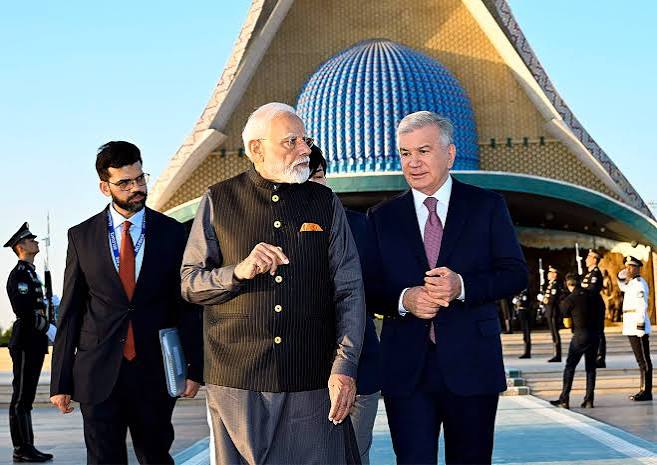
The partnership also extends into digital public infrastructure, education, defence and security coordination. These non-trade pillars reinforce the commercial track by building institutional familiarity and reducing friction for companies operating across both markets. For Indian specialty chemical and pharmaceutical exporters, the upgraded political framework improves the predictability of market access and the climate for investment in local formulation or packaging capacity.
Implications for Specialty Chemical and Fertilizer Flows
For the specialty chemicals, pharmaceutical ingredients and fertilizer marketplace, the deepening India–Uzbekistan partnership creates incremental trade and investment channels within Central Asia. Indian producers gain a clearer route into a growing market for finished and intermediate chemical products, while buyers of cotton, natural gas and fertilizers obtain an additional origin that can complement existing supply portfolios. Logistics corridors linking South Asia with Central Asia will determine how quickly the stated trade ambitions translate into higher volumes.
The elevation to a comprehensive strategic partnership therefore marks more than a diplomatic milestone. It provides a stronger political and institutional foundation for the existing exchange of pharmaceuticals, machinery and chemicals for cotton, energy and fertilizers—and for the expansion of that exchange in the years ahead.
Cedarwood oil
Found this useful?