Amogy and LOTTE Fine Chemical Sign an MoU on Green Ammonia-to-Power
Amogy and LOTTE Fine Chemical Sign an MoU on Green Ammonia-to-Power
Amogy and LOTTE Fine Chemical Partner to Advance Green Ammonia Solutions
Amogy and LOTTE Fine Chemical have signed a Memorandum of Understanding (MoU) to explore green ammonia-to-hydrogen and ammonia-to-power applications in South Korea.
Announced on September 10, 2026, the collaboration will combine LOTTE Fine Chemical's ammonia import, storage and distribution infrastructure with Amogy's ammonia-cracking and power-generation technologies.
The companies will evaluate opportunities across three main areas: hydrogen refueling infrastructure, distributed ammonia-to-power generation and marine ammonia bunkering. Specific project scopes and implementation timelines have not yet been finalized.
Combining Ammonia Infrastructure With Downstream Technology
The partnership brings together two different parts of the clean-ammonia value chain.
LOTTE Fine Chemical operates a large ammonia import, storage and distribution network in Asia, while Amogy develops systems designed to convert ammonia into hydrogen and subsequently use that hydrogen for power generation.
Under the MoU, LOTTE Fine Chemical would provide ammonia supply, storage and logistics capabilities, while Amogy would provide its proprietary ammonia-cracking technology and ammonia-to-power modules.
The companies will assess how these capabilities can be integrated into practical applications across South Korea.
Ammonia-to-Hydrogen for Refueling Stations
One of the proposed applications is the development of hydrogen refueling infrastructure.
Under the concept being evaluated, LOTTE Fine Chemical would supply green ammonia through its overseas procurement channels and domestic infrastructure.
Amogy's ammonia-cracking systems would then convert the ammonia into high-purity hydrogen at the point of use.
The hydrogen could subsequently be supplied to hydrogen refueling stations.
This approach could provide another pathway for transporting and storing hydrogen in the form of ammonia before converting it back into hydrogen close to the final point of consumption.
How Ammonia Cracking Works
Ammonia consists of nitrogen and hydrogen. Through an ammonia-cracking process, the ammonia molecule can be separated into its constituent gases.
Amogy's technology is designed to produce hydrogen from ammonia, which can then be directed toward integrated fuel cells or hydrogen engines for power generation.
This creates a potential energy pathway in which ammonia functions as a carrier for hydrogen rather than being used only as a chemical feedstock.
The technology is particularly relevant to applications where transporting pure hydrogen may present logistical or infrastructure challenges.
Distributed Ammonia-to-Power Generation
The second area of collaboration involves distributed ammonia-to-power generation.
The companies will explore applications at commercial and community-scale sites.
Under the proposed arrangement, LOTTE Fine Chemical would handle ammonia supply, storage and logistics, while Amogy would provide ammonia-to-power generation modules.
These modules can be configured around fuel-cell or internal-combustion-engine technologies, according to Amogy.
Such systems could potentially provide electricity at locations where a reliable, lower-carbon fuel supply is required.
Marine Ammonia Bunkering
The third area of cooperation is the maritime sector.
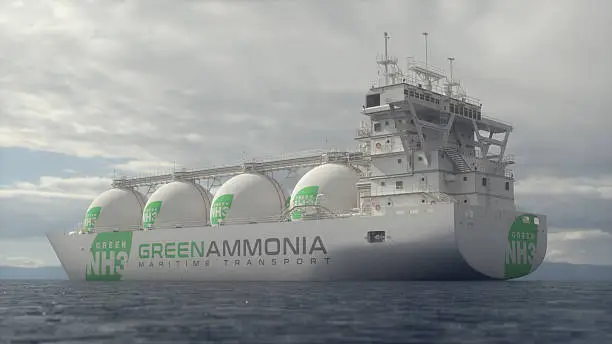
Amogy and LOTTE Fine Chemical will explore supplying ammonia to vessels equipped with Amogy's ammonia-to-power technology.
The initiative would make use of LOTTE Fine Chemical's ammonia terminal at Ulsan Port and its existing ship-bunkering capabilities.
This could connect ammonia supply infrastructure with vessels designed to use ammonia-based power systems, creating a potential pathway for maritime applications.
LOTTE Fine Chemical has previously supplied green ammonia for ship bunkering in South Korea and has described the activity as the country's first domestic ship-bunkering supply using green ammonia.
LOTTE Fine Chemical's Role in the Clean Ammonia Supply Chain
LOTTE Fine Chemical has more than 60 years of experience handling ammonia and operates ammonia import, storage and distribution infrastructure in Asia.
The company says it has achieved the world's first commercial import of green ammonia and the world's first domestic ship-bunkering supply using green ammonia.
These activities give the company infrastructure that can potentially be connected to new downstream applications such as hydrogen production and power generation.
The MoU with Amogy is therefore focused not only on supplying ammonia but also on expanding the potential applications for ammonia within South Korea's emerging clean-energy infrastructure.
Ammonia as a Hydrogen Carrier
Ammonia is receiving increasing attention as a potential hydrogen carrier because it can be transported and stored using established industrial infrastructure.
Rather than transporting hydrogen directly, hydrogen can be converted into ammonia and transported in that form. At the destination, ammonia can then be cracked back into hydrogen for applications requiring hydrogen.
The Amogy–LOTTE Fine Chemical collaboration explores this concept at the infrastructure level by connecting ammonia supply with localized hydrogen production.
For hydrogen refueling applications, the proposed model could allow green ammonia to be transported to a station before being converted into hydrogen on site.
Potential Applications Across South Korea
The collaboration covers several sectors rather than focusing on a single end use.
Potential areas include:
Hydrogen refueling: Green ammonia converted into high-purity hydrogen at refueling locations
Distributed power: Ammonia supplied to commercial and community-scale power-generation systems
Marine applications: Ammonia supplied to vessels using Amogy's ammonia-to-power technology
Ammonia logistics: Use of LOTTE Fine Chemical's existing import, storage and distribution infrastructure
This multi-application approach could allow the companies to evaluate different markets for ammonia-based energy systems in parallel.
Supporting South Korea's Clean-Ammonia Economy
South Korea has been developing infrastructure and policies around hydrogen and clean ammonia as part of its broader energy-transition strategy.
The Amogy and LOTTE Fine Chemical partnership is focused on connecting imported ammonia with downstream applications inside the country.
By combining ammonia supply infrastructure with hydrogen production and power-generation technology, the companies aim to explore a broader supply-chain-to-technology platform for clean ammonia.
However, the MoU represents an exploratory collaboration rather than a finalized commercial project. The companies said that further details regarding project scope and timing will be determined as the opportunities are evaluated.
From Imported Ammonia to On-Site Energy
One of the key aspects of the collaboration is the potential to move ammonia further downstream in the energy value chain.
Instead of stopping at import, storage and distribution, ammonia could be converted into hydrogen or used through ammonia-to-power systems closer to the final customer.
This could create a more integrated model involving:
Green ammonia production → Import and storage → Distribution → Ammonia cracking or power generation → Hydrogen or electricity
Such integration could help connect international ammonia supply with local energy applications.
What to Watch Next
Key developments to monitor include:
Evaluation of green ammonia hydrogen-refueling projects
Development of distributed ammonia-to-power applications
Further work on marine ammonia bunkering
Use of the LOTTE Fine Chemical ammonia terminal at Ulsan Port
Deployment of Amogy's ammonia-cracking technology in South Korea
Development of commercial project scopes and timelines
Growth of South Korea's clean ammonia and hydrogen infrastructure
Potential expansion into additional commercial and industrial applications
The next stage will be particularly important because the current MoU does not specify individual projects, capacities or commercial deployment dates.
Conclusion
Amogy and LOTTE Fine Chemical are exploring a broader role for green ammonia in South Korea's emerging hydrogen and clean-power markets.
Their MoU combines LOTTE Fine Chemical's ammonia supply, storage and distribution infrastructure with Amogy's ammonia-cracking and ammonia-to-power technologies.
The collaboration covers hydrogen refueling, distributed power generation and marine ammonia bunkering, creating several potential pathways for ammonia to be converted into hydrogen or used to generate electricity.
For the clean-ammonia sector, the agreement highlights the importance of connecting ammonia supply infrastructure with downstream conversion technologies. The companies' next steps will determine whether the collaboration develops into specific commercial projects across South Korea's hydrogen, power and maritime markets.
Found this useful?