Aniline's Carbon Footprint Comes Into Focus as Biomass Alternatives Advance
The global chemical industry faces mounting pressure to decarbonize its most energy-intensive processes. Global aniline production currently reaches approximately 7 million metric tons annually. This massive output relies almost entirely on traditional fossil fuel feedstocks. Consequently, this standard manufacturing route generates roughly 20 million tons of CO2 emissions each year. Procurement managers and chemical traders must urgently address this severe environmental impact. Regulatory bodies and corporate sustainability mandates now demand measurable reductions in supply chain carbon footprints. Buyers sourcing this critical intermediate for polyurethane and rubber applications need to explore viable low-carbon alternatives. Understanding the rapid shift toward biomass-derived aniline is essential for future-proofing procurement strategies. Ignoring this transition risks severe compliance penalties and supply chain obsolescence. Strategic preparation is now mandatory for maintaining a competitive advantage in a rapidly evolving market.
The Scale of Aniline Carbon Emissions
The sheer volume of aniline production makes it a significant target for emission reductions. The chemical serves as a foundational building block for methylene diphenyl diisocyanate. MDI production drives the massive global polyurethane market.
Fossil-based synthesis requires high temperatures and hydrogen derived from natural gas reforming. These energy-intensive steps directly contribute to the 20 million tons of annual CO2 output. The industry can no longer absorb these emissions without facing severe regulatory backlash.
The traditional production pathway begins with benzene nitration to form nitrobenzene. This initial step already carries a substantial carbon penalty. Subsequent catalytic hydrogenation requires vast amounts of energy.
The chemical sector must innovate beyond incremental efficiency gains. True decarbonization requires a fundamental shift in feedstock sourcing. The 20 million tons of CO2 represent a massive opportunity for green chemistry solutions.
Buyers must recognize that Scope 3 emissions reporting will soon include these upstream impacts. Procurement teams need accurate carbon data from their suppliers immediately. This transparency allows companies to make informed and compliant sourcing decisions.
Advancing Biomass Alternatives for Aniline
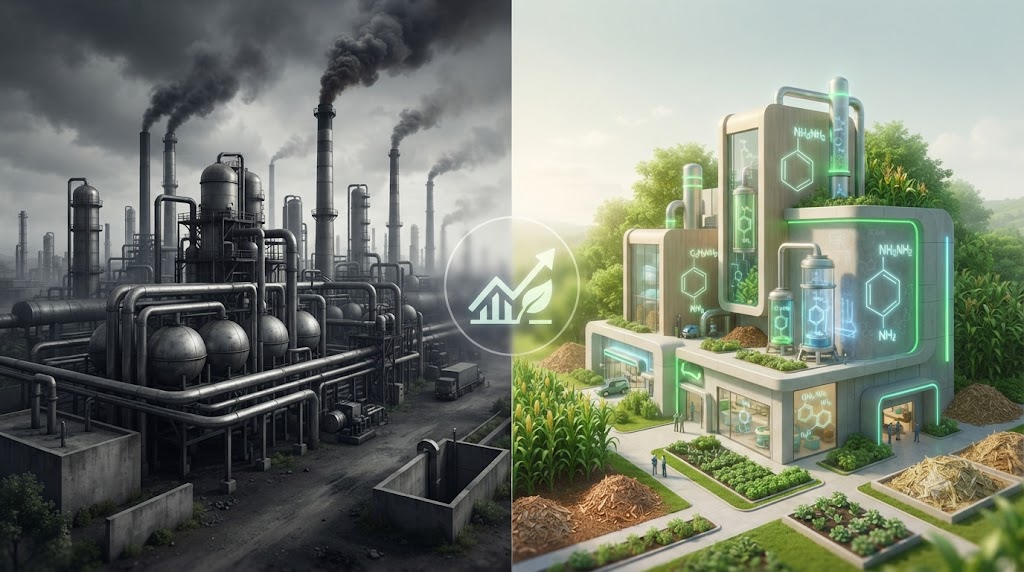
Researchers and chemical manufacturers are actively developing biomass-based pathways to produce aniline. These innovative methods utilize renewable feedstocks like lignin or bio-based nitrobenzene. This strategic shift drastically reduces the reliance on petroleum derivatives.
Biomass alternatives offer a compelling pathway to lower the overall carbon footprint. Early pilot projects demonstrate significant reductions in greenhouse gas emissions. Some advanced processes even achieve near carbon-neutral production when paired with renewable energy sources.
Lignin depolymerization provides a sustainable source of aromatic precursors. This abundant agricultural waste stream is currently underutilized in the chemical sector.
Bio-based nitrobenzene hydrogenation uses green hydrogen instead of fossil-derived sources. This powerful combination eliminates the largest source of process emissions.
These technological breakthroughs are moving rapidly from the laboratory to commercial scale. Buyers should monitor these developments closely to secure early access to green materials.
Impact on Polyurethane and Rubber Supply Chains
The transition to green aniline will fundamentally reshape downstream supply chains. Polyurethane manufacturers face strict mandates to reduce the embedded carbon in their products. Automotive and construction sectors demand low-carbon insulation and seating materials.
Suppliers who successfully commercialize biomass aniline will gain a massive competitive advantage. They can offer certified low-carbon materials to environmentally conscious buyers. This clear differentiation commands premium pricing in specialized market segments.
The rubber industry also relies heavily on aniline derivatives for producing accelerators and antiozonants. Tire manufacturers are under intense pressure to lower the carbon footprint of their products. Sourcing bio-based rubber chemicals is becoming a key differentiator for major brands.
Brands are increasingly linking executive compensation to sustainability targets. This corporate governance shift guarantees sustained demand for low-carbon intermediates. Procurement teams must align their sourcing strategies with these high-level corporate mandates.
Regulatory Drivers Accelerating the Transition
Government policies are the primary catalyst for adopting sustainable chemical production. The European Union continues to tighten its Emissions Trading System. This mechanism directly increases the operational cost of producing high-carbon chemicals.
Similar carbon pricing mechanisms are emerging in North America and Asia. These regulations force chemical producers to internalize the true cost of their CO2 emissions. The 20 million tons of annual aniline emissions will soon carry a heavy financial penalty.
The Carbon Border Adjustment Mechanism will further complicate global trade. Importers will face tariffs based on the carbon intensity of their chemical inputs. This policy levels the playing field for domestic producers using green technologies.
Buyers must stay informed about these evolving regulatory frameworks. Sourcing from regions with strict carbon pricing may become more expensive initially. However, it also guarantees that suppliers are actively investing in decarbonization technologies. This proactive approach protects buyers from future supply shocks.
Navigating the Biomass Aniline Market
Sourcing biomass-derived chemicals requires a completely different evaluation framework. Buyers must rigorously verify the sustainability credentials of the feedstock. Certifications such as ISCC Plus are becoming mandatory for proving renewable content.
Procurement teams should engage directly with suppliers about their decarbonization roadmaps. Ask specific questions about the exact percentage of bio-based content in their aniline. Request detailed life cycle assessments to validate all emission reduction claims.
Auditing the supply chain for mass balance accounting is also essential. This method tracks sustainable inputs through complex production facilities. Buyers must ensure their suppliers have robust tracking systems in place.
Building long-term partnerships with innovative producers is absolutely crucial. These collaborations can secure priority allocation of green materials as capacity scales. Early adopters will establish a strong market position before regulations fully tighten.
Financial Implications of Green Chemical Sourcing
Transitioning to biomass aniline involves navigating entirely new cost structures. Initial production costs for bio-based chemicals remain higher than traditional methods. Suppliers will pass a portion of these costs to buyers through premium pricing.
However, the financial calculus is changing rapidly. Carbon taxes and compliance costs are eroding the price advantage of fossil-based aniline. The tipping point where green alternatives become cost-competitive is approaching faster than many anticipate.
Procurement departments must model these financial scenarios accurately. Budgeting for a gradual shift toward sustainable materials prevents sudden cost shocks. Negotiating flexible contracts with price adjustment clauses tied to carbon markets provides essential protection.
Companies should also explore internal carbon pricing mechanisms. Assigning a hypothetical cost to emissions helps justify the premium for green chemicals. This internal accounting method aligns procurement decisions with broader corporate sustainability goals. Financial planning teams must collaborate closely with sourcing professionals to execute this strategy.
What Buyers Should Do Now
Procurement leaders must act decisively to future-proof their supply chains. Conduct a comprehensive audit of your current aniline consumption and associated carbon footprint. Identify which downstream products face the strictest environmental regulations.
Initiate immediate discussions with your chemical suppliers regarding their biomass initiatives. Request samples and technical data for any bio-based aniline alternatives they are developing. Update your vendor qualification criteria to heavily weight sustainability performance.
Invest in supply chain transparency tools to track Scope 3 emissions accurately. Training your procurement staff on green chemistry trends ensures informed decision-making. Building a resilient and sustainable supply base is the only reliable defense against impending regulatory shifts.
Do not wait for mandates to force your hand. Early engagement with innovators secures favorable terms and reliable supply. Collaborate with your research and development teams to test these new materials. Proactive adaptation will separate market leaders from those struggling with compliance.
Ready to source aniline from verified global suppliers? Explore competitive offers on our platform today.

Acrylonitrile
Found this useful?