Industrial Robot Orders & Chemical Manufacturing Outlook | Procurement Intelligence | ChemicalsBlog.com
Chemical Markets
schedule4 Min Read
Automation Investment Stalls: What a Q1 2026 Dip in Robot Orders Signals for Chemical Manufacturing
terminal
prodchem
Jul 16, 2026
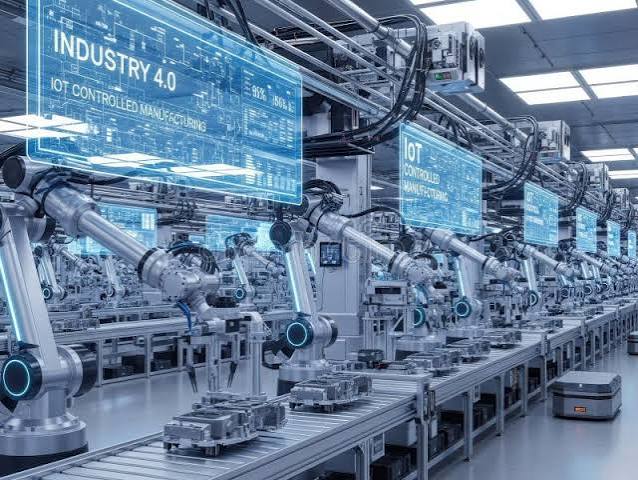
Industrial robot orders are more than a measure of automation demand.
They are also a valuable leading indicator of manufacturing confidence.
When manufacturers expand production, modernise facilities or build new plants, investment in automation equipment often increases before production volumes rise.
Conversely, a slowdown in robot orders may indicate that companies are becoming more selective with capital expenditure.
For procurement professionals, automation investment trends provide useful insight into future manufacturing activity.
Why Robot Orders Matter
Industrial robots support numerous operations across chemical manufacturing, including:
Packaging automation.
Material handling.
Palletising.
Laboratory automation.
Quality inspection.
Warehouse logistics.
Process support.
Growing robot investment generally reflects confidence in long-term production growth and operational efficiency.
Capital Spending Often Moves Ahead of Production
Manufacturing investment follows a predictable sequence.
Companies typically:
Approve capital budgets.
Purchase automation equipment.
Install production systems.
Commission facilities.
Increase manufacturing output.
As a result, robot orders often provide an early indication of future industrial activity rather than current production levels.
Chemical Manufacturing Continues Advancing Digitally
Automation remains an important component of modern chemical production through:
Digital process control.
Predictive maintenance.
AI-assisted operations.
Automated quality assurance.
Smart warehousing.
Integrated production planning.
Even when short-term investment slows, long-term digital transformation continues across much of the industry.
A Short-Term Slowdown Does Not Necessarily Change Long-Term Trends
Temporary reductions in automation investment may reflect:
Capital budgeting cycles.
Higher interest rates.
Economic uncertainty.
Project timing.
Inventory adjustments.
Delayed equipment purchases.
These factors should be evaluated alongside broader manufacturing indicators before drawing long-term conclusions.
Procurement Should Monitor Capital Investment Trends
Automation data complements traditional procurement intelligence.
Important indicators include:
Industrial robot orders.
Capital expenditure.
Manufacturing PMIs.
Capacity expansion announcements.
Plant construction.
Industrial production.
Equipment utilisation.
Together, these indicators provide a more complete view of future manufacturing activity.
While quarterly fluctuations in robot orders may signal short-term caution, automation remains a strategic priority for chemical manufacturers seeking to improve productivity and operational resilience.
Key long-term benefits include:
Higher production efficiency.
Improved process consistency.
Reduced operational downtime.
Better workplace safety.
Lower operating costs.
Increased manufacturing flexibility.
For procurement professionals, automation investment should be viewed over multiple years rather than a single quarter.
Digital Manufacturing Continues Beyond Robotics
Robot installations represent only one component of broader industrial digitalisation.
Chemical manufacturers are also investing in:
Artificial intelligence for process optimisation.
Digital twins.
Predictive maintenance systems.
Industrial Internet of Things (IIoT).
Advanced process analytics.
Automated quality management.
Cloud-based manufacturing execution systems.
These technologies continue supporting operational improvement even when physical equipment investment temporarily moderates.
Procurement Should Monitor Multiple Investment Indicators
Robot order data becomes more meaningful when analysed alongside other manufacturing indicators, including:
Capital expenditure announcements.
Plant expansion projects.
Capacity utilisation.
Industrial production growth.
Manufacturing PMIs.
Chemical output trends.
Equipment lead times.
Together, these indicators provide a stronger picture of future manufacturing activity than any single metric alone.
Procurement Priorities for H2 2026
As manufacturers balance investment with economic uncertainty, procurement organisations should:
Track automation investment across key supplier industries.
Monitor capital expenditure trends among strategic suppliers.
Evaluate suppliers' digital manufacturing capabilities.
Review long-term production capacity expansion plans.
Assess operational resilience supported by automation.
Integrate manufacturing investment indicators into supplier risk assessments.
Continue monitoring Industry 4.0 adoption across the chemical sector.
These actions help procurement teams anticipate future production capability while identifying suppliers investing in long-term competitiveness.
Looking Ahead to H2 2026
A modest decline in North American industrial robot orders during Q1 2026 should be interpreted as a signal of greater capital investment discipline rather than a reversal of manufacturing automation. Economic uncertainty, financing conditions and project timing can all influence quarterly investment decisions, while the long-term transition toward digitally connected, highly automated chemical production continues. Manufacturers remain focused on improving productivity, operational reliability and competitiveness through advanced technologies.
For procurement professionals, automation investment is an important leading indicator that complements broader measures such as industrial production, capacity expansion and manufacturing confidence. Suppliers that continue investing in automation, digital process control and smart manufacturing are often better positioned to deliver consistent quality, higher efficiency and stronger long-term operational resilience.
The key lesson for H2 2026 is that automation investment should be evaluated as a strategic long-term trend rather than a single-quarter statistic. Procurement organisations that combine automation intelligence with financial analysis, production capacity monitoring and supplier performance assessments will be better positioned to identify resilient manufacturing partners and anticipate future changes in industrial capability.
Ready to source industrial and specialty chemicals from verified manufacturers investing in advanced automation, digital production and world-class manufacturing excellence? Explore competitive offers on our platform today.