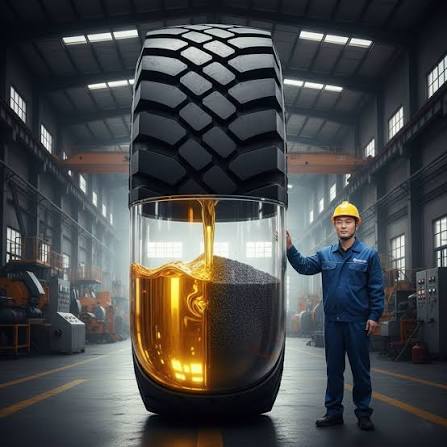
Axens Wins a US Contract to Design a Tire-Pyrolysis-Oil Hydroprocessing Unit
The conversion of waste tires into useful fuels and chemical feedstocks is gaining attention as industries look for ways to improve resource recovery and reduce dependence on conventional fossil resources. A new US project involving Axens highlights how tire pyrolysis oil can move beyond waste treatment toward integration with industrial fuel production.
Axens has won a contract to design a hydroprocessing unit that will upgrade 100% tire pyrolysis oil into low-sulfur fuel with sulfur content of 500 ppm or below. Front-end engineering design is already underway, while the project targets a final investment decision in 2027.
The project reflects growing interest in technologies that can process challenging waste-derived feedstocks while producing fuels that meet defined quality requirements.
Tire Pyrolysis Oil Gains Industrial Attention
Tire pyrolysis breaks down end-of-life tires through thermal treatment in the absence of oxygen. The process produces several outputs, including tire pyrolysis oil, recovered carbon-rich solids and gas.
Tire pyrolysis oil contains a mixture of hydrocarbons as well as sulfur, nitrogen and other compounds that can limit its direct use in conventional fuel applications. Hydroprocessing can help improve the quality of this feedstock by removing unwanted components and adjusting its properties.
The ability to process tire pyrolysis oil at industrial scale could create additional value from waste tires while expanding the feedstock base available to fuel producers.
Axens Technology Targets Full Feedstock Conversion
The US project focuses on processing 100% tire pyrolysis oil in the hydroprocessing unit. This is significant because waste-derived oils can have different characteristics from conventional refinery streams.
A dedicated processing configuration needs to accommodate feedstock variability while achieving the required product specifications. The targeted sulfur level of 500 ppm or below demonstrates the project's focus on producing a more suitable low-sulfur fuel.
FEED work will help establish the technical configuration, equipment requirements and operating parameters before the project reaches its expected investment decision in 2027.
Why Hydroprocessing Matters for Pyrolysis Oil
Pyrolysis oil from waste tires cannot always enter conventional fuel systems without additional treatment. Its composition can vary depending on the original tire feedstock and the pyrolysis process.
Hydroprocessing uses hydrogen and catalysts to improve the quality of hydrocarbon streams. Depending on the process configuration, treatment can reduce sulfur and other contaminants while producing a more stable and useful fuel stream.
For tire pyrolysis operators, this creates a potential pathway from waste-derived oil to a product with greater compatibility with established fuel markets.
A Step Toward Higher-Value Tire Recycling
Traditional tire recycling can involve applications such as rubber crumb, recovered carbon black and other material recovery routes. Pyrolysis adds another pathway by converting tire components into oil, gas and solid products.
The commercial challenge lies in finding consistent markets for these outputs. A hydroprocessing project can strengthen the business case for pyrolysis by creating a route to upgrade the oil fraction into a defined fuel product.
This approach also supports the broader concept of a circular tire value chain, where end-of-life tires become feedstocks for new industrial products instead of remaining primarily a disposal challenge.
Feedstock Quality Will Remain Important
Tire pyrolysis oil is not a uniform refinery feedstock. Its properties can depend on tire composition, feedstock preparation, pyrolysis conditions and the separation process used at the recycling facility.
Consistent feedstock quality will therefore be important for commercial hydroprocessing operations. Operators may need robust testing, blending and quality-control systems to maintain stable unit performance.
For buyers of pyrolysis-derived products, specifications and consistency will remain key considerations alongside sustainability claims.
The Project Could Support Circular Fuel Markets
The project comes at a time when chemical and energy companies are examining alternative feedstocks for fuels and other hydrocarbon products. Waste-derived oils offer one way to introduce secondary carbon sources into established processing infrastructure.
Tire pyrolysis can potentially reduce the amount of material directed toward disposal while recovering hydrocarbons from complex waste streams. Further processing can increase the usefulness of those recovered hydrocarbons.
However, the environmental and commercial performance of such projects depends on factors including feedstock sourcing, process efficiency, hydrogen requirements, emissions and the final application of the products.
Implications for the Rubber Industry
The development has implications beyond fuel production. Tire manufacturers, recyclers and chemical companies are increasingly examining how end-of-life tires can contribute to circular material systems.
A stronger market for tire pyrolysis oil could create additional demand for recovered feedstock. This may encourage investment in collection, sorting and pyrolysis infrastructure.
At the same time, recycling companies will need to demonstrate that their products meet the quality and regulatory requirements expected by downstream processors.
Opportunities for Chemical Traders
The growth of tire pyrolysis creates potential opportunities across several parts of the chemical supply chain. Traders may become involved in feedstock sourcing, recovered oils, catalysts, process chemicals and downstream materials.
Recovered carbon products can also create commercial opportunities. Carbon Black (N330) - China is a relevant product category for buyers operating in the rubber and tire industry, although recovered carbon black and conventional furnace carbon black are distinct materials with different specifications and applications.
As tire recycling technologies mature, chemical traders can support the sector by connecting recyclers with industrial buyers and helping companies identify alternative sources for processing inputs.
What Buyers Should Watch
The US project provides several signals for companies following tire recycling and circular feedstocks.
Pyrolysis oil specifications: Consistency will be important for downstream hydroprocessing.
Low-sulfur fuel demand: Products meeting tighter sulfur requirements may have broader potential applications.
Technology development: Commercial projects can demonstrate whether advanced pyrolysis-oil upgrading can operate reliably at scale.
Feedstock availability: Expansion of tire recycling capacity could increase the availability of recovered oil.
Investment decisions: The expected 2027 FID will provide an important milestone for the project.
Downstream markets: The economics of tire pyrolysis will depend heavily on the value achieved for oil, recovered carbon and other outputs.
Looking Ahead to 2027
Axens' US contract illustrates how tire pyrolysis is evolving from a waste-management technology toward a potential source of refinery-compatible feedstocks. The planned hydroprocessing unit aims to process 100% tire pyrolysis oil and produce low-sulfur fuel at a targeted sulfur level of 500 ppm or below.
With FEED underway and FID expected in 2027, the project will be closely watched by companies involved in tire recycling, fuels, refining and circular chemical production.
For chemical traders and industrial buyers, the development highlights a growing market around recovered feedstocks and the technologies needed to convert them into higher-value products.
Ready to source Carbon Black (N330) from verified global suppliers? Explore competitive offers on our platform today.

Carbon Black (N330) - China
Found this useful?