Eyeglass lenses have long been produced by a series of grinding, polishing, and coating steps that are both time‑consuming and material‑heavy. Azul 3D’s latest innovation promises to collapse this chain在线计划 into a single, additive process that uses UV‑curable photopolymers. By doing so, the company aims to dramatically shorten production time, reduce waste, and unlock unprecedented design freedom for consumers and manufacturers alike.
Current Lens Manufacturing Challenges
The conventional lens-making pipeline involves multiple stages: material casting, precision grinding, surface polishing, and finally coating. Each step adds cost, labor, and potential defects. Moreover, the process is largely batch‑oriented, meaning that small orders require the same investment as large volumes, which is inefficient for niche or bespoke markets.
High Production Costs: Labor and equipment for grinding and polishing are expensive.
Material Waste: Rough machining removes significant material before polishing.
Limited Customization: Custom optical prescriptions require re‑tooling or special orders.
Azul 3D’s Photopolymer Solution
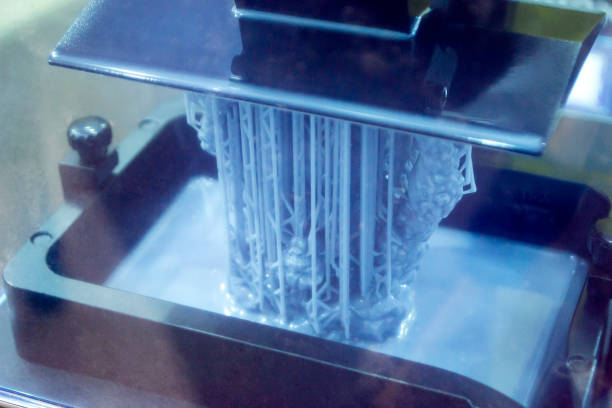
Azul 3D’s photopolymer platform replaces the grinding stage with a laser‑directed UV cure process. The company’s proprietary resin blends are engineered for optical clarity, low shrinkage, and high durability. By printing the lens in a single build, the workflow eliminates the need for grinding and polishing, which traditionally consume up to 70% of the manufacturing time.
Key Advantages
Reduced step count leads to faster production cycles.Lower material consumption cuts costs and waste.Direct digital design integration supports complex geometries.
UV‑Curable Resins and Additive Manufacturing
The core.req of Azul 3D’s approach is a family of UV‑curable resins that set rapidly upon exposure to a specific wavelength. These resins are formulated with advanced polymers that exhibit:
High refractive index accuracy for precise optical performance.
Low thermal expansion to maintain shape under varying temperatures.
Excellent scratch resistance to prolong lens lifespan.
When combined with stereolithography or digital light processing (DLP) 3D printers, the resins can be patterned layer by layer, producing lenses that are both structurally sound and optically flawless.
Customization & Design Freedom
One of the most compelling benefits is the ability to tailor lenses to individual prescriptions in a fully digital workflow. Designers can input power, cylinder, axis, and even add decorative patterns or functional features like anti‑glare textures. The printer builds each lens to exact specifications without the need for separate tooling.
For eyewear brands, this means:
Quick turnaround from design to prototype.
On‑demand production for limited‑edition or personalized collections.
Ability to explore experimental lens shapes that were previously impractical.
Economic & Environmental Impact
By cutting out grinding and polishing, Azul 3D reduces the need for heavy machinery and skilled labor. The company estimates a 40% reduction in overall production cost per lens. Additionally, the precision of additive manufacturing means less material is wasted – a vital improvement for sustainability.
Environmental benefits include:
Lower energy consumption because fewer process steps are required.
Reduced chemical usage from polishing solutions.
Potential for recycling of unused resin in a closed‑loop system.
Azul 3D is working on scaling its printers for mass production while maintaining quality control. The company is also exploring hybrid processes that combine 3D printing with traditional coating techniques to further enhance optical performance. If successful, the photopolymer platform could become the new standard for eyeglass lens manufacturing, democratizing high‑quality vision solutions worldwide.