Balaji Amines Starts Commercial Production at Its Enhanced Acetonitrile Plant
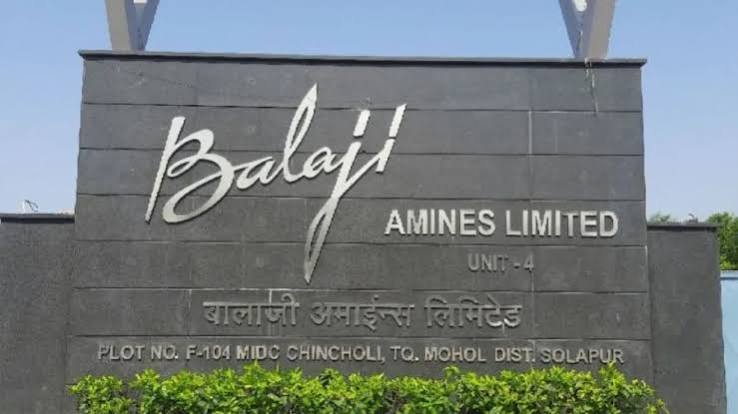
Balaji Amines has commenced commercial production at its enhanced Acetonitrile (ACN) plant in Solapur, Maharashtra, marking the completion of an expansion and modernization program at its Unit III facility.
Commercial production began on September 24, 2026, with the upgraded plant reaching an installed capacity of 1,440 tonnes per month (TPM), equivalent to approximately 17,280 tonnes annually. The facility uses advanced production technology and serves both domestic and international markets.
The development is significant for India's specialty chemical supply chain because acetonitrile is an important solvent and process chemical used across pharmaceutical, laboratory, chemical, and analytical applications.
Why the Acetonitrile Expansion Matters
Acetonitrile is widely used in applications requiring high-performance solvents and controlled chemical properties.
Its major uses include:
Pharmaceutical manufacturing
Laboratory analysis
Chromatography
Chemical synthesis
Research applications
Specialty chemical processing
Increasing domestic production capacity can strengthen supply availability for Indian buyers while also expanding the country's ability to serve international customers.
Balaji Amines states that the upgraded facility caters to both domestic and international markets, giving the expansion relevance beyond India's domestic chemical industry.
Capacity Expansion Changes the Supply Equation
The upgraded plant now has an installed capacity of 1,440 TPM.
That translates to:
1,440 tonnes/month × 12 = approximately 17,280 tonnes/year
The scale is meaningful because acetonitrile demand is closely connected to pharmaceutical production, laboratory testing, analytical chemistry, and specialty chemical manufacturing.
The expansion therefore gives Balaji Amines greater capacity to participate in these markets while improving the availability of locally produced material.
Technology and Production Efficiency
The project is part of Balaji Amines' broader expansion and modernization program.
The company has described the upgraded ACN facility as using advanced technology and an improved process, while earlier company disclosures indicated that the expansion was intended to increase capacity and improve production economics.
This is important in a competitive chemical market because additional capacity alone does not necessarily create an advantage.
Lower production costs, improved process efficiency, consistent quality, and reliable plant operation can be equally important when competing with international suppliers.
Pharmaceutical and Analytical Demand
Acetonitrile occupies an important position in pharmaceutical and analytical chemistry supply chains.
It is particularly relevant to chromatography and laboratory applications, where solvent purity and consistent performance are critical.
Balaji Amines' broader portfolio includes specialty chemicals and pharmaceutical-related products, meaning the ACN expansion fits into an existing business model serving technically demanding chemical markets. The company's own profile describes its operations across aliphatic amines, specialty chemicals, derivatives, and pharma excipients.
This gives the new capacity relevance to India's growing pharmaceutical and specialty chemical manufacturing ecosystem.
India's Specialty Chemical Supply Chain
The project also reflects a broader trend toward increasing domestic chemical manufacturing capability in India.
For chemical buyers, greater domestic availability can potentially provide:
Shorter supply chains
Reduced dependence on imported material
More sourcing flexibility
Faster delivery opportunities
Greater supplier diversification
Improved supply continuity
These factors become particularly important when international shipping disruptions, geopolitical risks, or raw-material shortages affect imported chemical supply.
Competitive Intelligence
Procurement teams tracking the acetonitrile market should monitor several indicators.
1. Installed Capacity
The new Balaji Amines capacity provides a benchmark for India's expanding ACN supply base.
2. Capacity Utilization
Actual production volumes will be important in determining how much additional material reaches the market.

3. Import Competition
Domestic capacity growth could change the balance between locally manufactured and imported acetonitrile.
4. Pharmaceutical Demand
Growth in pharmaceutical manufacturing and analytical testing can influence downstream solvent demand.
5. International Exports
Balaji Amines' stated domestic and international market coverage means export activity will also be relevant to regional supply dynamics.
Procurement Considerations
Chemical and pharmaceutical buyers should evaluate the expansion not only in terms of additional capacity but also supplier reliability and product qualification.
Important considerations include:
Product purity and specifications
Production consistency
Available capacity
Lead times
Domestic versus imported sourcing
Logistics costs
Regulatory documentation
Supplier qualification requirements
Contract flexibility
For pharmaceutical and laboratory applications, technical qualification can be particularly important because switching suppliers may require testing and validation.
What the Expansion Could Mean for India's Chemical Market
The commissioning of the enhanced ACN facility adds another example of Indian chemical producers investing in higher-value and technically demanding products.
Balaji Amines' wider manufacturing footprint includes specialty chemicals, derivatives, and pharmaceutical-related products, while the company has also continued investing in additional capacity across its portfolio.
For India's chemical industry, this supports a broader shift from simply increasing chemical volumes toward developing more integrated specialty and downstream manufacturing capabilities.
Looking Ahead
Balaji Amines' commercial launch of the upgraded acetonitrile facility increases its installed ACN capacity to 1,440 TPM, or approximately 17,280 tonnes per year.
The next important indicators will be capacity utilization, domestic customer adoption, export volumes, and the resulting effect on India's import requirements.
For procurement teams, the development reinforces the importance of monitoring new domestic chemical capacity alongside international supply, freight conditions, and pharmaceutical-sector demand.
As India continues to expand its specialty chemical manufacturing base, projects such as this could gradually reshape regional sourcing strategies and create additional alternatives for chemical buyers.
Key Takeaways
Balaji Amines began commercial production at its enhanced acetonitrile plant on September 24, 2026.
The upgraded facility has an installed capacity of 1,440 tonnes per month, or approximately 17,280 tonnes per year.
The plant is located at Unit III, Chincholi MIDC, Solapur, Maharashtra.
The facility uses advanced technology as part of an expansion and modernization program.
The additional capacity supports both domestic and international markets.
Acetonitrile's role in pharmaceutical, laboratory, analytical, and specialty chemical applications makes the expansion relevant to multiple downstream industries.
Buyers should monitor utilization, imports, exports, pricing, and supplier qualification as the new capacity ramps up.
Sources
Found this useful?