Econic Launches CO2-Based Ultra-Mild Surfactant for Personal Care
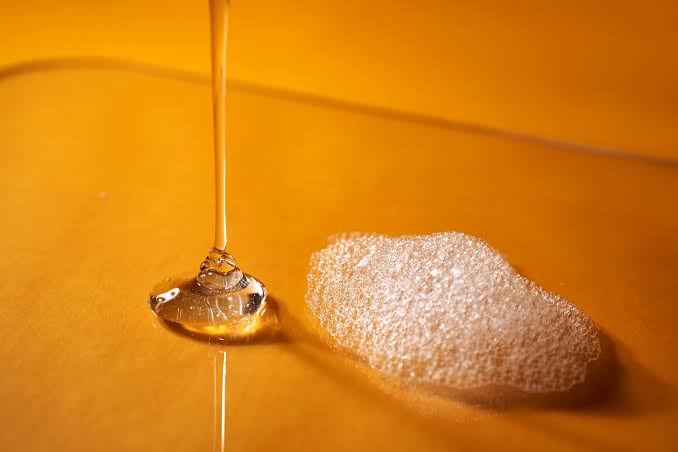
Econic Technologies has introduced Recreaire® 17RC28, an ultra-mild surfactant and emulsifier made using captured carbon dioxide (CO₂) and designed for personal-care formulations.
The launch represents an important development in the growing market for lower-carbon specialty chemicals. Instead of treating captured CO₂ primarily as a waste stream, Econic's technology uses it as a feedstock for producing functional materials.
For personal-care formulators, the significance is particularly commercial: the new surfactant is positioned not simply as a sustainability alternative, but as a material designed to combine mildness, formulation performance, and lower carbon footprint.
Why CO₂-Based Surfactants Matter
Surfactants are widely used in personal-care formulations to support emulsification, wetting, dispersion, solubilization, and other formulation functions.
The challenge for sustainable alternatives is that reducing fossil-carbon dependence cannot come at the expense of:
Product performance
Formulation stability
Sensory properties
Manufacturing compatibility
Shelf life
Commercial scalability
Econic's Recreaire platform attempts to address this challenge by incorporating CO₂ into carbonate ethoxylate surfactant structures rather than relying exclusively on conventional fossil- or oleochemical carbon sources.
Recreaire 17RC28's Sustainability Positioning
According to Econic, Recreaire 17RC28 contains 28% CO₂ by weight and reduces its carbon footprint by approximately 25% compared with standard surfactants.
The company says the material can also be combined with bio-based surfactants, allowing formulators to adjust formulations according to performance requirements and sustainability targets.
This creates an interesting market proposition: captured carbon does not have to compete with renewable feedstocks. Instead, it can become another carbon source within a broader portfolio of lower-footprint formulation strategies.
Performance Still Determines Commercial Adoption
Sustainability alone is unlikely to determine whether a new surfactant succeeds commercially.
Econic reports side-by-side testing against a widely used fatty alcohol ethoxylate system. According to the company, formulations containing Recreaire 17RC28 maintained more consistent viscosity over 40 days while matching the benchmark for appearance and three-cycle freeze-thaw stability.
The company also reports long-term storage stability over 140 days at 40°C.
These performance claims are important because formulators generally need sustainable ingredients to work within existing formulation and manufacturing requirements.
Personal-Care Applications
Recreaire 17RC28 is designed for applications including:
Lotions
Creams
Shampoos
Conditioners
Other skin- and hair-care formulations
Its higher molecular weight is specifically intended to support emulsification.
This positions the material within a specialty segment where formulation performance and consumer-facing sustainability claims increasingly overlap.
The Bigger Carbon Utilization Opportunity
The launch also illustrates the broader potential of carbon capture and utilization (CCU).
Rather than viewing captured CO₂ solely as something to store or dispose of, chemical companies are exploring ways to convert it into:
Polymers
Polyols
Surfactants
Coatings materials
Other specialty chemicals
Econic's broader Recreaire platform can incorporate up to 45% CO₂ by weight in certain surfactant concepts, demonstrating how captured carbon can become a functional component of chemical molecules.
Competitive Intelligence
Companies tracking sustainable specialty chemicals should monitor several indicators.
1. Carbon Feedstock Utilization
Which chemical platforms are replacing fossil-derived carbon with captured or renewable carbon?
2. Verified Carbon Performance
Are lower-carbon claims supported by lifecycle analysis or other credible assessments?

3. Formulation Performance
Can sustainable materials match conventional ingredients under real formulation conditions?
4. Manufacturing Compatibility
Can existing production infrastructure be adapted without significant additional capital?
5. Commercial Scale
Are technologies moving beyond samples and pilot projects toward licensed, commercial production?
These factors will help distinguish commercially viable sustainable chemistry from early-stage technology concepts.
Procurement Considerations
Personal-care procurement teams evaluating lower-carbon surfactants should assess sustainability and technical performance together.
Key considerations include:
Carbon footprint
Feedstock origin
CO₂ utilization methodology
Formulation performance
Regulatory documentation
Supply scalability
Manufacturing location
Certification or verification
Compatibility with existing formulations
Long-term supplier capacity
A lower-carbon ingredient has limited commercial value if it cannot be supplied consistently at the required quality and scale.
Looking Ahead
Econic's Recreaire 17RC28 launch illustrates a broader transition in specialty chemicals: sustainable feedstocks are increasingly being evaluated as functional raw materials rather than simply environmental alternatives.
The company is currently working with surfactant manufacturers and brand owners to scale the technology, while making the platform available for licensing worldwide.
If captured-carbon chemistry can consistently deliver both lower emissions and competitive formulation performance, it could create a new category of specialty materials for personal care and other consumer-product markets.
The key commercial test will be whether these technologies can move from sustainability-driven interest to large-scale procurement and repeat formulation adoption.
Key Takeaways
Econic launched Recreaire® 17RC28, a CO₂-based ultra-mild surfactant for personal-care formulations.
The material contains 28% CO₂ by weight, according to Econic.
Econic reports an approximately 25% lower carbon footprint versus standard surfactants.
Reported testing showed competitive viscosity, appearance, freeze-thaw, and storage performance.
The launch demonstrates how captured CO₂ can become a feedstock for higher-value specialty chemicals.
Commercial scaling, formulation performance, supply reliability, and credible carbon accounting will determine broader adoption.
Sources
https://chemxplore.com/news/econic-mild-surfactant-captured-carbon
Carbon Black (N220) - China
Found this useful?