
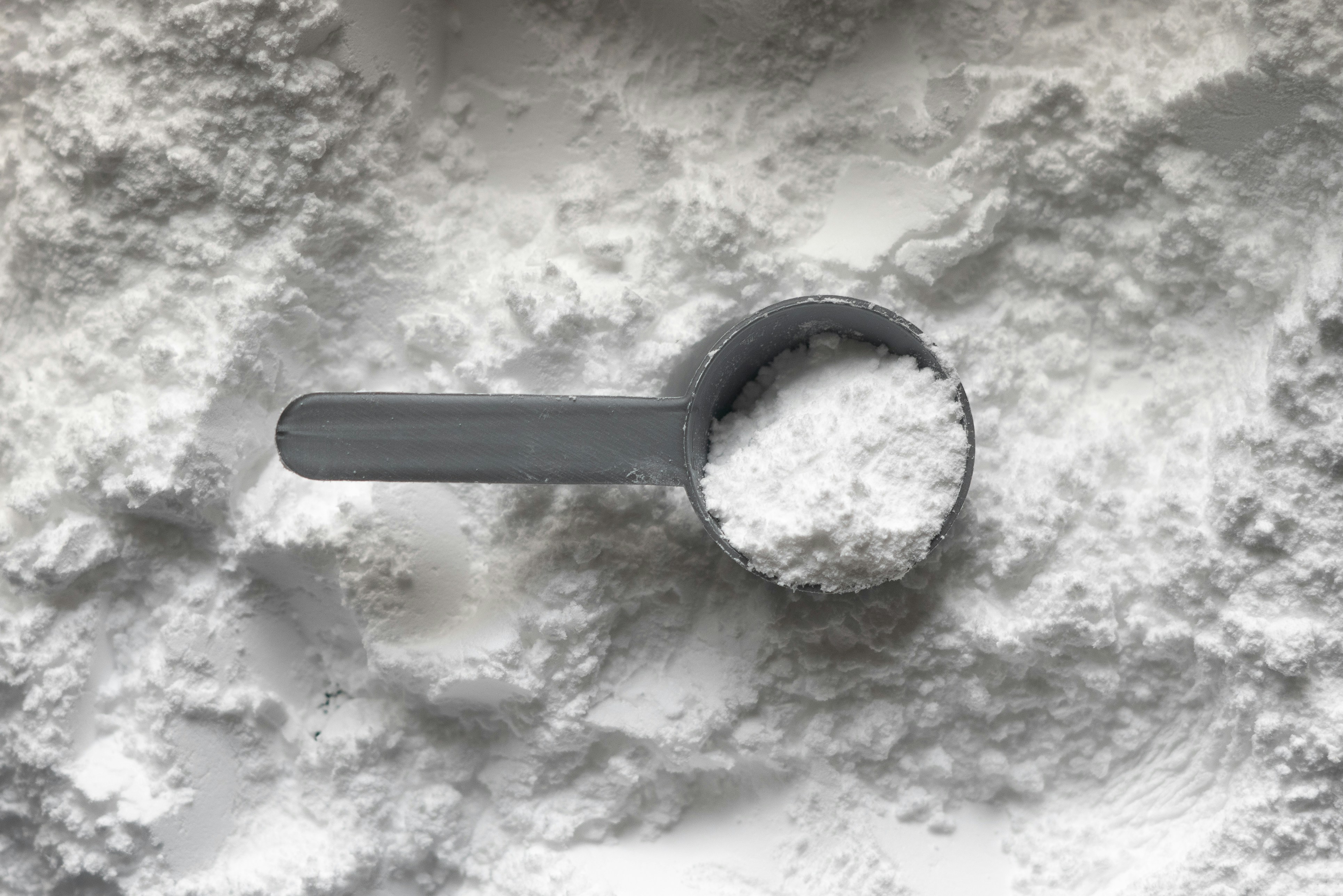
Barium Sulphate: Industrial Uses and Global Market Opportunities
Barium sulphate is a widely used industrial mineral that supports manufacturing operations across paints, plastics, rubber and oil and gas drilling. Its high density, chemical stability, low water solubility and natural whiteness make it valuable in applications where manufacturers require reliable filler performance, improved product characteristics or increased material density.
For chemical traders, procurement managers and industrial buyers, barium sulphate offers opportunities across several manufacturing sectors. However, product selection depends heavily on the intended application. Paint manufacturers may prioritise brightness and particle size, plastics producers may focus on dispersion and mechanical performance, while drilling companies require specific density and particle-size characteristics.
What Is Barium Sulphate and How Is It Produced?
Barium sulphate (BaSO₄), commonly known as barite when referring to its naturally occurring mineral form, is an inorganic compound with a high specific gravity and excellent chemical stability.
It is generally available in two main commercial categories:
Natural barium sulphate: Obtained by mining barite ore, followed by crushing, washing, beneficiation and grinding to achieve the required purity and particle size.
Precipitated barium sulphate: Produced synthetically through chemical reactions and purification processes. It generally offers higher chemical purity and more controlled particle-size distribution.
The two forms serve different industrial requirements. Natural barite is particularly important in drilling operations, while precipitated barium sulphate, also known as blanc fixe, is widely used in high-performance paints, coatings and plastics.
Important Physical and Chemical Properties
Several characteristics explain the industrial importance of barium sulphate:
High specific gravity: Its density makes it suitable for increasing drilling fluid weight and adding mass to industrial products.
Chemical inertness: It resists reactions with many chemicals, supporting its use in coatings and polymer formulations.
Low water solubility: It remains stable in water-based environments under normal conditions.
Whiteness and brightness: High-quality grades provide useful optical properties in paints, pigments and plastics.
Particle-size control: Fine particles support better dispersion and surface finish in specialised formulations.
Chemical resistance: Its stability supports applications requiring resistance to weathering and chemical exposure.
These properties allow manufacturers to use different barium sulphate grades according to product performance and production requirements.
American Chemical Society+2
Barium Sulphate Applications in Paints and Coatings
The paints and coatings industry uses barium sulphate as a functional filler and pigment extender. Manufacturers incorporate it into different formulations to improve brightness, opacity, surface characteristics and chemical resistance.
Its chemical stability also makes it useful in coatings exposed to demanding industrial and environmental conditions.
Paints and Pigment Manufacturing
Barium sulphate supports paint formulations by contributing to pigment extension and controlling the physical characteristics of the finished coating.
Fine precipitated grades can improve pigment dispersion and help manufacturers optimise titanium dioxide usage. This can support formulation efficiency while maintaining the desired appearance and performance.
Common applications include:
Architectural and decorative paints.
Industrial protective coatings.
Automotive primers and coatings.
Powder coatings.
Printing inks and pigment preparations.
Anti-corrosion coating formulations.
Surface Finish and Coating Performance
Particle size and purity influence the performance of barium sulphate in coating formulations.
Fine, consistently processed material can contribute to smoother surfaces, improved gloss and more uniform pigment distribution. Its resistance to many chemicals also makes it suitable for selected protective coating systems.
Paint manufacturers should select grades according to oil absorption, particle-size distribution, whiteness, moisture content and dispersion behaviour.
Industrial Applications in Plastics and Polymer Manufacturing
Barium sulphate is also an important mineral filler in plastics and polymer processing. Manufacturers incorporate it into selected formulations to modify density, improve certain physical characteristics and control production costs.
Its chemical stability allows it to function as a filler without significantly reacting with many polymer systems.
PVC and Engineering Plastics
Plastic manufacturers use barium sulphate in selected PVC compounds, masterbatches and other polymer formulations.
Depending on the polymer matrix and loading level, it can influence:
Product density and weight.
Surface appearance and smoothness.
Dimensional stability.
Stiffness and selected mechanical properties.
Opacity and colour characteristics.
Its performance depends on particle size, surface treatment, dispersion quality and compatibility with the polymer matrix.
Automotive and Industrial Plastic Components
Automotive and industrial manufacturers use mineral-filled plastics in selected components where density, durability and material performance matter.
Barium sulphate can also contribute to noise, vibration and harshness (NVH) management in certain polymer applications because of its high density.
Other potential applications include plastic profiles, flooring materials, cable compounds and specialised polymer products.
Manufacturers should conduct formulation trials before selecting a commercial grade. Excessive filler loading or poor dispersion can affect processing behaviour and mechanical properties.
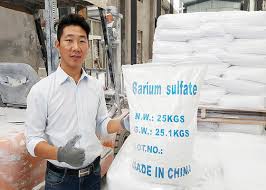
Barium Sulphate in Oil and Gas Drilling Fluids
The oil and gas industry represents one of the most important markets for natural barium sulphate, particularly in the form of barite. Drilling companies use it as a weighting agent in drilling fluids to control pressure and maintain well stability.
During drilling operations, drilling mud circulates through the wellbore, cools the drill bit and transports rock cuttings towards the surface. Maintaining the correct mud density helps operators manage underground formation pressures.
Role as a Drilling Fluid Weighting Agent
Barite increases drilling fluid density without requiring excessive quantities of other solid additives. Its high specific gravity allows drilling engineers to adjust mud weight according to well conditions.
Important functions include:
Pressure control: Helps drilling teams maintain sufficient hydrostatic pressure to manage formation fluids.
Wellbore stability: Supports drilling operations by maintaining suitable fluid density.
Cuttings transportation: Contributes to the physical properties of drilling mud used to carry rock cuttings.
Operational safety: Helps reduce the risk of uncontrolled formation fluid entry when properly designed drilling fluids are used.
API Specification 13A provides requirements for drilling-grade barite. Typical specifications address density, soluble alkaline earth metals and particle-size distribution.
slb.com+1
Natural Barite Versus Precipitated Barium Sulphate
Drilling operations generally require natural barite with suitable density and particle characteristics. Precipitated barium sulphate serves more specialised applications where manufacturers prioritise purity, brightness and fine particle control.
Procurement teams should not treat these grades as interchangeable. A paint-grade product may not satisfy drilling-fluid specifications, even if both products contain barium sulphate.
Other Industrial Applications of Barium Sulphate
Beyond paints, plastics and drilling fluids, barium sulphate serves several additional manufacturing and industrial markets.
Rubber and Automotive Manufacturing
Rubber producers use barium sulphate as a filler in selected rubber formulations. It can influence product density, dimensional characteristics and formulation economics.
Certain automotive components, industrial rubber products and specialised compounds use mineral fillers to achieve specific manufacturing requirements.
Paper, Inks and Pigments
Selected paper coating and printing ink formulations use barium sulphate to improve whiteness, opacity and surface characteristics.
Its chemical stability also makes it suitable for pigment extension in products where manufacturers require consistent colour performance.
Radiation Shielding and Specialised Materials
Barium sulphate's high density makes it useful in certain radiation-shielding materials, including specialised heavy concrete formulations.
Manufacturers incorporate suitable barium-containing materials into construction products designed for specific shielding requirements.
These applications require careful material selection and engineering evaluation to achieve the necessary density and shielding performance.
Global Barium Sulphate Supply and Market Dynamics
The international barium sulphate supply chain includes natural barite mining, mineral processing and synthetic chemical manufacturing. These production routes serve different customer segments, making product specifications important when evaluating global suppliers.
China is an important participant in the global barite and barium sulphate supply chain. Other relevant producing and supplying markets include India, Morocco, the United States, Turkey and several European countries.
Natural barite suppliers generally serve drilling and mineral-filler markets, while manufacturers of precipitated barium sulphate focus on higher-purity grades for coatings, plastics and specialised industrial applications.
Factors Influencing Global Demand
Several industrial developments influence barium sulphate purchasing requirements:
Oil and gas exploration: Drilling activity creates demand for natural barite used in drilling fluids.
Paint and coating production: Industrial and decorative coating manufacturers require consistent filler and extender materials.
Plastic manufacturing: Polymer producers use mineral fillers to modify product properties and manage formulation costs.
Automotive production: Demand for specialised coatings, plastics and rubber components supports related mineral consumption.
Infrastructure development: Industrial coatings and specialised construction materials create additional opportunities.
For chemical traders, these different demand segments provide opportunities to serve manufacturers with application-specific product grades.
Factors Affecting Barium Sulphate Prices
Barium sulphate prices vary according to product origin, purity, processing requirements and transportation costs. Buyers should understand these factors before comparing international supplier quotations.
Raw Material Availability and Production Costs
Natural barite pricing depends on mineral availability, mining expenses, beneficiation requirements and transportation from production locations.
Precipitated barium sulphate involves additional chemical processing and purification. These requirements can increase manufacturing costs compared with certain natural grades.
Purity and Particle Size
Product specifications have a direct influence on commercial suitability and pricing.
Paint and plastic manufacturers may prioritise:
BaSO₄ purity.
Whiteness and brightness.
Median particle size (D50).
Particle-size distribution.
Oil absorption.
Moisture content.
Iron and other impurity levels.
Drilling companies require a different set of specifications, particularly specific gravity, particle-size distribution and soluble alkaline earth metal content.
Packaging and Freight Expenses
Barium sulphate is commonly supplied in industrial bags and larger bulk packaging. Its relatively high density means buyers should evaluate container loading capacity and handling requirements.
International procurement costs also depend on shipping distance, port charges, insurance, customs duties and inland delivery.
Businesses should calculate total landed cost rather than selecting suppliers solely on their quoted price per tonne.
Procurement and Quality Control Considerations
Selecting a suitable barium sulphate supplier requires a clear understanding of the intended industrial application.
A product suitable for decorative paint manufacturing may not meet the technical requirements of oil and gas drilling. Buyers should establish specifications before requesting commercial quotations.
Essential Supplier Documentation
Procurement teams should request:
Certificate of Analysis (COA).
Safety Data Sheet (SDS).
Technical Data Sheet (TDS).
Product origin and manufacturing details.
Particle-size distribution information.
Purity and impurity test results.
Batch identification and packaging details.
For drilling-grade barite, buyers should also verify compliance with the relevant API 13A requirements specified in their purchase contract.
Storage and Handling
Barium sulphate is generally chemically stable, but proper storage helps preserve product quality and prevent contamination.
Recommended practices include:
Store products in dry, covered warehouses.
Keep packaging sealed when not in use.
Protect bags from moisture and physical damage.
Prevent contamination from other minerals and chemicals.
Use appropriate dust-control procedures during handling.
Follow supplier SDS instructions and workplace safety requirements.
Although insoluble barium sulphate differs significantly from soluble toxic barium compounds, industrial dust should still be controlled through appropriate protective equipment and handling procedures.
What Global Buyers Should Prioritise in 2027
Barium sulphate procurement requires a combination of technical evaluation, supplier verification and supply chain planning.
Buyers can strengthen their sourcing strategies through several practical measures:
Application-specific sourcing: Purchase natural barite for suitable drilling operations and specialised precipitated grades for high-performance coatings and plastics.
Supplier diversification: Maintain relationships with suppliers across different manufacturing regions.
Quality verification: Compare COAs and technical specifications before approving shipments.
Cost management: Evaluate freight, packaging, customs and handling expenses alongside product prices.
Long-term supply planning: Establish purchasing agreements when production requires regular material availability.
Performance testing: Conduct laboratory and production trials before approving new suppliers or alternative grades.
Chemical distributors can also benefit from understanding the differences between natural and precipitated barium sulphate. This knowledge helps them match customer requirements with suitable products and avoid specification-related purchasing problems.
Key Considerations for Global Barium Sulphate Buyers
Barium sulphate remains an important industrial material because of its density, chemical stability and functional properties. Its applications in paints, plastics and drilling fluids demonstrate how one chemical compound can serve very different manufacturing requirements.
For international buyers, successful procurement depends on identifying the correct grade, checking technical documentation and maintaining dependable supplier relationships. Businesses that prioritise quality consistency, application suitability and total landed costs can improve purchasing efficiency and reduce supply chain risks.
Barium Chloride Dihydrate
Found this useful?