
BASF Ultrason Engineering Plastics: Supporting the AI Data Center Build-Out
Artificial intelligence is changing the requirements for digital infrastructure, and the materials inside data centers are becoming just as important as the computing equipment they support. As AI workloads increase power consumption, accelerate data transmission and intensify thermal demands, manufacturers need plastics that maintain their properties under challenging operating conditions.
BASF is expanding the application focus of its Ultrason engineering plastics portfolio to address these requirements. Its Ultrason PSU, PESU and PPSU grades target applications including fiber-optic connectors, cable jacketing and magnet wire insulation, connecting specialty polymer technology with the infrastructure behind AI computing and high-speed communications.
BASF Plastics & Rubber
For chemical traders, procurement managers and industrial buyers, this development highlights an important sourcing consideration. Material selection increasingly depends on electrical performance, dimensional stability, heat resistance and long-term reliability, rather than price alone.
Why AI Data Centers Need High-Performance Engineering Plastics
AI data centers rely on interconnected systems that transfer data, distribute electricity and manage heat. As operators deploy more powerful computing equipment, components face tighter design tolerances and greater demands for continuous operation.
Conventional plastics remain suitable for many general-purpose applications, but some electrical and electronic components require a broader combination of properties. High-performance polymers can help manufacturers address demanding temperatures, mechanical stresses and electrical insulation requirements within compact designs.
BASF's Ultrason portfolio belongs to the polyarylethersulfone family, commonly abbreviated as PAES. These specialty thermoplastics combine thermal resistance, mechanical strength, electrical insulation and chemical stability, making them relevant to demanding electronic components and supporting infrastructure.
BASF Plastics & Rubber
The AI infrastructure opportunity extends beyond computer processors and server assemblies. It also reaches the supporting components that keep data flowing, distribute power safely and help equipment operate reliably over extended periods.
For buyers, this creates a wider material-sourcing landscape. Suppliers of specialty polymers and conventional engineering plastics may find opportunities across connector manufacturing, electrical equipment, cable production and industrial cooling systems.
BASF Ultrason PSU, PESU and PPSU: Understanding the Polymer Grades
BASF's Ultrason range includes three principal polymer types, each with characteristics relevant to high-performance industrial applications.
PSU, or polysulfone: Ultrason S provides a combination of mechanical strength, dimensional stability and electrical properties for demanding molded components.
PESU, or polyethersulfone: Ultrason E supports applications that require thermal performance, dimensional precision and suitable processing characteristics for complex component designs.
PPSU, or polyphenylsulfone: Ultrason P offers high heat resistance, chemical resistance and durability for demanding cable and electrical insulation applications.
These materials share a position within the high-performance thermoplastics segment, but procurement teams should not treat them as interchangeable. Their suitability depends on the finished component, manufacturing method and operating environment.
Grade selection also affects processing. Injection molding suits many precision components, including connector housings, while extrusion supports continuous products such as cable jackets and insulation layers. BASF's portfolio covers different viscosity levels to accommodate varying processing requirements.
For chemical distributors, the distinction matters when developing a product portfolio. Buyers need to identify the precise polymer family and grade instead of sourcing materials under a broad engineering-plastics category.
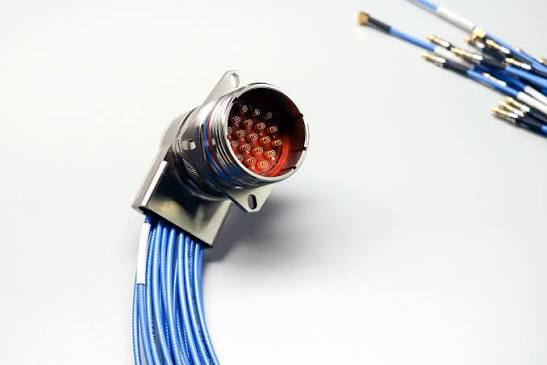
Fiber-optic connectors provide the physical connections that allow optical signals to travel between network components. In AI data centers, where high-bandwidth communication supports intensive computing workloads, connector quality directly affects the reliability of the wider system.
Manufacturers must produce connectors with accurate dimensions and consistent geometry. Even small variations in molded components can complicate assembly and affect how reliably the connection performs under changing environmental conditions.
BASF positions its Ultrason E and S grades for fiber-optic connector applications, including Lucent Connector (LC) and Multi-fiber Push-On (MPO) designs. Their material properties can support precise molding, low shrinkage and dimensional stability across temperature variations.
BASF Plastics & Rubber
+1
Several characteristics matter when evaluating polymers for these components:
Dimensional precision: Low shrinkage and limited warpage help manufacturers maintain tight tolerances in small, complex connector designs.
Thermal performance: Stability across changing temperatures supports consistent component geometry during operation.
Moisture management: Low water uptake can help preserve dimensional consistency and support reliable optical connections.
Fire safety: Appropriate flame-retardant performance helps manufacturers meet the safety requirements applicable to their component designs.
These characteristics create a specialized purchasing requirement. A low-cost polymer may appear attractive initially, but its overall value depends on molding consistency, production yield and the performance of the finished connector.
Procurement teams should therefore request grade-specific technical documentation and confirm suitability for the exact connector design. They should also assess whether the selected material meets the customer's dimensional, thermal and applicable fire-safety requirements.
Cable Jacketing and Magnet Wire Insulation: Managing Electrical Stress
AI infrastructure needs dependable electrical connections alongside high-speed data transmission. Power distribution equipment, transformers and cable assemblies must handle demanding electrical and thermal conditions while maintaining mechanical integrity.
Cable jacketing protects conductors and insulation systems against environmental exposure and physical damage. Magnet wire insulation serves a different but related purpose, providing an insulating layer around conductive wire used in electrical equipment such as motors and transformers.
BASF identifies Ultrason P, based on PPSU, for cable jacketing and magnet wire insulation. Its stated application range includes aluminum and copper magnet wires operating in hot oil at temperatures up to 200°C, making grade-specific thermal and electrical performance important considerations for buyers.
BASF Plastics & Rubber
+1
The relevant purchasing factors include:
Heat resistance: The material must maintain suitable performance at the component's expected operating temperature.
Electrical insulation: Buyers need to confirm that the grade meets the electrical requirements of the finished wire or cable system.
Chemical resistance: Exposure to oils, cleaning agents and other substances can affect material suitability.
Extrusion performance: Consistent processing helps manufacturers produce continuous insulation layers and cable jackets with the required quality.
BASF also identifies potential opportunities to replace certain PFAS-containing polymers in selected cable and wire insulation applications. Buyers should evaluate such alternatives against their technical requirements rather than assume that one polymer can replace every existing formulation.
BASF
+1
For procurement teams, the central issue is the relationship between material performance and total operating cost. A suitable polymer may help reduce manufacturing problems and support component durability, but buyers must assess those benefits alongside resin price, processing conditions and qualification costs.
Thermal Management Adds Another Engineering Plastics Opportunity
AI computing systems generate substantial heat, so data center operators must manage temperatures across equipment, power systems and cooling infrastructure. Thermal management components need to retain their dimensions and mechanical properties while encountering heat, water or other cooling media.
BASF's Ultrason portfolio also targets components used in thermal management, including cooling pipe fittings, manifolds and fan blades. Ultrason E and P grades offer combinations of chemical resistance, dimensional stability and mechanical performance relevant to selected cooling applications.
BASF Plastics & Rubber
+1
This application area broadens the opportunity beyond connectivity and electrical insulation. Polymer suppliers can potentially serve manufacturers involved in cooling equipment, industrial fluid systems and related electronic infrastructure.
However, material selection must reflect the intended service conditions. A polymer used in a cooling manifold, for example, needs evaluation against the relevant fluid chemistry, pressure, temperature and mechanical loads.
Buyers should also consider the complete manufacturing process. Mold design, component thickness, processing temperatures and quality control all influence the performance of the finished part.
What This Development Means for Chemical Traders and Importers
The expansion of high-performance polymers into AI-related applications creates a more specialized sourcing environment. Traders and importers need to distinguish between commodity plastics, general engineering polymers and specialty resins designed for demanding electrical and thermal conditions.
Price remains important, but technical compatibility can determine whether a resin qualifies for a particular application. A cheaper material may not deliver the same combination of dimensional precision, heat resistance and electrical insulation as the specified grade.
Chemical trading businesses can strengthen their position by focusing on several priorities:
Build technical product knowledge: Understand the differences between PSU, PESU and PPSU, including their intended uses and processing requirements.
Source exact grades: Confirm the manufacturer's grade designation, product documentation and application suitability before quoting a buyer.
Assess supply continuity: Discuss lead times, order quantities, packaging requirements and repeat-order availability with suppliers.
Support customer qualification: Help buyers obtain technical data sheets and other documentation needed for material evaluation.
Compare total procurement costs: Consider processing efficiency, material wastage and quality requirements alongside the quoted resin price.
Importers should also clarify the commercial terms of each transaction. Delivery schedules, shipment size, payment conditions and responsibility for freight can affect the final landed cost.
Specialty polymer transactions may require closer coordination between procurement, engineering and quality teams than routine commodity purchases. Traders that facilitate this communication can provide greater value than suppliers that compete on price alone.
Supply Chain and Material Qualification Risks
High-performance engineering plastics serve applications where component failure can affect larger systems. Buyers therefore need a disciplined qualification process, particularly when introducing a new grade or changing an established supplier.
The first step involves confirming the exact material specification. Polymer family alone does not establish suitability because different grades may have distinct viscosity, processing behavior and performance characteristics.
Procurement teams should review the following areas before committing to a new supply arrangement:
Technical documentation: Obtain the relevant product data sheet and verify the properties required by the application.
Processing compatibility: Confirm that the resin suits the customer's molding or extrusion equipment and manufacturing conditions.
Quality consistency: Establish incoming inspection procedures and agree on documentation for repeat shipments.
Supply planning: Evaluate lead times, minimum order quantities and contingency arrangements for critical production requirements.
Application approval: Confirm whether the end customer requires testing, formal qualification or specific component-level approvals before material substitution.
These checks become especially important when a buyer sources through an intermediary. Clear communication about grade identity and intended use helps reduce the risk of receiving a technically unsuitable product.
Procurement teams should avoid treating an alternative polymer as an automatic replacement based on a similar headline specification. Changes to electrical components, cables and connectors may require testing of the finished part, not simply comparison of resin data sheets.
The Competitive Position of Specialty Polymers
BASF's Ultrason application focus illustrates how specialty polymers can support the evolution of electronic infrastructure. As manufacturers pursue smaller components, higher performance and greater operational reliability, material suppliers must address increasingly specific design requirements.
The commercial opportunity depends on more than AI-related demand alone. High-performance polymers also serve automotive, medical, filtration and other industrial applications, giving suppliers access to multiple end markets.
BASF Plastics & Rubber
+1
For chemical traders, this diversification can support a more resilient product strategy. However, specialty polymers require stronger technical sales capabilities and more careful product matching than many standard commodity resins.
Suppliers that understand application requirements can help buyers navigate grade selection, qualification and processing considerations. This expertise can support longer-term commercial relationships, especially where material consistency and reliable supply influence the customer's production performance.
What Procurement Teams Should Do Next
The growing role of engineering plastics in AI infrastructure creates a practical opportunity for buyers to reassess their sourcing strategies. Rather than evaluating polymers only by unit price, procurement managers should connect material specifications with the operating requirements of the finished component.
A structured sourcing process should begin with the intended application, followed by a review of temperature exposure, electrical performance, mechanical demands and chemical contact. Buyers can then compare suitable grades, confirm processing compatibility and evaluate supply arrangements.
For chemical traders and importers, the priority is to match customers with the right material category and maintain clear documentation throughout the purchasing process. Specialty polymers such as PSU, PESU and PPSU require careful grade selection, but this technical focus can help buyers secure materials that support demanding industrial applications.
As AI data centers expand, demand for reliable connectors, cables, electrical systems and thermal management components will keep material performance central to procurement decisions. Businesses that combine technical understanding with disciplined supplier evaluation will be better positioned to serve this evolving market.

PVC Resin
Found this useful?