Battery Energy Storage Integration Requires New Process Safety Management Frameworks
Battery energy storage systems are becoming increasingly important for industrial power management, renewable energy integration and grid flexibility. As facilities deploy larger battery energy storage systems, traditional process safety management approaches must adapt to address hazards that differ from conventional chemical processing operations.
CEP's August 2026 coverage highlights the need for facilities deploying BESS to develop process safety management approaches specifically around battery-related hazards. The issue is becoming increasingly important as energy storage installations move into industrial environments where chemical, electrical and fire risks can interact.
For facility operators, engineers and procurement teams, the challenge is not simply installing batteries safely. It is creating a management framework that covers the entire BESS lifecycle, from system selection and installation through operation, maintenance and emergency response.
Why BESS Creates New Safety Challenges
Battery energy storage systems combine electrical equipment, energy-dense cells, thermal management systems and control electronics within a relatively compact installation.
Lithium-ion systems can present particular hazards when cells experience thermal runaway. A damaged or malfunctioning cell can generate heat and gases, potentially affecting adjacent cells and creating fire or explosion risks if the system does not contain the event effectively.
These hazards require a different approach from traditional process equipment.
A conventional process safety framework may focus heavily on chemical inventories, pressure systems, process reactions and mechanical equipment. BESS installations require those concepts to be supplemented with battery-specific hazard identification.
Important considerations include:
Thermal runaway: Assess how cell failures could initiate and propagate.
Fire propagation: Evaluate whether an event in one battery module could affect adjacent equipment.
Gas generation: Consider gases that may be released during battery failure.
Electrical hazards: Address high-voltage equipment, stored electrical energy and isolation requirements.
Cooling systems: Evaluate the reliability of thermal management equipment.
Emergency response: Establish procedures for detection, isolation and incident management.
Process Safety Management Must Extend Beyond Installation
BESS safety cannot be treated as a one-time engineering exercise completed when the system becomes operational.
Battery systems change over time. Cell degradation, software updates, maintenance activities and changes in operating conditions can influence risk.
A strong management framework should therefore cover the full operating lifecycle.
This includes:
Design: Identify hazards before equipment is installed and evaluate system-level protection.
Commissioning: Confirm that monitoring, alarms, isolation and emergency systems operate as designed.
Operation: Track battery performance and identify abnormal conditions early.
Maintenance: Control work on electrical and battery systems through appropriate procedures.
Modification: Reassess hazards whenever battery capacity, configuration or control systems change.
Decommissioning: Plan safe removal, transportation and disposal of battery equipment.
This lifecycle approach helps ensure that safety controls evolve alongside the installation.
Thermal Runaway Requires a Different Hazard Review
Thermal runaway is one of the defining hazards associated with lithium-ion BESS installations. It can create rapidly changing conditions that challenge conventional emergency response assumptions.
A process safety review should therefore consider the chain of events rather than focusing only on individual battery cells.
Questions can include:
What conditions could initiate thermal runaway?
How quickly can the system detect abnormal temperature or electrical behavior?
Can a failed module affect neighboring modules?
How effectively can the system isolate affected equipment?
What gases or combustion products could accumulate?
Can emergency responders safely approach the installation?
What happens if cooling or control systems fail?
These questions can help operators identify weaknesses in the overall protection strategy.

Emergency Response Must Be Designed Around BESS Hazards
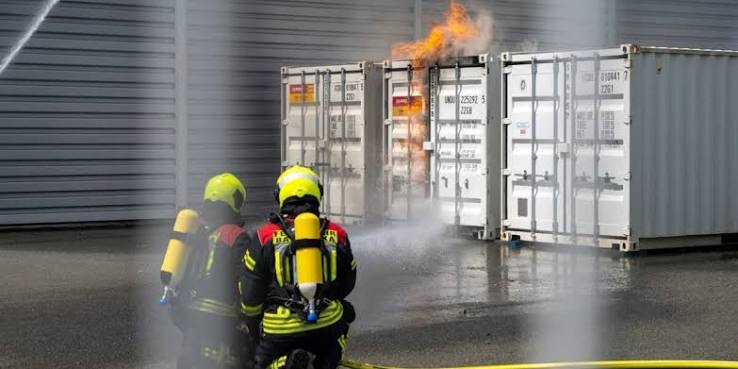
Battery incidents can behave differently from conventional industrial fires. Emergency responders need information about the battery chemistry, system configuration, electrical isolation and potential hazards before approaching an incident.
Facility operators should therefore develop emergency plans specifically for BESS installations.
The plan should address:
Alarm activation.
Electrical isolation.
Site evacuation.
Emergency responder notification.
Fire response.
Re-ignition risks.
Damaged battery handling.
Post-incident monitoring.
Clear communication between facility personnel and emergency services can become especially important when BESS equipment is located near manufacturing plants, warehouses or other industrial infrastructure.
Procurement Decisions Can Influence Safety Performance
BESS safety begins before equipment arrives at the facility. Procurement teams can influence risk through supplier qualification and technical specifications.
Choosing a battery system solely on capital cost can overlook important differences in safety architecture, monitoring capabilities and service support.
Procurement teams should evaluate:
Battery chemistry and system configuration.
Thermal management design.
Battery management system capabilities.
Fire and gas detection.
System isolation features.
Supplier safety certifications and testing.
Maintenance requirements.
Emergency response documentation.
Availability of replacement components.
Supplier support throughout the system lifecycle.
This approach makes procurement part of the facility's process safety strategy.
Supplier Documentation Should Support Process Safety
Operators need detailed information about how BESS equipment behaves under normal and abnormal conditions. Suppliers should therefore provide comprehensive technical documentation during system qualification.
Relevant information can include operating limits, alarm thresholds, maintenance requirements and emergency procedures.
Documentation should also remain current after installation. Software changes, equipment modifications or updated safety procedures can affect how operators manage the system.
A clear documentation trail can support both operational safety and regulatory compliance.
Facility Integration Creates Additional Risks
A BESS installation rarely operates in isolation. It may be connected to manufacturing equipment, renewable generation, grid infrastructure or existing chemical processes.
This creates opportunities for hazards to interact.
For example, a battery installation may be located near combustible materials, process equipment or occupied buildings. A process safety review should therefore examine the physical relationship between the BESS and surrounding assets.
Facility-level risk assessments can consider:
Separation distances.
Fire exposure.
Access for emergency responders.
Electrical interconnections.
Ventilation.
Nearby chemical inventories.
Evacuation routes.
Impact on critical operations.
This moves BESS safety from an equipment-level question to a facility-wide process safety issue.
Maintenance and Workforce Training Matter
Even a well-designed battery system can become hazardous if personnel do not understand its operating characteristics.
Workers involved in inspection, maintenance or emergency response should understand the hazards associated with stored electrical energy and battery failure.
Training should cover normal operating conditions as well as abnormal events.
Contractors also need appropriate information before performing work on BESS equipment. Procurement teams can incorporate training and competency requirements into service agreements to ensure that external personnel meet the facility's safety expectations.
BESS Decommissioning Will Become an Increasing Concern
As early battery installations reach the end of their useful lives, facilities will need to address safe removal and disposal.
Decommissioning creates its own challenges because batteries may retain electrical energy and damaged cells can remain hazardous.
Operators should therefore plan for the end of the system lifecycle during the initial procurement stage.
Questions around transportation, recycling, damaged batteries and residual energy should form part of long-term planning.
This is another area where supplier support can become valuable. Equipment providers that offer clear end-of-life guidance can help operators reduce uncertainty when systems eventually require replacement.
What Industrial Facilities Should Review Now
Facilities deploying or planning BESS installations can use the current safety discussion to strengthen their process safety programs.
Priority actions include:
Conduct BESS-specific hazard assessments: Identify battery, electrical, fire and gas-related hazards.
Integrate BESS into facility risk management: Evaluate interactions with nearby industrial processes.
Review emergency procedures: Coordinate response plans with local emergency services.
Strengthen monitoring: Confirm that temperature, electrical and fire detection systems provide appropriate warning.
Qualify suppliers: Evaluate safety design, documentation and lifecycle support alongside price.
Train personnel: Ensure operators and contractors understand BESS-specific hazards.
Plan for modifications: Require safety reviews before changing system capacity or configuration.
Prepare for decommissioning: Include end-of-life handling in the original project plan.
These measures can help facilities avoid treating energy storage as simply another electrical installation.
The Bottom Line for Industrial Procurement Teams
Battery energy storage is becoming an important component of modern industrial and energy infrastructure, but its integration creates hazards that traditional process safety frameworks may not fully address. Thermal runaway, electrical energy, gas generation, fire propagation and emergency response require dedicated consideration.
For facility operators and procurement teams, the key lesson is that BESS safety should begin during supplier selection and continue throughout the system lifecycle. A structured framework can connect equipment design, monitoring, maintenance, emergency response and decommissioning into one integrated safety strategy.

Calcium Carbonate (Feed Grade)
Found this useful?