Battery Storage Integration Lessons From CEP Could Inform Fertilizer Plant Energy Resilience
Battery Storage Integration Lessons From CEP Could Inform Fertilizer Plant Energy Resilience
Introduction
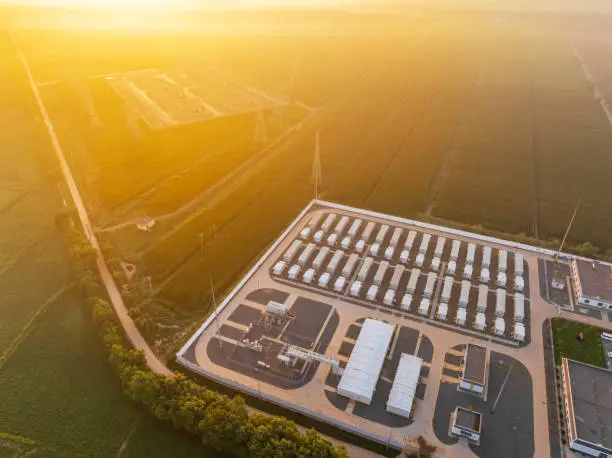
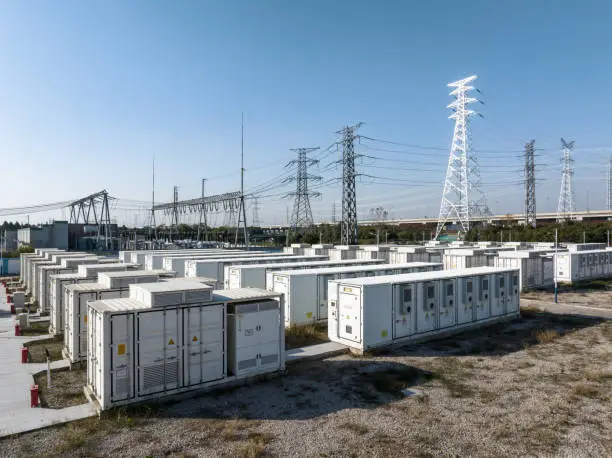
Large-scale battery energy storage is increasingly moving from a supporting technology for renewable power to a strategic tool for grid reliability, peak management, and industrial energy resilience. The proposed battery project by CEP Energy at Kurri Kurri in New South Wales, Australia, provides an example of how very large storage assets can be positioned within an energy system rather than treated simply as backup generators. The project was announced as a 1,200 MW battery intended to store electricity, particularly renewable generation, and strengthen the Hunter region's energy system.
For fertilizer producers, the underlying lesson is relevant even when the scale is much smaller. Ammonia and nitrogen fertilizer plants depend on continuous and predictable energy supply, while electricity costs and interruptions can affect production economics, equipment operation, and supply commitments. As fertilizer manufacturers increasingly integrate renewable electricity, electrification, and lower-carbon production technologies, battery storage could become part of a broader plant-level energy-resilience strategy.
What CEP's Battery Concept Demonstrates
The proposed CEP Energy project illustrates an important principle: battery storage can be integrated as part of the wider electricity system rather than functioning only as emergency backup. The Kurri Kurri proposal targeted 1,200 MW of battery capacity and was designed to absorb electricity and provide power when required, particularly in a grid increasingly influenced by renewable generation.
This model highlights several lessons for industrial facilities:
Storage can separate electricity generation from electricity consumption.
Batteries can respond rapidly to changes in grid conditions.
Renewable electricity can be stored and dispatched when demand requires it.
Energy storage can reduce exposure to short-duration supply disruptions.
Storage assets can potentially provide both resilience and economic value.
For a fertilizer plant, these principles can be adapted to the facility's specific critical loads rather than attempting to maintain the entire plant through batteries.
Why Fertilizer Plants Are Particularly Sensitive to Energy Reliability
Ammonia production is energy intensive, and the Haber–Bosch process involves tightly controlled temperature, pressure, hydrogen supply, nitrogen supply, and compression systems. Interruptions therefore have consequences beyond simply losing electricity for a few minutes.
Modern research into electrified ammonia production highlights the importance of operational flexibility. A 2026 study found that fluctuating renewable electricity can create challenges for Haber–Bosch operation because reactor pressure and temperature conditions can limit how quickly production can ramp up or down. The study also identifies battery and hydrogen storage as potential tools for managing variable power supply.
This means fertilizer producers need to distinguish between energy supply and energy resilience.
A plant may have sufficient electricity capacity under normal conditions but still remain vulnerable to:
Grid outages
Voltage fluctuations
Frequency disturbances
Peak electricity prices
Renewable generation variability
Transmission constraints
Extreme weather events
Fuel or utility interruptions
Battery storage can address some of these short-duration risks while other technologies handle longer interruptions.
Batteries Should Complement, Not Replace, Existing Backup Systems
One of the most important lessons for fertilizer producers is that batteries should not automatically be viewed as a replacement for conventional backup generation.
A practical industrial energy-resilience system could combine:
Grid electricity → Renewable generation → Battery storage → Critical plant loads
with additional layers such as:
Natural-gas generation / hydrogen fuel cells / emergency generation → Longer-duration backup
This layered approach allows batteries to respond almost immediately while longer-duration systems provide sustained power.
Research into flexible Haber–Bosch systems similarly indicates that batteries may be particularly useful for short-duration requirements, while hydrogen storage or fuel-cell systems can provide longer-duration energy storage.
For example, a fertilizer facility could use battery storage to maintain critical control systems, pumps, instrumentation, compressors, safety systems, and selected process equipment during a short grid disturbance while the plant transitions to another power source.
Renewable Integration Creates Another Opportunity
Battery storage becomes even more valuable when fertilizer plants install solar or wind generation.
Instead of:
Solar generation → Immediate plant consumption
a more flexible system could operate as:
Solar/wind → Plant consumption + Battery charging → Battery discharge during demand peaks or renewable shortages
This can help reduce renewable curtailment and improve the utilization of on-site generation.
The concept is particularly relevant to emerging green-ammonia projects. Research published in 2026 shows that decentralized electric Haber–Bosch systems can combine renewable generation, grid electricity, battery storage, hydrogen storage, and flexible ammonia production. However, the optimal combination depends strongly on local electricity prices and renewable resources.
Therefore, battery deployment should be based on an integrated energy model rather than simply adding storage capacity.
The Bigger Lesson: Design Around Critical Loads
A fertilizer producer does not necessarily need a battery capable of supporting the entire ammonia plant for several hours.
Instead, procurement and engineering teams can classify equipment according to operational importance.
Tier 1 — Critical Loads
Equipment required for safety and controlled shutdown or restart.
Examples include:
Control systems
Safety instrumentation
Emergency systems
Essential pumps
Communication systems
Monitoring equipment
Tier 2 — Process-Support Loads
Equipment that can maintain selected operations during temporary disturbances.
Examples include:
Selected compressors
Cooling systems
Water systems
Auxiliary equipment
Tier 3 — Flexible Loads
Equipment that can be reduced, delayed, or temporarily stopped.
Examples include:
Non-critical processing
Some utility loads
Non-essential pumping
Certain maintenance operations
This approach can significantly reduce the battery capacity required while still improving plant resilience.
Battery Storage Can Also Support Cost Management
Energy resilience is only one potential benefit. Batteries can also help manage electricity economics.
An industrial facility could charge batteries when electricity prices are lower and discharge them during expensive peak periods. This creates a potential energy arbitrage opportunity.
Battery systems can also potentially support demand management by reducing the plant's grid demand during peak periods.
However, battery economics depend on local electricity tariffs, storage duration, cycling requirements, degradation, financing costs, and available market mechanisms. Storage should therefore be evaluated using a combination of:
Resilience value + electricity savings + renewable integration value + grid-service revenue
rather than simply comparing battery cost with diesel-generator cost.
Implications for Fertilizer Procurement and Supply Chains
The move toward energy-storage integration also changes how fertilizer producers should evaluate their industrial supply chains.
Procurement teams may increasingly need to source:
Battery energy storage systems
Power conversion systems
Transformers and switchgear
Energy-management software
Battery monitoring systems
Thermal-management equipment
Renewable generation equipment
Backup generation
Hydrogen storage and fuel-cell systems
Power-quality monitoring equipment
This creates a new intersection between fertilizer procurement and energy procurement.
A chemical marketplace could therefore expand beyond conventional raw materials and track industrial energy infrastructure suppliers, equipment specifications, capacity, delivery schedules, warranties, maintenance requirements, and lifecycle costs.
Energy Resilience Could Become a Competitive Advantage
For fertilizer producers, reliable energy is directly connected to production reliability.
A plant capable of maintaining critical operations during grid disturbances may reduce:
Unplanned shutdowns
Restart costs
Production losses
Equipment stress
Delivery delays
Emergency procurement requirements
This becomes increasingly important as fertilizer markets become more sensitive to energy prices and geopolitical disruptions.
The concept also aligns with the broader transition toward decentralized and low-carbon ammonia production. Recent research suggests that hybrid systems combining renewable generation, grid electricity, storage, and flexible ammonia production could eventually provide more resilient fertilizer production models, although economics remain highly location-dependent.
What Fertilizer Producers Should Monitor
Companies considering battery storage should evaluate more than battery size.
Key indicators include:
Plant critical-load requirements
Historical grid outage frequency
Peak electricity tariffs
Renewable generation potential
Required backup duration
Battery degradation and replacement costs
Grid connection capacity
Power-quality requirements
Availability of alternative backup fuels
Integration with plant energy-management systems
The most important question is not “How large a battery should we buy?” but rather “Which production risks are we trying to eliminate?”
Outlook
The CEP Energy example illustrates how large-scale storage can be integrated into broader electricity infrastructure to improve flexibility and reliability. For fertilizer plants, the same principle can be applied at a smaller and more targeted scale.
The future energy architecture of fertilizer manufacturing may increasingly combine grid electricity, renewable power, battery storage, hydrogen storage, flexible process operation, and conventional backup systems.
This is particularly relevant for green-ammonia projects, where variable renewable electricity introduces a new operational challenge for processes historically designed around relatively stable energy inputs. Recent research shows that process flexibility, storage capacity, and reactor operating characteristics must be considered together rather than independently.
Conclusion
Battery storage is unlikely to solve every energy-resilience challenge facing fertilizer plants, but the integration principles demonstrated by large projects such as CEP's proposed Kurri Kurri battery offer useful lessons.
For fertilizer manufacturers, the strongest strategy may be a layered energy-resilience architecture in which batteries provide rapid short-duration support, renewable generation lowers exposure to grid electricity, and hydrogen or other backup systems address longer interruptions.
As fertilizer production becomes increasingly electrified and decarbonized, energy storage should therefore be evaluated not simply as an electricity technology, but as part of the plant's production continuity, procurement, and supply-chain resilience strategy.

Alkalized Reddish Brown Cocoa Powder
Found this useful?