Plastic Waste Is About to Become Benzene — Here's the Plant That'll Do It
Plastic Waste Is About to Become Benzene — Here's the Plant That'll Do It
From Plastic Waste to Valuable Chemical Feedstocks
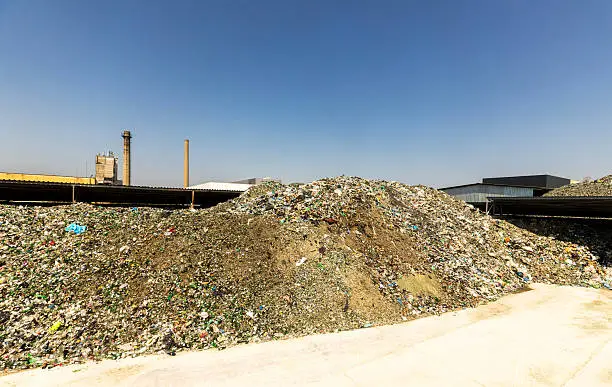
Plastic waste that would otherwise be sent to incineration or landfill could soon become a source of valuable chemicals.
Dutch circular chemistry company BioBTX has taken a major step toward commercializing its technology for converting mixed plastic waste into aromatic chemicals. The company has taken the Final Investment Decision for a commercial-scale plant at Chemical Park Delfzijl in the Netherlands. (Covestro)
The facility will use BioBTX's proprietary Integrated Catalytic Cracking Process (ICCP) technology to transform difficult-to-recycle mixed plastic waste into an aromatic oil containing benzene, toluene and xylenes (BTX).
For the chemical industry, this creates a potential route for turning discarded plastics back into useful chemical feedstocks rather than treating them solely as waste.
What Will the Delfzijl Plant Produce?
The planned facility is expected to produce approximately 10,000 tonnes per year of renewable aromatic oil, alongside around 8,000 tonnes of sustainable by-products. BioBTX expects the plant to become operational in 2028, with construction scheduled to begin in early 2027. (BioBTX)
The aromatic oil will contain valuable compounds including:
Benzene
Toluene
Xylenes
Other aromatic products
These chemicals are important building blocks for a wide range of products across the chemical and plastics industries.
How Does Plastic Become Benzene?
The process is based on catalytic pyrolysis.
In simplified terms, plastic waste is subjected to controlled thermal and catalytic processing. Instead of simply melting the plastic, the technology breaks down the long polymer chains and converts the resulting compounds into smaller hydrocarbon molecules.
BioBTX's ICCP technology is designed specifically to produce aromatic compounds from mixed plastic waste.
The resulting aromatic oil can then be further processed and used as a feedstock for chemical production.
This is particularly interesting because conventional mechanical recycling can be difficult for mixed, contaminated or degraded plastic waste.
Why Benzene Matters
Benzene is one of the major building blocks of the petrochemical industry.
It is used to manufacture materials and intermediates that ultimately contribute to products such as plastics, resins, synthetic fibers and other chemicals.
Producing benzene from waste plastics therefore creates the possibility of keeping carbon already present in the material within the chemical manufacturing cycle.
Instead of extracting only new fossil resources to produce chemical feedstocks, part of the required carbon could come from end-of-life plastic products.
Targeting Difficult Mixed Plastic Waste
One of the important features of BioBTX's project is its focus on mixed plastic waste.
Mechanical recycling generally works best when waste streams are relatively clean and well separated. Real-world plastic waste, however, can contain different polymer types, additives, contamination and other materials.
Chemical recycling technologies such as catalytic pyrolysis are being investigated because they can potentially process more complex waste streams and convert them into chemical feedstocks.
A 2026 review of plastic pyrolysis highlighted the potential of these technologies to produce valuable chemical feedstocks while also identifying industrial-scale challenges such as feedstock quality, process economics and product upgrading. (ScienceDirect)
A Commercial-Scale Step for BioBTX
The Delfzijl project represents a major change in the development of BioBTX's technology.
The company has spent approximately 14 years developing the concept, progressing through laboratory and pilot-scale development before reaching the investment decision for its first commercial-scale facility. (BioBTX)
The project is also intended to demonstrate that circular aromatics can be produced at an industrial scale rather than only in laboratory or demonstration facilities.
BioBTX has described the plant as the world's first commercial-scale facility dedicated to converting plastic waste into renewable aromatics. (BioBTX)
Covestro's Role in the Project
The project has attracted interest from major chemical companies.
Covestro has been a shareholder and strategic partner of BioBTX since 2024, with an investment in the Groningen-based company. Covestro says the partnership is part of its strategy to develop alternative raw materials and circular solutions for chemical production. (Covestro)
The potential availability of circular aromatic feedstocks could help chemical manufacturers reduce their dependence on fossil-based raw materials while continuing to use established chemical processes.
Potential Climate Benefits
BioBTX says the PETRA plant is expected to achieve a 70–80% lifecycle greenhouse-gas reduction compared with the relevant conventional pathway, according to its project information. (BioBTX)
The environmental performance of chemical recycling depends on several factors, including the type of plastic waste used, energy requirements, process efficiency, transportation and how the resulting chemicals are used.
For this reason, commercial-scale operation will be important for establishing the technology's real-world environmental and economic performance.
BioBTX Expands Its Industry Partnerships
The project is also gaining momentum through partnerships across the chemical value chain.
In September 2026, BioBTX and Rain Carbon announced a collaboration aimed at supplying renewable aromatic products to the chemical industry. The companies said the partnership will support the development of more circular chemical value chains. (BioBTX)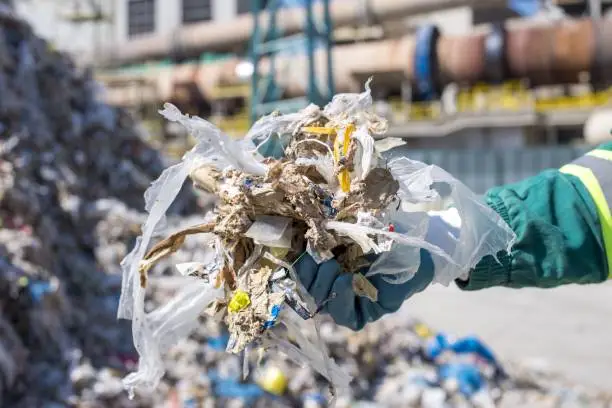
BioBTX has also worked with organizations including ExxonMobil Chemical Holland, Ketjen, NTCP, ISPT, the University of Twente and the University of Groningen through the Circular Aromatics project. That project focuses on scaling ICCP technology for complex, contaminated and mixed plastic waste. (BioBTX)
The Bigger Opportunity for Chemical Recycling
The Delfzijl plant is part of a broader movement toward using chemical recycling to recover value from plastic waste that is difficult to process mechanically.
Other technologies are also targeting the production of BTX chemicals from plastics. For example, research published in 2026 demonstrated catalytic routes for converting waste polypropylene into benzene, toluene, ethylbenzene and xylenes, illustrating the growing scientific interest in plastic-to-aromatics pathways. (ACS Publications)
The challenge now is moving from technical feasibility to reliable, cost-effective and scalable commercial production.
BioBTX's Delfzijl facility will provide an important real-world test of whether mixed plastic waste can become a dependable source of aromatic chemical feedstocks.
What Happens Next?
Construction of the Delfzijl facility is expected to begin in early 2027, with start-up targeted for 2028. Once operational, the plant is expected to produce approximately 10,000 tonnes of aromatic oil annually from plastic waste. (BioBTX)
If the technology performs as planned, the project could demonstrate a new pathway for recovering chemical value from plastic waste—turning materials that might otherwise be discarded into feedstocks for the next generation of chemical products.
Sources
https://biobtx.com/track-record/?utm_source=chatgpt.com
https://pubs.acs.org/doi/abs/10.1021/acs.energyfuels.6c01811?utm_source=chatgpt.com
https://www.sciencedirect.com/science/article/pii/S0165237026001178?utm_source=chatgpt.com
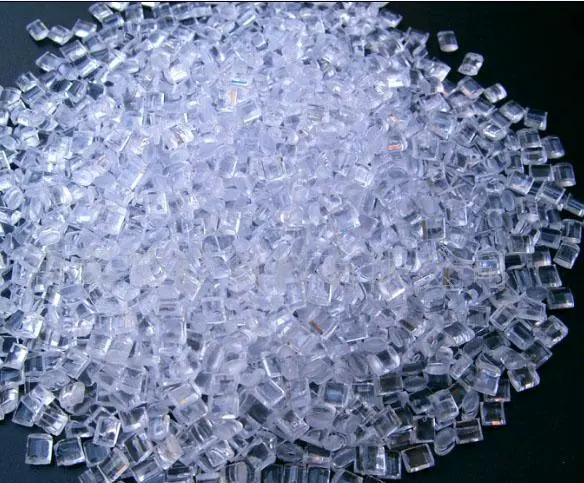
General-Purpose Polystyrene (GPPS)
Found this useful?