
Blockchain Traceability for Pharmaceutical Ingredients: 2026 Adoption Progress
Blockchain traceability in pharmaceuticals has moved beyond a purely experimental technology discussion. In 2026, platforms including MediLedger and PharmaLedger have moved into operational applications, while pharmaceutical companies continue connecting serialization, digital product identities and supply-chain events across multiple trading partners.
The regulatory push is also becoming more practical. The U.S. Drug Supply Chain Security Act requires an interoperable electronic system to identify and trace certain prescription drugs at package level, while Pakistan approved a nationwide track and trace system in June 2026 that requires standardized 2D barcodes and serialization data on medicines.
For chemical and pharmaceutical procurement teams, the important question is no longer whether blockchain can improve traceability. It is where companies have actually deployed production systems and whether ingredient suppliers can connect to them.
From Blockchain Pilots to Operational Pharmaceutical Networks
Early pharmaceutical blockchain projects focused heavily on proving that multiple companies could share trusted transaction records without placing sensitive commercial data in one centralized database.
That phase has produced several useful demonstrations. The FDA's DSCSA pilot program, for example, evaluated multiple technologies for electronic and interoperable drug tracing, including a blockchain pilot involving IBM, KPMG, Merck and Walmart.
The market is now moving toward a different test: operational value.
A useful way to assess adoption is to separate projects into three categories:
Pilot: Technology remains primarily a controlled proof of concept.
Operational deployment: Companies use the platform for a defined production workflow.
Network expansion: Additional manufacturers, distributors or other trading partners connect to an established system.
This distinction prevents the market from treating every blockchain announcement as evidence of widespread adoption.
MediLedger Has Moved Beyond the Pilot Stage
MediLedger provides one of the clearest examples of blockchain moving into production within pharmaceutical supply chains.
The network, administered by Chronicled, was originally developed around pharmaceutical traceability and DSCSA requirements. Its industry participants have included major pharmaceutical manufacturers and distributors, with the architecture designed to let trading partners verify transactions while keeping sensitive commercial information private.
The platform's development has progressed beyond its original proof-of-concept work. Chronicled has described decentralized solutions running in production, while industry reporting identifies MediLedger as operational infrastructure rather than simply a blockchain experiment.
The important lesson for procurement teams is that the commercial use case does not require every transaction to be publicly visible.
A permissioned network can allow authorized participants to verify an event while restricting commercially sensitive information. That model fits pharmaceutical supply chains where manufacturers, wholesalers and other trading partners need shared verification without exposing pricing or proprietary supplier data.
PharmaLedger Is Building a Broader Trust Infrastructure
PharmaLedger represents another significant step toward production use, particularly across European pharmaceutical ecosystems.
The organization has progressed from its original EU consortium into a member-governed platform involving pharmaceutical companies, distributors, technology providers and other stakeholders. Its current membership includes GSK, MSD, AbbVie, Takeda, Moderna, Elanco and Zuellig Pharma, among others.
Its 2026 platform emphasizes more than a blockchain ledger. PharmaLedger combines digital identities, serialized product information, GS1 Digital Link, EPCIS 2.0 and tamper-evident records to support different supply-chain workflows.
That broader architecture is important because pharmaceutical traceability depends on interoperability as much as the underlying ledger technology.
Which Pharma Companies Have Operational Use Cases?
The strongest evidence of adoption comes from companies with named production deployments rather than organizations that have merely participated in a research project.
PharmaLedger's current platform information identifies several concrete implementations:
MSD: PharmaLedger reports that its patient and healthcare professional electronic product information application has been in production since 2023 and operates across 46 countries and 29 languages. This is a production digital-labeling application rather than a pharmaceutical ingredient traceability deployment, so buyers should not treat it as evidence that MSD has blockchain-tracked every API shipment.
Takeda: PharmaLedger identifies Takeda with distribution and supply applications using GS1 Digital Link and 2D DataMatrix technology through AstraTrace. This is much closer to the serialized supply-chain use case relevant to physical pharmaceutical products.
Zuellig Pharma: The platform identifies Zuellig Pharma with EPCIS 2.0 visibility events designed to provide track and trace across supply-chain hops. EPCIS provides a standardized way to describe supply-chain events and can work alongside distributed-ledger infrastructure.
AbbVie: PharmaLedger identifies AbbVie as a participant in the platform ecosystem and reports production use of its electronic product information capability. Again, this demonstrates operational adoption of the platform but should not be interpreted as proof that all AbbVie ingredient transactions run on a blockchain.
Moderna: PharmaLedger identifies Moderna with tamper-evident audit events using a hash-chained trail. This demonstrates operational use of cryptographic integrity controls, although it is more closely associated with clinical research workflows than conventional API traceability.
The distinction matters. Operational adoption of blockchain infrastructure does not automatically mean end-to-end blockchain tracking of every pharmaceutical ingredient.
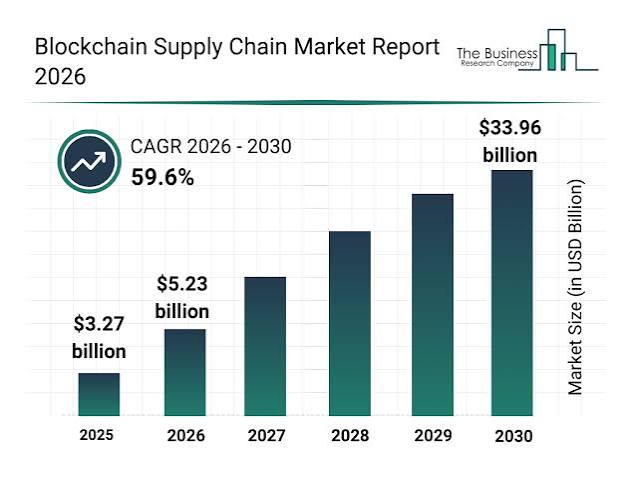
Blockchain Does Not Replace EPCIS or Serialization
One of the biggest misconceptions around pharmaceutical blockchain is that the ledger itself provides the complete traceability system.
In practice, several technologies work together.
Serialization creates unique identifiers for products or packages.
GS1 standards provide common identification and data structures.
EPCIS describes supply-chain events such as shipping, receiving and transformation.
Blockchain or distributed-ledger technology can provide a tamper-evident shared record for selected transactions.
PharmaLedger's 2026 platform reflects this combination, using GS1 Digital Link, 2D DataMatrix and EPCIS 2.0 alongside its trust infrastructure.
For buyers, this is more important than the blockchain label itself.
A practical supplier question is not simply, "Do you use blockchain?" It is, "Can you exchange the product, batch and transaction data required by our traceability architecture?"
Pakistan Adds Another Track and Trace Market
The adoption trend is not limited to the United States and Europe.
In June 2026, Pakistan's Federal Cabinet approved nationwide implementation of a pharmaceutical track and trace system aimed at reducing counterfeit, fake and substandard medicines. The framework requires pharmaceutical manufacturers and importers to use standardized 2D barcodes and serialization data.
This creates another market where pharmaceutical companies and suppliers will need digital traceability capabilities.
The Pakistani framework does not itself establish blockchain as the required technology. However, expanding serialization requirements increase the amount of structured supply-chain data that companies must capture, exchange and protect.
That creates a broader foundation for distributed-ledger applications where the commercial case supports them.
What This Means for API and Chemical Suppliers
API suppliers should not assume that blockchain adoption only affects finished-drug manufacturers.
As pharmaceutical companies connect more upstream suppliers to digital traceability networks, they may request richer documentation from API and intermediate manufacturers.
Potential requirements could include:
Digital batch certificates.
Manufacturing-site identification.
Lot-level transaction records.
Serialized shipment information.
Chain-of-custody events.
Electronic quality documentation.
Integration with customer traceability systems.
The immediate requirement will vary by customer and jurisdiction. But the direction is clear: physical product movement is becoming increasingly tied to machine-readable digital records.
Chemical traders serving pharmaceutical customers should therefore monitor traceability requirements when negotiating long-term supply agreements.
The Business Case Is Strongest Where Risk Is High
Not every chemical shipment needs blockchain.
For low-value, low-risk materials, the cost and integration burden may outweigh the benefit. For high-value APIs, controlled materials or ingredients with serious counterfeit or diversion risks, the economics can look very different.
A digital traceability investment becomes more attractive when:
Product value is high.
Counterfeit risk is significant.
Multiple organizations handle the product.
Recalls are expensive.
Regulatory traceability requirements are strict.
Supplier networks are geographically complex.
Customers require rapid batch verification.
This suggests that adoption will likely remain selective rather than universal.
What Procurement Teams Should Ask Suppliers in 2026
Procurement teams can evaluate digital maturity without requiring every supplier to adopt the same blockchain platform.
Useful questions include:
Can you provide serialized batch information electronically?
Which GS1 standards do your systems support?
Can your platform exchange EPCIS events?
Can you integrate with customer traceability networks?
How do you protect transaction records from unauthorized changes?
Can you provide a complete chain of custody for critical batches?
How quickly can you support a recall or authenticity investigation?
These questions focus on measurable capability rather than technology branding.
They also help buyers distinguish suppliers that have genuine digital infrastructure from companies that simply describe blockchain as part of their innovation strategy.
Where Adoption Goes Next
The 2026 market shows a clear progression from experimentation toward selective operational deployment.
MediLedger demonstrates that blockchain-based pharmaceutical verification and commercial workflows can operate beyond the pilot stage. PharmaLedger's current platform shows another model, combining distributed trust with GS1 standards, EPCIS, serialization and digital product information across a growing network of pharmaceutical and supply-chain organizations.
The next stage will likely focus less on proving blockchain itself and more on connecting fragmented systems.
For API manufacturers, that could mean deeper integration between quality systems, enterprise resource planning platforms, logistics providers and customer traceability networks.
For chemical traders, the impact may initially appear in supplier onboarding and documentation requirements rather than in the physical handling of chemicals.
The Bottom Line for Pharmaceutical Procurement Teams
Blockchain traceability has reached a more practical stage in 2026, but adoption remains selective. MediLedger has established production use cases in the U.S. pharmaceutical supply chain, while PharmaLedger's current ecosystem includes operational deployments and named participants such as GSK, MSD, AbbVie, Takeda, Moderna and Zuellig Pharma.
The strongest signal is not the number of blockchain pilots. It is the growing combination of serialization, standardized supply-chain events, digital identities and tamper-evident records.
For sourcing teams, this means traceability should become part of supplier qualification alongside price, quality, capacity and regulatory compliance. API and chemical suppliers that can provide reliable digital batch and transaction data will be better positioned as pharmaceutical customers expand connected supply-chain systems.
The technology will not eliminate every traceability problem. But as more regulatory regimes require serialized data and more pharmaceutical companies deploy interoperable systems, digital product provenance is moving from an innovation project toward an everyday procurement requirement.

Ammonia Anhydrous
Found this useful?