Brussels Reviews the EU Battery Recycling Targets and Leaves Them Unchanged
Brussels Reviews the EU Battery Recycling Targets and Leaves Them Unchanged
Commission Decision: Targets Remain Fit for Purpose
The European Commission adopted a report on September 11 concluding that the current EU targets for battery recycling efficiency and material recovery set out in the Batteries Regulation remain appropriate.
Waste batteries recycling targets remain fit for purpose, the Environment Directorate-General stated, after an in-depth assessment of market and technology readiness. The Commission is not proposing changes to recycling efficiency and material recovery targets for waste batteries.
What Targets Stay in Place
Recovery processes need to reach industrial scale, but thresholds are confirmed. Lithium recovery thresholds remain 50% by the end of 2027 and 80% by the end of 2031. The percentages measure different things: recycling efficiency concerns battery mass, while recovery is calculated for each targeted material. Battery chemistry and the share of casing influence how difficult it is to meet the overall recycling target.
The wider framework remains. The EU Batteries Regulation set recycling efficiency targets to be reached by 31 December 2027: 90.0% for cobalt, copper, lead, and nickel, and 50.0% for lithium. EU Battery Regulation also pushed 65% lithium recycling efficiency by end-2025 and 70% by 2030 in earlier drafts, with material recovery rising from 50% lithium by 2027 to 80% by 2031.
Why Brussels Did Not Lower the Bar
Brussels is balancing two pressures. On one side, European recyclers face low margins, especially as LFP chemistry gains share and contains less high-value cobalt and nickel. On the other side, Europe has written a battery recycling law for the wrong battery market if it rewards only cobalt-rich chemistries.
By keeping targets, the Commission signals that technology must catch up, not that ambition should fall. The European Commission has decided to maintain the battery recycling targets set by the Batteries and Cells Regulation unchanged, providing certainty to a sector that is still growing, noted industry reviews.
Export Curbs and the September 2026 Hazardous Classification
The decision comes just ahead of a critical trade rule. From September 2026, waste lithium-ion batteries and black mass will be classified as hazardous, preventing exports to non-OECD countries. From early 2026, the EU also plans to restrict exports of battery scrap and recyclable battery waste to support domestic processing and a circular economy.
The EU moves to curb rare earth exports from China and targets battery scrap recycling from 2026 under the same strategic autonomy logic. The message is clear: keep black mass in Europe to build domestic treatment capacity.
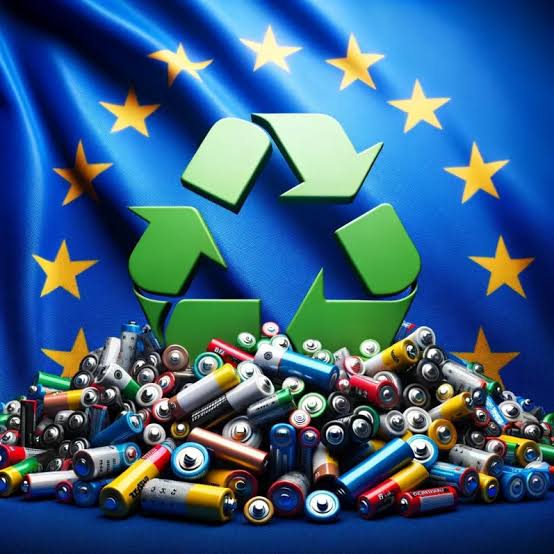
Recycled Content Quotas Still Drive Demand
The EU keeps battery recycling targets as industry prepares for tougher recovery rules. Mandatory recycled content quotas for EV batteries begin in 2031: 16% for cobalt, 6% for lithium, and 6% for nickel, rising to 26%, 12% and 15% respectively by 2036. These are not aspirational targets but enforceable thresholds.
The next big date is 18 August 2026, when Brussels must set the method for calculating and verifying recycled content. That methodology will decide whether the rule actually supports recycling capacity in Europe, or mostly becomes a compliance exercise.
Capacity Gap: What Needs Industrial Scale
Commission keeps battery recycling targets, pointing to the need for more EU treatment capacity. Current European hydrometallurgical and pyrometallurgical capacity is insufficient to handle projected end-of-life EV volumes plus production scrap. Recovery processes need to reach industrial scale, and permitting for new plants in Spain, Germany and Poland remains slow.
Porsche's 100% recycled cell prototype and new plants in Spain show momentum, but collection rates for portable batteries remain below the 63% by end-2027 and 73% by 2030 goals, requiring producer responsibility organization reform.
Implications for Chemical and Materials Producers
For chemical majors like BASF, Evonik and Wanhua that are already navigating European competitiveness warnings, unchanged recycling targets mean investment certainty but also cost pressure. Lithium hydroxide refiners must secure recycled lithium to meet quotas, while graphite sits outside recycled-content targets with no recovery rate in the regulation, a gap flagged for the 2028 review.
The parallel with other circular projects is strong. Wanhua's Taozi Bay circular water system winning the Zhan Tianyou Award for closing wastewater, reclaimed water and sludge loops shows how China rewards circular integration with top civil engineering prizes. Brussels is now rewarding circular integration with market access, not prizes.
Working Source Links:
Waste batteries recycling targets remain fit for purpose - European Commission - https://environment.ec.europa.eu/news/waste-batteries-recycling-targets-remain-fit-purpose-2026-09-11_en
Commission keeps battery recycling targets, pointing to the need for more EU treatment capacity - https://2eu.brussels/en/news/commission-keeps-battery-recycling-targets-pointing-to-the-need-for-more-eu-treatment-capacity
EU keeps battery recycling targets as industry prepares for tougher recovery rules - https://marketbusinessnews.com/eu-keeps-battery-recycling-targets-as-industry-prepares-for-tougher-recovery-rules/451315/
EU moves to curb rare earth exports from China, targets battery scrap recycling from 2026 - https://www.malaymail.com/news/money/2025/12/04/eu-moves-to-curb-rare-earth-exports-from-china-targets-battery-scrap-recycling-from-2026/200744
Battery recycling is accelerating: from Porsche's 100% recycled cell to new plants in Spain - https://en.renovablesverdes.com/el-reciclaje-de-baterias-acelera-de-la-celda-100-reciclada-de-porsche-a-las-nuevas-plantas-en-espana/

Ferrous Sulphate Heptahydrate (Recycled) - China
Found this useful?