
Calcium Chloride: Industrial Applications in Construction, De-Icing and Water Treatment
Calcium chloride plays an important role in construction, winter road maintenance and industrial water management because it absorbs moisture, dissolves readily in water and performs effectively in demanding operating conditions. For chemical traders, importers and procurement managers, these properties create several commercial opportunities across infrastructure projects, industrial facilities and municipal maintenance operations.
The market for calcium chloride serves buyers with very different requirements. Construction contractors may need a product that supports specific concrete operations, road maintenance teams often prioritize low-temperature performance and dust suppression, while industrial water-treatment facilities require consistent chemical quality for their treatment processes.
Understanding these differences helps buyers select the right grade, compare supplier quotations and avoid purchasing material that does not meet their intended application. Product form, concentration, packaging, transport arrangements and technical documentation all influence the suitability and total cost of a shipment.
What Is Calcium Chloride and Why Is It Used in Industry?
Calcium chloride (CaCl₂) is an inorganic salt that typically appears as a white crystalline solid, flakes, pellets or granules. Manufacturers also supply it as an aqueous solution for applications that require liquid dosing or direct application.
Its commercial value comes from several useful properties:
High water solubility: Calcium chloride dissolves readily in water, making it suitable for preparing industrial brines and treatment solutions.
Hygroscopic behaviour: It attracts moisture from the surrounding air, supporting its use in drying, moisture control and dust suppression.
Heat release during dissolution: Mixing calcium chloride with water releases heat, a property that requires appropriate handling and controlled preparation.
Freezing-point reduction: Calcium chloride solutions can remain liquid at temperatures below the freezing point of pure water, making them useful for ice control and refrigeration systems.
Manufacturers produce calcium chloride through several industrial routes, including the processing of natural brines and chemical processes that generate calcium chloride as a product. Production method, concentration and subsequent processing influence the final grade and its suitability for particular customers.
For B2B buyers, the key consideration is not simply whether a supplier offers calcium chloride. Buyers should establish whether the offered product meets the technical requirements of their process.
Calcium Chloride Applications in Construction and Concrete
Construction companies use calcium chloride in selected applications where its moisture-related properties and ability to accelerate cement hydration can support project requirements. Its use requires careful evaluation because the benefits depend on the concrete formulation, site conditions and structural specifications.
One established application involves accelerating the setting and early strength development of certain concrete mixtures. Under appropriate conditions, an accelerator can help contractors manage construction schedules, particularly when cooler temperatures slow the hardening process.
However, calcium chloride is not suitable for every concrete application. Chloride ions can contribute to corrosion of embedded steel reinforcement, so conventional calcium chloride accelerators should not be used in reinforced concrete or prestressed concrete where chloride exposure presents a corrosion risk.
The American Concrete Institute discusses these restrictions in its technical guidance on accelerating admixtures. Buyers should therefore confirm the intended application and obtain approval from the responsible concrete engineer before procuring material for a construction project.
American Concrete Institute
Other construction and infrastructure applications include:
Road-base stabilization: Contractors can use calcium chloride in specified road-treatment operations to help maintain moisture conditions and support unpaved road performance.
Dust suppression: Calcium chloride attracts and retains moisture, helping reduce airborne dust on gravel roads, construction access routes and selected industrial surfaces.
Aggregate and site management: Some operations use calcium chloride solutions to manage dust around stockpiles and exposed surfaces, subject to local operating requirements.
Procurement teams should specify the required concentration, application method and material acceptance criteria before placing an order. They should also verify compatibility with reinforcement, nearby metal structures and other construction materials.
Calcium Chloride for De-Icing and Winter Road Maintenance
Calcium chloride is widely used in winter maintenance because it helps melt ice and reduce further ice formation under suitable conditions. Its performance at low temperatures makes it valuable for road authorities, logistics operators, parking facilities and contractors responsible for maintaining safe transport routes.
Unlike ordinary rock salt, calcium chloride dissolves exothermically, releasing heat as it mixes with water. This can help it begin working quickly when applied under appropriate conditions, although actual performance depends on pavement temperature, ice thickness, moisture availability and application rate.
Commercial buyers commonly procure calcium chloride for three winter-maintenance methods:
Direct de-icing: Operators spread solid calcium chloride or apply a prepared solution to treat ice on roads, walkways and parking areas.
Pre-wetting road salt: Maintenance teams can use calcium chloride brine to moisten other de-icing materials, helping them adhere to road surfaces and begin dissolving.
Brine preparation: Liquid calcium chloride provides a convenient option for facilities with suitable storage tanks, dosing equipment and application systems.
The choice between solid and liquid products affects freight costs, storage requirements and application efficiency. Solid products may offer easier transport where liquid storage infrastructure is unavailable, while ready-made solutions can reduce on-site preparation work.
Calcium chloride can also cost more than conventional sodium chloride, so procurement teams should compare performance against the total operating cost rather than purchase price alone. Application rates, local weather, equipment requirements and the frequency of treatment all influence the economics of a winter-maintenance program.
Water Treatment and Industrial Moisture Control
Calcium chloride serves selected industrial water-treatment operations, particularly where dissolved calcium ions can help remove certain contaminants from wastewater. Depending on the water chemistry, treatment process and dosage, it can support precipitation reactions that separate specific dissolved substances from the liquid stream.
Industrial facilities may evaluate calcium chloride for wastewater containing substances such as fluoride, phosphate or other compounds that can form relatively insoluble calcium salts. Some industrial treatment systems also use it to assist in managing oily wastewater and removing suspended contaminants through process-specific treatment steps.
Its role depends on the actual treatment objective. Calcium chloride does not replace a complete water-treatment program, and buyers should not assume that it will remove every contaminant or produce potable water without additional treatment stages.
Moisture control provides another important market for calcium chloride. Because the material absorbs water, businesses use suitable formulations in selected drying applications, moisture-control systems and industrial processes that require reduced humidity.
Potential applications include:
Industrial drying: Suitable calcium chloride products can absorb moisture in certain gas and liquid processing operations.
Facility moisture management: Some industrial and logistics operations use calcium chloride-based products in controlled moisture-absorption systems.
Brine-based processing: Facilities may use calcium chloride solutions in industrial cooling, heat-transfer or process-fluid applications when the system specifications support their use.
Buyers should distinguish between calcium chloride used as a treatment reagent and calcium chloride used as a process fluid or desiccant. Each application has different requirements for purity, concentration, impurities and operating performance.
Commercial Grades, Product Forms and Quality Requirements
Calcium chloride suppliers offer multiple product forms and concentrations to serve different industries. Selecting the correct specification helps buyers avoid unnecessary processing costs and reduces the risk of inconsistent results at the point of use.
Common commercial forms include:
Flakes: Solid flakes are suitable for many industrial applications, including selected road-treatment and moisture-control operations. Buyers should confirm the assay, moisture content and particle characteristics.
Pellets and granules: These forms can support controlled feeding and mechanical spreading, depending on particle size and equipment design.
Anhydrous calcium chloride: This form contains very little water compared with hydrated products and typically offers a higher calcium chloride concentration by weight. It suits applications where a high active-content material is required.
Calcium chloride dihydrate: This hydrated form contains water of crystallization, which affects the percentage of calcium chloride in the product. Buyers should distinguish it from anhydrous material when comparing quotations.
Liquid calcium chloride: Suppliers provide aqueous solutions at specified concentrations for brine preparation, road maintenance and industrial processes.
A product's physical appearance does not establish its technical suitability. Two visually similar materials may differ in active content, moisture level, impurities and handling characteristics.
Before approving a supplier, procurement teams should review the following specifications:
Calcium chloride concentration: Confirm the assay or solution concentration and ensure that the basis of measurement is clear.
Moisture and impurities: Check the limits for relevant contaminants and water content, particularly for applications with strict process requirements.
Physical properties: Specify the required particle size, bulk handling characteristics or liquid concentration.
Documentation: Request a current Certificate of Analysis (CoA), Safety Data Sheet (SDS) and relevant product specification.
Batch consistency: Establish acceptable limits for variation between deliveries, especially for continuous industrial operations.
Food-grade calcium chloride also exists for approved food-processing applications, but industrial-grade material should not be substituted for food-grade products. Buyers should match the grade to the application and applicable regulatory requirements.
Supply Chain, Storage and Logistics Considerations
Calcium chloride procurement involves more than selecting a suitable concentration. Its moisture-absorbing behaviour makes packaging, storage conditions and shipment handling important factors in maintaining product quality.
Solid calcium chloride can absorb moisture during storage or transport if packaging becomes damaged or remains exposed to humid conditions. This may cause caking, changes in handling behaviour and difficulties during automated feeding.
Importers and distributors should evaluate suppliers on several operational factors:
Packaging integrity: Confirm that bags, liners or bulk containers provide suitable protection against moisture during the expected transport and storage period.
Shipment configuration: Compare bagged shipments, bulk deliveries and liquid tank transport according to order volume, receiving infrastructure and handling capacity.
Storage facilities: Maintain dry, appropriately managed storage for solid products and use compatible tanks and fittings for liquid solutions.
Delivery reliability: Check lead times, stock availability, shipment frequency and the supplier's ability to support repeat orders.
Documentation and traceability: Ensure that shipment documents identify the correct product, grade, quantity and batch information.
Importers should also calculate the landed cost, including the product price, freight, insurance, import duties, port handling and inland transportation. A lower quoted price may provide limited value if the product has a lower active concentration or requires more material to achieve the same process result.
For liquid calcium chloride, transportation planning should account for solution concentration, tank capacity, leakage prevention and compatibility with equipment. Buyers should confirm these requirements with the supplier and logistics provider before dispatch.
Price Drivers and Supplier Selection for Calcium Chloride
Calcium chloride prices vary according to product concentration, physical form, production costs, shipment size and destination market. Procurement teams that understand these variables can compare offers more accurately and negotiate contracts that reflect actual operating needs.
Several factors influence the final purchase price:
Grade and concentration: Higher-concentration products may command a different price per tonne, but buyers should compare cost per unit of active calcium chloride rather than price alone.
Manufacturing and energy costs: Production inputs, energy consumption and processing requirements influence the supplier's cost base.
Freight and packaging: Solid bags, bulk shipments and liquid deliveries involve different transport and handling expenses.
Order quantity: Larger volumes may improve the economics of freight and packaging, although minimum-order requirements and storage capacity can limit the benefit.
Seasonal demand: Winter road-maintenance demand can affect availability, inventory planning and delivery schedules in colder regions.
Quality requirements: Tighter impurity limits, specialized packaging and additional testing can increase the total procurement cost.
Supplier selection should also consider product consistency, technical support and the ability to supply the same specification across multiple orders. A supplier that provides clear documentation and reliable deliveries can help reduce production interruptions and emergency purchasing.
For importers, it is useful to request comparable quotations from multiple suppliers using the same concentration, grade, packaging and delivery terms. This approach provides a clearer basis for assessing both price and commercial reliability.
Environmental, Safety and Handling Requirements
Calcium chloride requires appropriate handling despite its broad industrial usefulness. Dissolution releases heat, while contact with the material or concentrated solutions can irritate or injure the eyes and skin.
Procurement managers should ensure that receiving facilities have appropriate procedures for unloading, storage, dilution and spill response. Workers should follow the product-specific SDS and use suitable personal protective equipment, including eye protection and gloves where required.
Environmental management also matters, especially for de-icing and dust-control applications. Chloride can move into surrounding soil, groundwater and surface water, while repeated applications may increase chloride concentrations in sensitive environments.
Canada+1
Responsible purchasing and use involve several practical measures:
Apply only the quantity required for the intended operating conditions.
Keep solid products and concentrated solutions away from incompatible materials and unprotected metal equipment.
Prevent uncontrolled releases into drains and nearby waterways.
Follow local rules governing chemical storage, transport, discharge and waste management.
Assess alternatives where chloride exposure could damage reinforced concrete, metal structures, vegetation or sensitive water resources.
These precautions help buyers balance operational performance with worker safety, infrastructure protection and environmental requirements.
What Procurement Teams Should Prioritize When Buying Calcium Chloride
Successful calcium chloride sourcing starts with a clear understanding of the end use. A product intended for road de-icing may not meet the purity or process requirements of a specialized industrial treatment operation, even if both products contain the same chemical compound.
Procurement teams should define their technical requirements before requesting quotations, then assess suppliers against a consistent set of commercial and quality criteria. This reduces specification mismatches and makes supplier comparisons more meaningful.
Before confirming a purchase, buyers should prioritize:
Application-specific specifications: Establish the required concentration, grade, physical form and acceptable impurity levels.
Verified quality documentation: Request a Certificate of Analysis, an SDS and batch-specific traceability records.
Total delivered cost: Evaluate product concentration, freight, packaging, import charges and handling requirements together.
Supply continuity: Confirm production capacity, inventory availability, lead times and the supplier's ability to support repeat shipments.
Safe storage and application: Ensure that the receiving facility can handle the product correctly and comply with relevant environmental and safety requirements.
For traders and distributors, maintaining relationships with reliable manufacturers can also improve supply planning and help serve customers across construction, road maintenance and industrial processing. Buyers who prioritize technical suitability and consistent supply are better positioned to manage procurement costs over the long term.
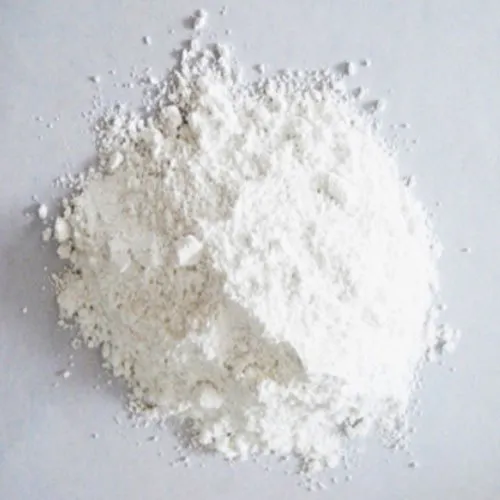
Calcium Carbonate (Feed Grade)
SOURCE LINK :https://pubchem.ncbi.nlm.nih.gov/
Found this useful?