Carbon Clean Pilots Compact CO₂ Capture Technology for Data Centres
Data centre operators face a growing challenge: meeting rising electricity demand while reducing emissions from the power systems that keep digital services running around the clock. Carbon Clean is now exploring one potential solution, compact carbon capture technology designed to fit into space-constrained data centre power plants.
The company has been selected for the Net Zero Start-Up Hub’s 2027 incubation programme, a six-month initiative running from January to June 2027. The programme will bring Carbon Clean together with data centre operators, technology leaders, investors and industry experts to assess how its modular CycloneCC technology could support lower-carbon power generation.
The initiative highlights a growing opportunity for the carbon capture sector. As data centre infrastructure expands, technology providers must develop solutions that can integrate with existing power equipment without demanding extensive space, lengthy construction programmes or disruptive site modifications.
Why Data Centres Need Compact CO₂ Capture Technology
Data centres depend on reliable electricity to operate servers, cooling systems, networking equipment and supporting infrastructure. Operators must maintain continuous service, making dependable power supply a central consideration when evaluating lower-carbon energy options.
Renewable electricity and other low-carbon energy sources can help reduce operational emissions. However, facilities that rely on fossil-fuel-based power generation may also consider carbon capture as part of a broader emissions reduction strategy.
Traditional carbon capture installations can require substantial equipment, additional infrastructure and careful integration with existing operations. These requirements create challenges for data centres, where land, building space and access to essential equipment can be limited.
Compact carbon capture systems aim to address this constraint by reducing the physical footprint of the equipment used to separate CO₂ from industrial exhaust gases. For data centre operators, a smaller installation could make it easier to evaluate carbon capture without significantly expanding the site.
The commercial opportunity depends on more than equipment size. Operators also need to understand capture performance, energy consumption, maintenance requirements and the effect of the system on the reliability of their power infrastructure.
Carbon Clean’s Six-Month Incubation Programme
Carbon Clean secured a place in the Net Zero Start-Up Hub’s 2027 incubation programme following a pitch event in Fredericia, Denmark. The company was selected as one of eight participants from more than 45 applicants across 19 countries.
The programme aims to connect emerging clean technologies with organisations that can help assess their practical applications. This structure gives technology developers an opportunity to work with industry stakeholders and examine the technical and commercial requirements for deployment.
For Carbon Clean, the immediate focus is to explore how CycloneCC could operate in data centre environments. The six-month period provides a defined window to investigate integration requirements, identify deployment barriers and develop a clearer pathway towards commercial use.
The programme is backed by organisations including APL, Danfoss, Data4, Google, Microsoft, Schneider Electric and Vertiv. Their involvement reflects the cross-industry coordination required to advance decarbonisation technologies for digital infrastructure.
Selection for the programme does not itself establish that the technology has completed a data centre pilot or achieved commercial deployment in this sector. Instead, the incubation represents a structured opportunity to examine its suitability and identify the next steps needed for implementation.
How CycloneCC Could Reduce Equipment Footprint
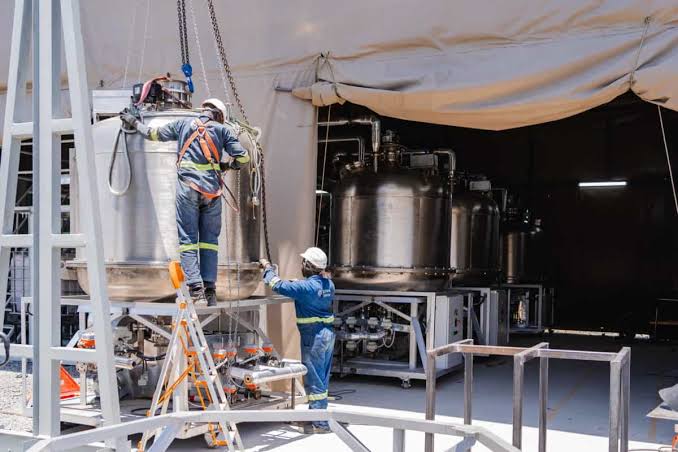
Carbon Clean's CycloneCC is a modular carbon capture system designed for industrial sites where conventional equipment can be difficult to accommodate. Its approach combines a proprietary solvent with rotating packed bed technology to intensify the process used to transfer CO₂ from gas streams into a capture medium.
The system uses the company's APBS-CDRMax solvent and rotating packed beds, which employ centrifugal force to improve mass transfer. According to Carbon Clean, this configuration can make the mass transfer equipment up to ten times smaller and reduce the overall system footprint by up to 50% compared with conventional carbon capture solutions.
Carbon Clean
These design features could be valuable in data centres, where operators must fit additional equipment around power generation assets, cooling systems, electrical infrastructure and other essential components.
Modular construction also offers potential advantages during installation. Prefabricated equipment can reduce the amount of construction required on-site, while standardised designs may make it easier to adapt the system to different facilities.
A smaller footprint, however, does not automatically guarantee lower operating costs or easier integration at every site. Engineers must assess the available space, exhaust gas characteristics, utility connections and operational conditions before determining whether a particular installation is suitable.
The Engineering Challenges of Capturing CO₂ at Data Centres
Data centre power systems impose demanding operational requirements. Carbon capture equipment must work alongside the power plant without compromising the availability, efficiency or stability of the electricity supply.
Several engineering questions will influence the suitability of CycloneCC for this environment:
- Power plant compatibility: Engineers must assess the composition, temperature, pressure and flow rate of the exhaust gas produced by the selected power system. These characteristics influence how the capture equipment performs and how it connects to the existing plant.
- Energy requirements: Carbon capture requires energy to operate process equipment and regenerate the solvent. Operators need to evaluate this demand against the facility's electricity requirements and the efficiency of its power generation system.
- Space and layout: Compact equipment may reduce land and installation requirements, but engineers must still provide sufficient access for inspections, maintenance and safe operation.
- Operational continuity: The capture system must accommodate the power plant's operating profile, including changes in output and maintenance schedules. Integration planning should minimise interference with essential electricity supply.
- CO₂ handling: Captured carbon dioxide needs an appropriate destination, such as transport for further processing, utilisation or geological storage. The availability and cost of these services can affect the overall business case.
The incubation programme provides an opportunity to examine these issues with relevant industry participants. Practical deployment will depend on whether the technology can satisfy the operational requirements of individual data centre sites.
Commercial Opportunities for Carbon Capture Suppliers
Carbon Clean's initiative could create opportunities across several parts of the carbon capture supply chain. If data centre operators find compact systems technically and commercially suitable, demand could extend beyond the capture equipment itself.
Equipment manufacturers, engineering contractors and industrial service providers may all have a role in supporting future installations. The precise requirements will depend on project design, local regulations and the availability of supporting infrastructure.
Potential areas of procurement include:
- Process equipment: Pumps, heat exchangers, rotating equipment, pressure vessels and other components may be required to support carbon capture operations.
- Industrial materials: Fabricators and equipment suppliers may provide piping, fittings, structural components and corrosion-resistant materials suited to the process conditions.
- Engineering and integration: Specialist contractors can support plant assessments, equipment layout, control system integration, installation and commissioning.
- Maintenance services: Operators may need inspection, replacement parts, solvent management and ongoing technical support throughout the equipment's operating life.
For chemical traders and procurement managers, these possibilities represent areas to monitor rather than confirmed purchase opportunities arising from the incubation programme. Actual demand will depend on the number of projects that proceed, their technical specifications and the commercial arrangements adopted by operators.
Suppliers that can demonstrate reliable product quality, consistent delivery schedules and suitable technical documentation may be better positioned to participate in future procurement processes.
Carbon Capture Economics and the Data Centre Energy Transition
The commercial case for carbon capture depends on the cost of reducing emissions relative to available alternatives. Equipment investment represents only one part of the calculation, alongside energy consumption, maintenance, solvent replacement, CO₂ transport and final storage or utilisation.
A compact system could reduce certain installation costs by lowering equipment size and infrastructure requirements. However, project economics will also depend on the amount of CO₂ captured, the operating hours of the power plant and the cost of managing the captured gas.
Data centre operators must compare these costs with other options for reducing emissions. These may include renewable electricity procurement, improvements in energy efficiency, lower-carbon power generation and other site-specific measures.
Carbon capture may be particularly relevant where operators require dispatchable electricity and want to reduce emissions associated with combustion-based generation. Its contribution will depend on the performance of the capture system and the wider emissions profile of the energy supply chain.
Procurement teams should therefore evaluate proposals using a full operating-cost assessment rather than relying on footprint reductions alone. They should also consider the availability of long-term CO₂ transport and storage services, which can influence both project feasibility and recurring expenditure.
What Industrial Buyers Should Monitor During 2027
The January to June 2027 incubation period provides a useful timeline for tracking progress towards potential data centre applications. Buyers should focus on evidence of technical suitability, integration planning and commercial readiness rather than treating programme selection as a guarantee of future orders.
Several developments will help procurement teams assess the opportunity:
- Technical validation: Look for information about operating conditions, capture performance and compatibility with the intended power generation equipment.
- Installation requirements: Assess whether modular construction can reduce site preparation, installation time and disruption compared with alternative systems.
- Operating costs: Request clear information about energy consumption, solvent requirements, maintenance intervals and expected equipment availability.
- CO₂ management infrastructure: Confirm whether suitable transport, utilisation or storage options exist near a proposed installation.
- Supplier readiness: Evaluate equipment specifications, quality assurance procedures, technical support and the ability to deliver replacement components.
Procurement teams should also distinguish between established industrial experience and performance demonstrated specifically in data centre applications. Carbon Clean has previously reported industrial operation of CycloneCC, including a deployment at a Fertiglobe nitrogen fertiliser plant in Abu Dhabi, but the data centre programme will examine the technology in a different operating environment.
That distinction matters when evaluating supplier claims, preparing tender requirements and comparing alternative decarbonisation projects.
What Carbon Clean’s Pilot Means for Future Data Centre Procurement
Carbon Clean's participation in the incubation programme signals growing interest in adapting industrial carbon capture for digital infrastructure. Its compact CycloneCC design could address one of the practical barriers facing data centre operators, namely the need to integrate emissions reduction equipment within space-constrained power facilities.
The next stage will be to determine how effectively the technology meets the sector's requirements for reliability, energy efficiency, installation flexibility and cost control. The six-month programme offers an opportunity to work through these questions with industry participants, although commercial adoption will depend on the findings and subsequent project decisions.
For chemical traders, industrial equipment suppliers and procurement managers, the development is a reason to monitor the emerging carbon capture supply chain. Businesses that understand the equipment, material and service requirements of these projects can prepare for potential opportunities without assuming that the incubation will immediately generate orders.
As data centre electricity demand continues to shape energy investment, compact carbon capture may become one option within a broader portfolio of emissions reduction technologies. Its long-term role will depend on measurable performance, competitive operating costs and access to reliable CO₂ management infrastructure.
For buyers assessing related industrial supply opportunities, understanding carbon capture requirements can also help identify demand for process chemicals, equipment materials and supporting services across the wider decarbonisation market.
Ammonia Anhydrous
Found this useful?