CF Industries' Low-Carbon Ammonia Commitment Reinforces Its Fertilizer Sustainability Strategy
CF Industries’ Low-Carbon Ammonia Commitment Reinforces Its Fertilizer Sustainability Strategy
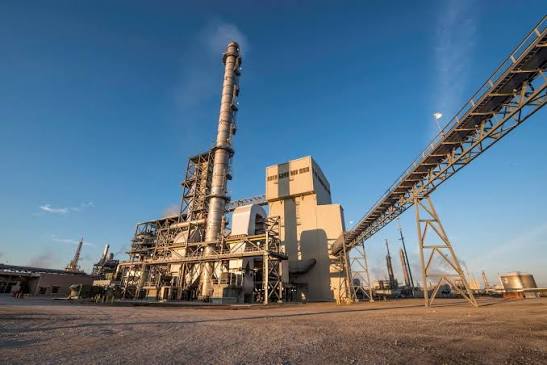
CF Industries is moving forward with construction of one of the world’s largest low-carbon ammonia facilities even as another major player reassesses its own project. The Blue Point One joint venture—led by CF Industries with partners JERA and Mitsui—broke ground in August 2026 on a 1.4-million-metric-ton-per-year plant in Modeste, Louisiana. The $3.7 billion project is designed to capture and permanently sequester the vast majority of process CO₂, positioning the output as low-carbon ammonia that can serve both traditional fertilizer markets and emerging energy applications. The advance stands in contrast to Woodside Energy’s strategic review of its recently acquired Beaumont, Texas blue ammonia asset.
CF Industries has long been the world’s largest ammonia producer. Its decision to commit substantial capital to carbon-capture-equipped capacity reflects a deliberate strategy to differentiate its product slate as customers, regulators and financiers place greater weight on emissions intensity. By pairing conventional natural-gas-based production with high rates of CO₂ sequestration, the company aims to offer a lower-carbon molecule without abandoning the scale and cost advantages of existing ammonia technology.
Advancing While Others Reassess
The Louisiana project is expected to begin production in 2029 and will be supported by shared infrastructure investments that CF Industries is funding separately. Air-separation capacity from Linde and CO₂ transport and storage arrangements with partners will enable the high capture rates required to meet customer and policy expectations for low-carbon ammonia. Groundbreaking with federal and state officials in attendance underscored the project’s alignment with broader US industrial and agricultural priorities.
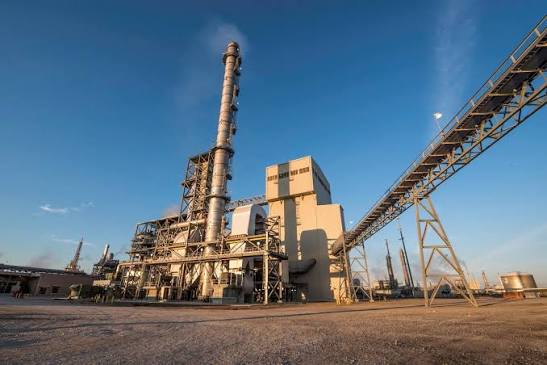
Woodside’s decision to review options for the Beaumont facility—originally developed by OCI and acquired as part of a low-carbon push—highlights the commercial and technical uncertainties still surrounding early blue-ammonia investments. Differing project timelines, carbon-capture readiness, offtake arrangements and capital-market conditions are producing divergent outcomes across the sector. CF Industries’ willingness to proceed signals confidence in both the long-term demand for lower-carbon nitrogen products and its own ability to execute at scale.
Implications for Fertilizer and Low-Carbon Markets
For the fertilizer and industrial ammonia marketplace, CF Industries’ continued investment reinforces the emerging bifurcation between conventional and lower-carbon supply. Buyers seeking to reduce Scope 3 emissions or meet procurement standards increasingly differentiate molecules on the basis of verified carbon intensity. Producers that can deliver large volumes with credible sequestration pathways gain a potential pricing and market-access advantage.
The Louisiana commitment also strengthens the US Gulf Coast’s role as a low-carbon ammonia production hub, supported by existing natural-gas infrastructure, geological storage capacity and export logistics. As more projects reach final investment decision or, conversely, face delay and review, CF Industries’ progress offers a clear data point: at least one major fertilizer producer is treating low-carbon ammonia as a core strategic pillar rather than an optional experiment.
Sulphuric Acid (60%)
Found this useful?