Woodside's Blue Ammonia Review Carries Direct Relevance to Fertilizer Feedstock Planning
Woodside's Blue Ammonia Review Carries Direct Relevance to Fertilizer Feedstock Planning
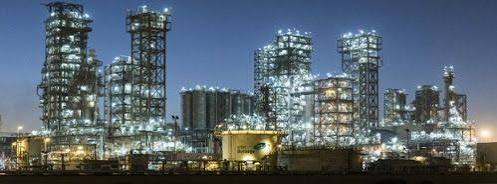
Woodside's review of its blue ammonia plans highlights a broader issue for fertilizer producers: low-carbon ammonia projects are increasingly becoming part of long-term feedstock planning, but their commercial viability remains closely tied to natural gas prices, carbon management, infrastructure and future demand for lower-emission fertilizers.
Ammonia is one of the most important building blocks in the global fertilizer industry.
It is used directly as a fertilizer and serves as the primary feedstock for products including:
Urea
Ammonium nitrate
Ammonium sulfate
UAN solutions
Other nitrogen fertilizers
Because ammonia production is highly energy intensive, the fertilizer industry's transition toward lower-carbon production is closely connected to how ammonia itself is manufactured.
This is where blue ammonia has attracted attention.
What Is Blue Ammonia?
Blue ammonia is generally produced using conventional natural-gas-based ammonia technology while incorporating carbon capture and storage.
The basic production pathway remains similar to conventional ammonia production:
Natural gas → Hydrogen → Ammonia
The difference is that carbon dioxide generated during hydrogen and ammonia production is captured and intended for permanent storage rather than released directly into the atmosphere.
This creates a potential pathway for reducing the carbon intensity of ammonia without completely replacing existing production technologies.
Why Woodside's Review Matters
A review of a major blue ammonia project is relevant beyond the individual company.
Large-scale ammonia developments influence expectations around:
Future fertilizer feedstock supply
Natural gas demand
Carbon-storage infrastructure
Low-carbon ammonia availability
Investment timing
Regional fertilizer production
When major projects are reviewed, delayed or reconsidered, fertilizer companies may need to reassess assumptions about the availability and cost of lower-carbon ammonia.
Ammonia Is Already a Strategic Feedstock
Nitrogen fertilizer production depends heavily on ammonia.
Urea manufacturing illustrates the connection clearly.
Ammonia reacts with carbon dioxide to produce urea:
2 NH₃ + CO₂ → CO(NH₂)₂ + H₂O
This means ammonia availability directly influences downstream fertilizer production.
Any structural change in ammonia supply can therefore affect the economics of nitrogen fertilizers.
Natural Gas Remains Central to the Equation
Conventional ammonia production is strongly linked to natural gas.
Natural gas provides both:
Hydrogen feedstock
Energy for the production process
As a result, ammonia prices are influenced by gas markets.
Blue ammonia does not completely eliminate this dependence.
Instead, it adds another major component:
Natural gas + Carbon capture + CO₂ transport + Storage
That means blue ammonia economics remain sensitive to gas prices while also depending on carbon-management infrastructure.
Carbon Capture Changes the Cost Structure
Adding carbon capture requires additional capital and operating expenditure.
Facilities need equipment to:
Capture CO₂
Purify and compress it
Transport it
Inject it into storage formations
Monitor storage performance
These costs can significantly influence the competitiveness of blue ammonia.
If carbon prices rise, carbon capture can become more economically attractive.
If carbon prices remain low, conventional ammonia may retain a stronger cost advantage.
Fertilizer Producers Need More Than a Low-Carbon Label
For fertilizer manufacturers, the key question is not simply whether ammonia is classified as "blue."
They need to understand the actual economics and carbon intensity.
Important factors include:
Natural gas source
Capture rate
Methane emissions
Energy consumption
CO₂ transport
Storage permanence
Certification
Total lifecycle emissions
This is increasingly important as customers and regulators demand more transparent emissions information.
Feedstock Planning Becomes More Complex
Traditional fertilizer planning focuses heavily on:
Gas availability
Gas prices
Ammonia prices
Plant capacity
Shipping
Seasonal demand
Low-carbon ammonia introduces additional variables.
Procurement teams may now need to consider:
Conventional ammonia
Blue ammonia
Green ammonia
Carbon intensity
Certification
Long-term offtake agreements
This creates a more complex feedstock-planning environment.
Blue Ammonia Can Provide a Transitional Path
One reason blue ammonia has attracted investment is that it can potentially build on existing industrial infrastructure.
Natural-gas-based ammonia technology is already commercially established.
Blue projects can potentially integrate carbon capture into existing or similar production systems.
This could make the transition easier than completely replacing fossil-based production with new technologies.
But Blue Ammonia Is Not Carbon-Free
The term "blue" should not be interpreted as meaning zero emissions.
Emissions can occur throughout the value chain.
For natural-gas-based production, methane leakage is particularly important.
Methane is a potent greenhouse gas, meaning upstream emissions can affect the overall climate performance of blue ammonia.
Therefore, lifecycle emissions matter.
Methane Performance Could Become a Competitive Factor
Two blue ammonia projects can use similar technologies but have different emissions profiles.
The difference may come from:
Gas production
Gas processing
Pipeline transportation
Methane leakage
Capture efficiency
For fertilizer buyers seeking lower-carbon products, this creates a need for more detailed supplier data.
The lowest-cost ammonia may not necessarily be the lowest-carbon ammonia.
Carbon Storage Infrastructure Is Critical
Blue ammonia depends on reliable CO₂ storage.
A project may have excellent production economics but still face constraints if suitable storage capacity is unavailable.
Developers need:
Appropriate geological formations
Transport infrastructure
Injection capacity
Monitoring systems
Regulatory approval
This creates a geographical dependency.
Blue ammonia development is therefore not simply a question of building an ammonia plant.
It also requires building or accessing a carbon-management network.
Infrastructure Can Determine Project Timing
Large industrial projects require long lead times.
Developers must coordinate:
Engineering
Construction
Gas supply
Carbon capture
CO₂ transportation
Storage
Ports
Pipelines
Offtake agreements
Delays in any one component can affect the entire project.
For fertilizer companies planning future supply, project timelines therefore need to be treated cautiously.
Long-Term Offtake Agreements Could Become More Important
Low-carbon ammonia projects may rely on long-term offtake agreements to secure financing.
Fertilizer producers could potentially become major buyers.
Such agreements can provide:
Supply certainty
Price visibility
Emissions-intensity commitments
Financing support for projects
But buyers also face risk.
Committing to a long-term contract can become unfavorable if market prices fall or alternative low-carbon supplies become cheaper.
Green Ammonia Creates a Competitive Benchmark
Blue ammonia is not developing in isolation.
Green ammonia is produced using hydrogen generated through water electrolysis powered by low-carbon electricity.
The pathway is broadly:
Renewable electricity → Electrolysis → Hydrogen → Ammonia
Green ammonia avoids the direct use of natural gas as the hydrogen source.
However, its economics depend heavily on:
Renewable electricity prices
Electrolyzer costs
Capacity utilization
Hydrogen storage
Water availability
Infrastructure
The competition between blue and green ammonia will influence future fertilizer feedstock strategies.
Geography Will Matter
The most competitive low-carbon ammonia may not necessarily be produced near fertilizer demand centers.
Projects can be developed where developers have access to:
Low-cost natural gas
Renewable electricity
CO₂ storage
Ports
Existing ammonia infrastructure
This creates potential international trade flows.
Fertilizer producers may increasingly source ammonia across borders based on both price and carbon intensity.
Shipping Could Become More Important
Ammonia is already transported internationally.
As low-carbon ammonia projects expand, shipping could connect production regions with fertilizer manufacturing centers.
This creates additional considerations:
Freight rates
Port infrastructure
Storage terminals
Ammonia handling capacity
Shipping emissions
The delivered cost of low-carbon ammonia may therefore differ significantly from its production cost.
Fertilizer Producers Need to Calculate Landed Cost
Feedstock planning should move beyond the headline ammonia price.
A more useful calculation is:
Landed ammonia cost = Production cost + Carbon cost + Transportation + Storage + Handling + Certification
This approach allows procurement teams to compare different sources more accurately.
For international fertilizer producers, this could become increasingly important.
Carbon Pricing Could Reshape Ammonia Economics
Carbon pricing is another variable that could influence the competitiveness of blue ammonia.
If conventional ammonia production faces a significant carbon cost, the relative economics of captured-carbon production can improve.
However, the effect depends on:
Carbon price
Capture rate
Gas emissions
Regulatory structure
Certification rules
Different regions may therefore reach different conclusions about blue ammonia economics.
European Demand Could Influence Global Supply
Europe's fertilizer industry faces pressure to reduce emissions while maintaining reliable nitrogen supply.
This could create demand for lower-carbon ammonia imports.
If European buyers pay a premium for verified lower-carbon feedstock, producers elsewhere may gain incentives to develop blue or green ammonia projects.
This could influence global trade flows.
Asia Remains a Major Fertilizer Market
Asian agricultural markets represent another important demand center.
Large fertilizer-consuming economies need reliable nitrogen supplies.
The availability of lower-carbon ammonia could therefore become relevant to producers seeking to reduce the emissions intensity of fertilizers sold into markets with increasingly demanding sustainability requirements.
Food Security Remains the Final Constraint
Fertilizer decarbonization cannot ignore agricultural productivity.
Nitrogen fertilizers are critical for crop yields.
If the transition to lower-carbon ammonia significantly increases fertilizer costs, farmers may face higher input costs.
This creates a difficult policy balance:
Lower emissions + Affordable fertilizer + Reliable supply + Food security
Successful low-carbon ammonia projects need to address all four objectives.
Technology Risk Still Matters
Blue ammonia relies on several technologies operating together.
Potential risks include:
Capture performance
Equipment reliability
Energy penalties
CO₂ transport
Storage availability
Methane leakage
Project developers therefore need to demonstrate not only that individual technologies work, but that the entire system performs reliably at commercial scale.
Financing Is Another Challenge
Large ammonia projects require substantial capital.
Investors need confidence that future demand will justify the investment.
That depends on:
Fertilizer demand
Carbon prices
Government incentives
Long-term offtake
Gas prices
Competing technologies
Project reviews can therefore provide an important signal about how investors perceive the future economics of low-carbon ammonia.
Fertilizer Procurement Is Becoming More Strategic
Historically, fertilizer procurement has been heavily focused on price and availability.
The emerging low-carbon market adds another dimension.
Procurement teams may increasingly evaluate suppliers according to:
Carbon intensity
Production technology
Feedstock origin
Certification
Supply reliability
Contract flexibility
This could eventually make carbon intensity a procurement specification alongside price and quality.
Digital Tools Can Improve Feedstock Planning
Modern procurement systems can combine market data with emissions information.
A fertilizer producer could theoretically compare ammonia suppliers based on:
Price + Freight + Carbon intensity + Reliability + Contract terms
This would provide a more comprehensive view of supply economics.
Scenario modeling could also help companies evaluate what happens if:
Gas prices rise
Carbon prices increase
Blue projects are delayed
Green ammonia costs fall
Shipping costs increase
Scenario Planning Will Become More Important
Fertilizer companies should avoid relying on a single future assumption.
Instead, they can develop scenarios such as:
Scenario 1: Gas remains inexpensive
Conventional and blue ammonia remain highly competitive.
Scenario 2: Carbon prices increase
Lower-carbon ammonia gains greater economic value.
Scenario 3: Renewable hydrogen costs fall rapidly
Green ammonia becomes more competitive.
Scenario 4: Low-carbon projects face delays
Conventional ammonia remains important for longer than expected.
Scenario planning allows procurement teams to prepare for multiple outcomes.
What Woodside's Review Means for Fertilizer Strategy
The broader lesson from reviewing major blue ammonia projects is that low-carbon feedstock availability should not be treated as guaranteed.
Fertilizer producers need to monitor:
Project approvals
Financing
Construction progress
Gas contracts
Carbon-storage development
Offtake agreements
Regulatory incentives
A project announcement is only the beginning.
The commercially relevant milestone is reliable production.
Key Takeaways for Fertilizer Producers
1. Blue Ammonia Can Diversify Low-Carbon Feedstock Options
It offers a pathway to lower-carbon ammonia without immediately replacing natural-gas-based production technology.
2. Gas Prices Still Matter
Blue ammonia remains closely connected to natural-gas economics.
3. Carbon Capture Adds New Infrastructure Requirements
CO₂ transportation and storage are essential parts of the supply chain.
4. Methane Emissions Cannot Be Ignored
Upstream gas emissions influence the true carbon intensity of blue ammonia.
5. Green Ammonia Creates Competitive Pressure
Fertilizer producers will increasingly compare multiple low-carbon production pathways.
6. Project Announcements Are Not Supply
Companies should distinguish between proposed capacity and commercially available capacity.
7. Procurement Needs Carbon Data
Future feedstock decisions may require both price and verified emissions information.
Conclusion
The review of Woodside's blue ammonia plans highlights a much broader challenge facing the fertilizer industry.
Ammonia is entering a period in which feedstock planning will increasingly involve more than natural-gas prices and production capacity.
Fertilizer producers must consider carbon capture, methane emissions, carbon-storage infrastructure, certification, renewable alternatives and evolving regulatory requirements.
Blue ammonia could play an important role in the transition because it builds on established ammonia-production technology while potentially reducing lifecycle emissions.
But its competitiveness is not guaranteed.
Gas prices, capture costs, carbon-storage availability and competition from green ammonia will all influence the economics.
For fertilizer companies, the strategic lesson is clear:
Low-carbon ammonia should be treated as a developing supply option, not an assumed future commodity.
Procurement teams that begin evaluating projects through the combined lens of cost, carbon intensity, infrastructure and reliability will be better positioned as the nitrogen fertilizer market moves toward a more complex and increasingly carbon-conscious feedstock landscape.

Alkalized Reddish Brown Cocoa Powder
Found this useful?