Chemical Demand in Southeast Asia: Market Opportunities and Trade Patterns
Southeast Asia has become an important region for the global industrial chemical trade. Expanding manufacturing activity, infrastructure development, urbanization, and investment in industrial facilities are supporting demand for a wide range of chemical products across the region.
Countries such as Indonesia, Thailand, Vietnam, Malaysia, Singapore, and the Philippines have different strengths within the chemical supply chain. Some are major manufacturing and consumption markets, while others play important roles in petrochemicals, refining, logistics, and international distribution.
For chemical manufacturers, exporters, distributors, and industrial buyers, the region offers opportunities across commodity chemicals, specialty chemicals, polymers, solvents, industrial gases, and water-treatment products. However, demand and trade conditions vary considerably between countries and product categories.
Major Factors Driving Chemical Demand
1. Manufacturing and Industrial Expansion
The growth of manufacturing industries is increasing demand for industrial chemicals and raw materials. Electronics, automotive, packaging, textiles, construction, and consumer goods production all depend on chemical inputs.
Vietnam, Indonesia, Thailand, and Malaysia are attracting manufacturing investment, creating opportunities for suppliers of solvents, adhesives, polymers, coatings, industrial gases, and specialty chemicals.
2. Construction and Infrastructure Development
Infrastructure projects, commercial buildings, residential construction, and industrial facilities are supporting demand for:
Construction chemicals and concrete admixtures
Paints, coatings, and protective finishes
Waterproofing and insulation materials
Industrial adhesives and sealants
Solvents and surface-treatment chemicals
As construction activity expands, manufacturers and distributors have opportunities to supply both bulk chemicals and application-specific formulations.
3. Packaging and Plastics Manufacturing
The region's packaging and consumer goods industries create demand for polyethylene (PE), polypropylene (PP), polyester materials, plastic additives, and specialty polymers.
Food packaging, e-commerce, electronics packaging, and household products are important downstream applications. However, competition and oversupply in certain petrochemical categories can put pressure on prices and producer margins.
4. Agriculture and Water Treatment
Agriculture remains an important market for fertilizers, crop protection chemicals, soil treatment products, and related chemical inputs.
Meanwhile, industrialization and urban development are increasing the need for water-treatment chemicals used in manufacturing facilities, wastewater treatment plants, and municipal infrastructure. Products such as caustic soda, coagulants, disinfectants, and treatment additives serve these applications.
Country-by-Country Market Opportunities
Southeast Asia is not a single uniform chemical market. Each country offers different opportunities based on its industrial structure, domestic demand, production capacity, and import requirements.
1. Singapore – Chemical Trading and Distribution Hub
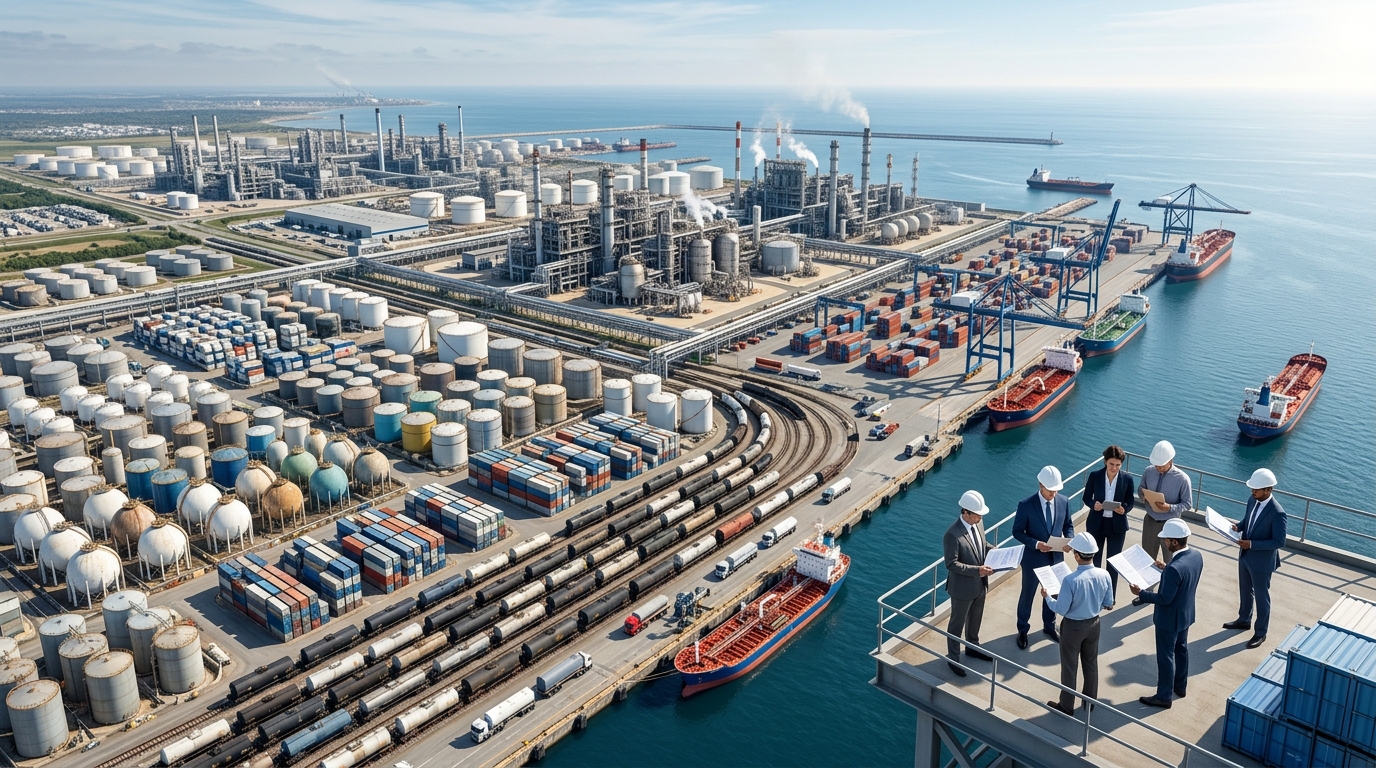
Singapore is a major petrochemical, refining, logistics, and specialty chemical center. Its established industrial infrastructure and international connectivity make it important for chemical storage, distribution, trading, and regional supply chains.
2. Thailand – Petrochemicals and Automotive Manufacturing
Thailand has a substantial petrochemical industry supporting plastics, automotive components, packaging, and electronics. Opportunities include specialty polymers, industrial solvents, coatings, and chemical additives. Its producers also face pressure from global oversupply and feedstock costs.
3. Indonesia – Large Domestic Industrial Market
Indonesia offers opportunities in fertilizers, mining-related chemicals, water treatment, construction materials, plastics, and industrial processing. Its large domestic market creates demand for imported raw materials as well as locally produced chemicals.
4. Vietnam – Manufacturing-Led Demand
Vietnam's manufacturing expansion supports demand for chemicals used in electronics, textiles, packaging, plastics, paints, and industrial processing. Its changing trade relationships also create opportunities for regional chemical exporters and distributors.
5. Malaysia – Petrochemicals and Specialty Products
Malaysia has an established petrochemical and oleochemical base. Demand and supply opportunities include polymers, industrial chemicals, specialty ingredients, surfactants, and chemicals for manufacturing. Its chemical trade also demonstrates the importance of imports alongside domestic production.
6. Philippines – Import and Downstream Manufacturing Opportunities
The Philippines offers opportunities for imported industrial chemicals used in food processing, construction, water treatment, consumer goods, and manufacturing. Chemical distributors can serve businesses that depend on international raw-material supply.
Industrial Chemical Trade Patterns Across Southeast Asia
Chemical trade in Southeast Asia involves both international imports and regional exchanges between ASEAN economies. The region's manufacturers source raw materials and intermediate chemicals from global suppliers while exporting finished and semi-finished products to international markets.
1. Dependence on Imported Feedstocks
Several Southeast Asian chemical producers depend on imported crude oil derivatives, naphtha, LNG, and other petrochemical feedstocks. This creates exposure to international energy prices, shipping costs, geopolitical disruptions, and supplier availability.
A 2026 industry assessment by Atradius highlights how feedstock dependence has affected producers across the region, with Singapore and Thailand particularly exposed.
2. Intra-ASEAN Chemical Trade
Countries within ASEAN exchange organic chemicals, polymers, industrial intermediates, and other chemical products. Regional trade allows manufacturers to source materials from nearby producers and gives exporters access to multiple industrial markets.
The ASEAN State of the Environment Report identifies organic chemicals and other chemical products among important categories of intra-ASEAN trade.
3. Imports from China and Other Asian Suppliers
China, South Korea, Japan, and India are important sources of chemical products and industrial inputs for Southeast Asian markets. Their role varies according to product category, pricing, manufacturing capacity, and trade relationships.
For regional buyers, comparing suppliers from different countries can help improve procurement flexibility and reduce dependence on a single source.
4. Export-Oriented Chemical Production
Singapore, Thailand, and Malaysia have established chemical production and export activities. Their products serve regional and international customers in plastics, packaging, automotive, electronics, and other manufacturing industries.
However, export performance varies by product. For example, Malaysia's chemical imports exceeded exports during January–September 2026, with its chemical trade deficit widening over the period.
Market Opportunities for International Chemical Suppliers
The region offers several opportunities for companies looking to expand their chemical exports or establish distribution partnerships.
Chemical category | Potential demand sectors | Commercial opportunity |
|---|---|---|
Industrial solvents | Paints, coatings, electronics, manufacturing | Bulk supply and distribution |
Specialty chemicals | Automotive, electronics, textiles | Application-specific products |
Polymers and resins | Packaging, construction, consumer goods | Industrial raw-material supply |
Water-treatment chemicals | Manufacturing, utilities, wastewater | Recurring industrial procurement |
Fertilizers and agrochemicals | Agriculture and food production | Import and distribution networks |
Surfactants | Cleaning products, personal care, textiles | Formulation and manufacturing supply |
Adhesives and additives | Packaging, construction, automotive | Specialty formulations |
Industrial gases | Electronics, healthcare, manufacturing | Long-term industrial contracts |
Growing Interest in Specialty Chemicals
Specialty chemicals offer opportunities beyond conventional commodity trading. Manufacturers increasingly require products designed for specific technical applications, including electronic-grade chemicals, high-performance coatings, industrial additives, water-treatment formulations, and advanced materials.
These products can require more technical support and quality documentation, but they also allow suppliers to compete through product performance rather than price alone.
Supply Chain Diversification
Industrial buyers are increasingly interested in maintaining alternative sourcing arrangements. Working with multiple qualified suppliers can help reduce the risks associated with shipping delays, feedstock shortages, and sudden changes in international market conditions.
For exporters, this creates opportunities to develop regional distributor relationships and offer dependable supply arrangements.
Challenges Affecting the Southeast Asian Chemical Market
Despite its opportunities, the region faces several commercial and operational challenges.
Feedstock price volatility: Changes in oil, gas, and naphtha prices can increase production costs.
Global oversupply: Excess capacity in certain petrochemical products can reduce selling prices and profit margins.
Logistics disruptions: Shipping delays and higher freight costs can affect delivery schedules.
Regulatory differences: Chemical registration, labeling, safety documentation, and import requirements vary by country.
Competition: Suppliers from China, India, South Korea, Japan, and other markets compete for regional customers.
Environmental requirements: Increasing attention to emissions, waste management, and sustainable manufacturing is influencing investment decisions.
These challenges make market research, supplier diversification, and country-specific compliance important for companies entering the region.
What Chemical Buyers Should Consider Before Sourcing
For importers, manufacturers, and distributors, successful chemical procurement requires more than finding a competitive quotation.
Product specifications: Confirm grade, purity, concentration, and technical suitability.
Regulatory documentation: Review safety data sheets (SDS), certificates of analysis (COA), and applicable registration documents.
Supplier verification: Evaluate manufacturer credentials, production capacity, and quality-control procedures.
Import requirements: Check customs classification, duties, permits, and local chemical regulations.
Packaging and transportation: Confirm that packaging and shipping arrangements are suitable for the chemical's properties.
Supply continuity: Review lead times, stock availability, and alternative sourcing options.
Total landed cost: Consider freight, insurance, duties, storage, and handling costs alongside the quoted price.
Outlook for Industrial Chemical Demand in Southeast Asia
Southeast Asia remains an important long-term market for industrial chemicals because of its manufacturing base, expanding consumer markets, infrastructure investment, and integration into global supply chains.
However, the near-term outlook is more challenging. An October 2026 assessment by Atradius forecast regional chemical production growth of just 0.1% for 2026, reflecting feedstock disruptions, higher costs, and weak downstream demand. It also identified potential for a recovery in 2027 if supply conditions improve.
For international suppliers, the strongest opportunities may come from understanding individual country requirements, targeting industries with recurring chemical needs, and building dependable distribution partnerships. Companies that combine competitive pricing with technical support, product quality, and reliable delivery will be better positioned to participate in the region's evolving chemical trade.
https://atradius.sg/knowledge-and-research/reports/industry-trends-chemicals?

Alum
Found this useful?