
Chemical Grade Selection: Understanding Purity, Concentration and Specifications
Chemical grade selection is an important part of industrial procurement because the quality and composition of raw materials directly influence manufacturing performance, product consistency and regulatory compliance. Chemicals with the same name or molecular formula can differ significantly in purity, concentration, impurity limits and suitability for particular applications.
Industrial buyers often compare products based on price and availability, but these factors alone cannot determine whether a chemical meets production requirements. A lower-cost material may contain impurities that interfere with processing, while a higher-purity grade may introduce unnecessary costs when the application does not require it.
Understanding chemical purity, concentration and specifications helps procurement managers, chemical traders, importers and manufacturers select suitable products and evaluate suppliers more effectively. It also reduces the risk of production interruptions, rejected batches and unexpected quality problems.
1. What Is Chemical Grade Selection?
Chemical grade selection involves choosing a chemical product according to its intended application, required composition and applicable quality standards. Manufacturers produce chemicals in different grades to meet the needs of industries with varying technical and regulatory requirements.
A chemical used for industrial cleaning may have different quality requirements from the same substance used in food processing or pharmaceutical manufacturing. Although the chemical identity may be identical, acceptable impurity levels and documentation requirements can differ substantially.
Why Chemical Grades Matter
Chemical grades help buyers identify whether a product is suitable for a particular process. However, grade descriptions do not always represent universal quality standards.
Terms such as industrial grade, technical grade and commercial grade can vary between suppliers. Buyers should therefore review actual specifications rather than relying on the grade name alone.
Selecting the correct grade can support consistent product performance, reduce manufacturing waste and improve cost control.
2. Common Chemical Grades Used Across Industries
Chemical manufacturers and distributors offer multiple grades depending on application requirements. Each grade may involve different production methods, purification processes, testing procedures and quality documentation.
Industrial Grade
Industrial-grade chemicals support manufacturing processes such as water treatment, textile processing, metal cleaning, construction materials and general chemical production.
These products must meet the specifications required by their intended industrial applications, but they may not meet the purity or impurity limits needed for food or pharmaceutical use.
Technical Grade
Technical-grade chemicals are commonly used in industrial processing, chemical synthesis and manufacturing operations.
The term does not establish a universal purity percentage. Suppliers may offer different technical-grade specifications depending on the chemical and production process.
Food Grade
Food-grade chemicals are intended for applications where the substance is permitted for food use and meets applicable identity, purity and safety requirements.
Food-grade suitability depends on the specific substance, intended use and destination-market regulations. Buyers should verify compliance with relevant standards such as the Food Chemicals Codex (FCC) where applicable.
Pharmaceutical Grade
Pharmaceutical-grade chemicals may need to meet requirements established by recognised pharmacopoeias such as the United States Pharmacopeia (USP), European Pharmacopoeia (Ph. Eur.) or British Pharmacopoeia (BP).
The applicable standard depends on the substance, manufacturing application and regulatory market. A pharmaceutical grade designation should be supported by appropriate specifications and testing documentation.
Laboratory and Reagent Grade
Laboratory chemicals support analytical testing, research and experimental applications. Some products meet defined reagent standards, while others are supplied for general laboratory use.
Analytical reagent (AR) and American Chemical Society (ACS) reagent designations may indicate specific quality requirements, but buyers should confirm which standard and edition apply.
3. Chemical Purity: Understanding Quality Requirements
Chemical purity describes the proportion of a product that consists of the intended chemical substance. It is commonly expressed as a percentage, although the measurement basis and analytical method can vary.
For example, a product described as 99% pure generally contains approximately 99% of the specified substance according to the stated test method. The remaining portion may include water, related compounds, residual manufacturing materials or other impurities.
However, a purity percentage does not provide a complete picture of product quality.
Why Impurity Profiles Matter
Two chemicals with identical reported purity may contain different impurities. These differences can influence manufacturing performance, product stability and regulatory compliance.
For example, trace metals may affect catalyst performance, while moisture can interfere with water-sensitive chemical reactions. Certain impurities may also influence colour, odour or the stability of finished products.
Purity Versus Application Suitability
Higher purity does not automatically mean better value. An industrial process may perform reliably with a lower-purity grade when the impurity profile remains within acceptable limits.
Conversely, a specialised application may require strict control of specific impurities even when the overall purity difference appears small.
Buyers should therefore define purity requirements based on process needs, relevant standards and product performance rather than selecting the highest available percentage.

4. Chemical Concentration: What Buyers Need to Understand
Chemical concentration describes the amount of a substance present in a mixture or solution. It differs from purity because a concentrated chemical solution may intentionally contain substantial quantities of water or another solvent.
For example, a 50% sodium hydroxide solution contains approximately 50% sodium hydroxide by mass when the supplier specifies weight-based concentration. This does not mean the product is a defective or impure version of solid sodium hydroxide.
Common Concentration Measurements
Weight percentage (w/w): Expresses the mass of a substance relative to the total mass of the solution.
Volume percentage (v/v): Expresses the volume of a component relative to the total solution volume under defined conditions.
Weight per volume (w/v): Describes the mass of a substance within a specified volume of solution.
Molarity: Measures the amount of substance in moles per litre of solution.
Parts per million (ppm): Commonly describes trace components or impurities, provided the measurement basis is specified.
Why Concentration Matters in Procurement
Concentration affects how much active material a buyer receives in each shipment. It can also influence storage requirements, handling characteristics and transportation economics.
A lower-concentration solution may have a lower price per tonne but require larger shipment volumes to deliver the same quantity of active chemical.
Buyers should therefore compare products on an equivalent active-content basis where appropriate.
Comparing Products by Active Content
Consider two hypothetical sodium hydroxide offers:
Supplier A offers a 50% solution at USD 400 per tonne.
Supplier B offers a 32% solution at USD 300 per tonne.
Supplier A provides approximately 500 kilograms of sodium hydroxide per tonne of solution, while Supplier B provides approximately 320 kilograms.
The approximate material cost per tonne of active sodium hydroxide is USD 800 for Supplier A and USD 937.50 for Supplier B, before freight, handling and other costs.
This example illustrates why comparing solution prices without considering concentration can lead to misleading procurement decisions.
5. Chemical Specifications and Quality Parameters
A chemical specification defines the characteristics a product must meet to be acceptable for a particular application. Specifications may include physical properties, chemical composition, impurity limits and analytical test methods.
A complete specification helps buyers compare offers consistently and reduces uncertainty about product quality.
Common Specification Parameters
Assay or active content: Indicates the measured amount of the intended substance or active ingredient.
Moisture content: Measures water present in the product and may be particularly important for moisture-sensitive processes.
pH: Describes acidity or alkalinity under specified test conditions, commonly for aqueous solutions or dispersions.
Density or specific gravity: Supports product identification, process calculations and certain concentration checks.
Colour and appearance: Help identify visible differences that may affect quality acceptance or finished product requirements.
Trace impurities: May include metals, chlorides, sulfates, residual solvents or other substance-specific components.
Particle size: Can influence dissolution, mixing, flow properties and processing performance for solid chemicals.
Stability and shelf life: Help determine suitable storage conditions and inventory management requirements.
Not every parameter applies to every chemical. Buyers should prioritise specifications that affect their manufacturing process and regulatory obligations.
6. Certificate of Analysis and Supplier Documentation
A Certificate of Analysis (CoA) provides test results for a particular product batch or lot. It helps buyers determine whether the supplied material meets agreed quality specifications.
A useful CoA should identify the product, batch number, relevant test parameters, analytical results and applicable acceptance limits.
What Buyers Should Check
Procurement and quality teams should verify that the CoA corresponds to the actual delivered batch. They should also confirm that the reported results fall within the agreed specifications.
The analytical method matters because different methods may produce different results. Buyers should clarify test procedures when a parameter is critical to production performance.
Technical Data Sheet
A Technical Data Sheet (TDS) typically provides general information about a chemical's properties, specifications and recommended applications.
Unlike a batch-specific CoA, a TDS usually describes typical or standard product characteristics. Buyers should not treat typical values as guaranteed batch results unless the supplier explicitly establishes them as acceptance criteria.
Safety Data Sheet
A Safety Data Sheet (SDS) communicates chemical hazards, protective measures, storage considerations, transport information and emergency response guidance.
An SDS does not replace a CoA or technical specification. Buyers need the appropriate combination of safety, quality and regulatory documentation for their intended application.
7. Regulatory Standards and Grade Compliance
Chemical grade selection becomes particularly important when products enter regulated industries. Food, pharmaceutical, cosmetic and other applications may require compliance with specific standards and legal requirements.
Food Industry Requirements
Food ingredient buyers must verify that a substance is permitted for the intended application and meets relevant identity and purity specifications.
Standards such as the FCC can provide useful quality references, but compliance with a specification does not automatically establish that every proposed food use is legally permitted.
Pharmaceutical Applications
Pharmaceutical manufacturers may require materials that comply with applicable pharmacopoeial monographs and qualified supplier procedures.
Requirements can include identity testing, impurity limits, traceability and documentation appropriate to the material's role in manufacturing.
Industrial and Specialty Chemical Requirements
Industrial applications may follow customer specifications, industry standards or product-specific regulatory requirements.
For international trade, buyers should also review destination-market obligations, including applicable chemical registration, classification and labelling requirements.
8. How Chemical Grade Selection Affects Pricing
Chemical pricing reflects production costs, purification requirements, testing, documentation and market demand. Products with more demanding specifications may require additional processing and quality assurance.
However, higher prices do not always indicate higher suitability.
Purification and Testing Costs
Additional purification can increase manufacturing expenses. More extensive analytical testing and tighter impurity limits may also affect product costs.
Certification and Documentation
Certain applications require additional testing records, regulatory documentation or supplier qualification activities.
These requirements can influence purchasing costs, particularly when customers request specialised grades or small production batches.
Order Volume and Supply Availability
Bulk industrial grades may be widely available, while specialised grades can have fewer qualified suppliers.
Minimum order quantities, lead times and regional availability can therefore influence procurement economics.
Total Cost of Use
The lowest price per kilogram does not always provide the lowest manufacturing cost. Product concentration, process yield, waste generation and quality rejection rates can affect the total cost of use.
Buyers should evaluate these factors alongside the quoted purchase price.
9. Procurement Strategies for Selecting the Correct Chemical Grade
Chemical procurement teams should use a structured qualification process to avoid purchasing materials that do not meet production requirements.
Define the application. Identify how the chemical will be used and which properties influence product performance.
Establish measurable specifications. Set acceptable ranges for assay, concentration, impurities and other relevant parameters.
Verify the grade designation. Confirm what the supplier means by industrial, technical, food, pharmaceutical or reagent grade.
Request supporting documentation. Obtain the TDS, SDS and appropriate CoA before approving a supplier.
Compare equivalent concentrations. Evaluate active chemical content when comparing solutions of different strengths.
Assess supplier consistency. Review batch-to-batch performance, quality controls and the supplier's ability to maintain agreed specifications.
Conduct technical qualification. Where necessary, test representative samples before changing suppliers or introducing a new grade.
Review regulatory requirements. Confirm that the product meets applicable standards for the intended application and destination market.
Evaluate total procurement cost. Include freight, storage, handling, testing, waste and potential process adjustments.
A documented qualification process can help procurement and technical teams make consistent decisions while reducing the risk of unsuitable substitutions.
10. Common Mistakes in Chemical Grade Selection
One common mistake is assuming that chemicals with the same name are interchangeable. Different grades may have distinct impurity profiles, stabilisers, concentration levels or physical characteristics.
Another mistake is relying only on the stated purity percentage. A product with high assay may still contain an impurity that makes it unsuitable for a specific manufacturing process.
Buyers may also confuse a general product specification with a batch-specific analytical result. This can create problems when the delivered material differs from the supplier's typical values.
Finally, selecting a higher grade than necessary can increase costs without improving performance. The correct approach is to match chemical quality to documented process and regulatory requirements.
What Industrial Buyers Should Do Now
Chemical grade selection should begin with a clear understanding of the intended application, required purity, concentration and critical specifications. Procurement teams should verify these factors through supplier documentation, technical evaluation and appropriate quality testing.
Industrial buyers should also compare products using consistent measurement bases and consider the total cost of use rather than focusing exclusively on the quoted price.
A well-defined chemical specification and supplier qualification process can improve manufacturing consistency, reduce procurement risks and support more reliable international sourcing decisions
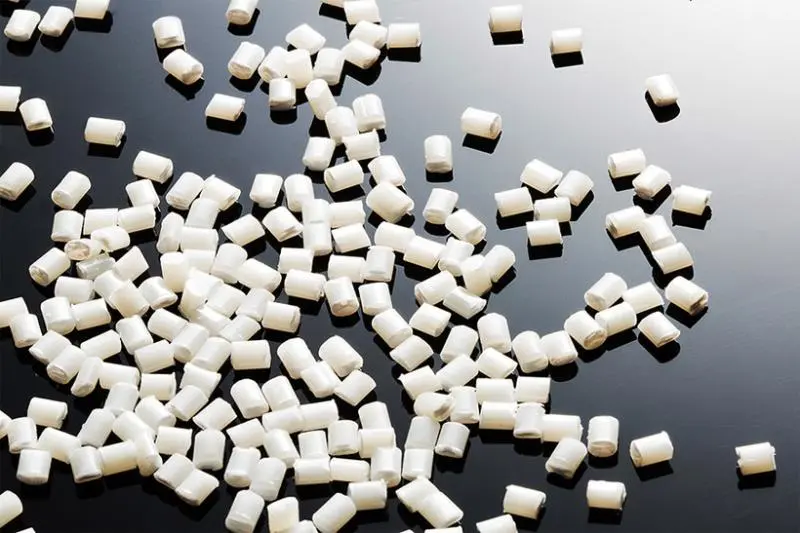
Acrylonitrile Butadiene Styrene (ABS)
Found this useful?