
Chemical Warehousing: Best Practices for Safe Storage and Inventory Control
Chemical warehousing directly affects product quality, workplace safety and the reliability of industrial supply chains. For chemical traders, importers, exporters and procurement managers, a warehouse does more than hold stock. It protects valuable inventory, supports timely order fulfilment and helps prevent incidents that can disrupt business operations.
Effective chemical warehousing combines safe storage conditions, proper chemical segregation, accurate inventory records and consistent inspection procedures. These practices become particularly important when facilities handle products with different requirements for temperature, ventilation, packaging and fire protection.
A poorly managed warehouse can expose businesses to chemical spills, damaged packaging, expired stock, inaccurate order quantities and costly shipment delays. A structured approach to storage and inventory control helps businesses reduce these risks while maintaining the product availability their customers expect.
Why Chemical Warehousing Matters for Industrial Supply Chains
Chemical warehouses connect manufacturers, distributors and end users. They allow businesses to hold inventory near customers, consolidate shipments and manage the timing between incoming supplies and outgoing orders.
However, chemical products require more careful handling than ordinary commercial goods. Their storage needs depend on properties such as flammability, corrosiveness, toxicity, reactivity and sensitivity to moisture or heat.
A well-managed warehouse delivers several operational benefits:
Product quality protection: Suitable storage conditions help maintain chemical specifications and reduce deterioration during storage.
Workplace safety: Appropriate segregation, handling equipment and emergency procedures help control exposure and prevent dangerous reactions.
Reliable order fulfilment: Accurate stock records allow warehouse teams to confirm availability and prepare shipments without unnecessary delays.
Lower inventory costs: Better stock rotation reduces avoidable waste, expired products and excess working capital.
Improved customer confidence: Consistent documentation and traceable inventory support dependable transactions between suppliers and industrial buyers.
For chemical trading businesses, these benefits influence both profitability and customer retention. A warehouse that maintains accurate records and safe operating conditions can support more predictable procurement and distribution.
Chemical Classification and Segregation for Safe Storage
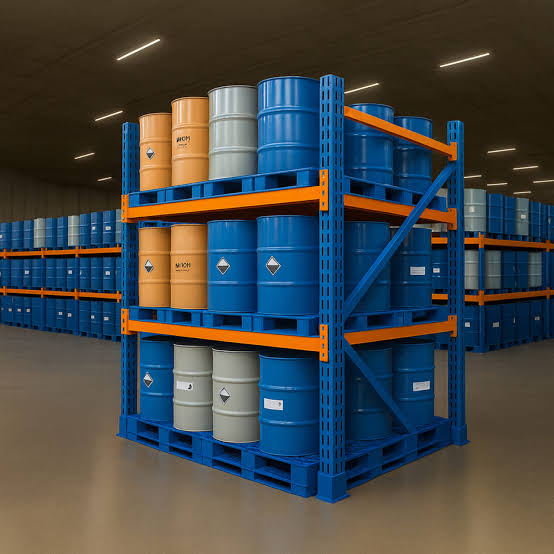
Chemical segregation is one of the most important principles in warehouse planning. Products should not share storage areas simply because they arrive in similar packages or serve related industrial applications.
Instead, warehouse managers should classify chemicals according to their hazards and compatibility. Safety Data Sheets (SDS) provide essential information about handling, storage conditions, incompatibilities and emergency measures.
For example, acids and alkalis may require separation because contact between them can generate heat and cause splashing. Oxidising agents may intensify fires when they come into contact with combustible materials, while certain incompatible chemicals can release toxic gases when mixed.
A practical segregation programme should include the following measures:
Group compatible chemicals: Establish designated storage zones based on hazard classification and compatibility requirements.
Separate incompatible products: Use appropriate distance, physical barriers or dedicated storage areas where the risk assessment requires them.
Control flammable materials: Store flammable liquids in suitable, approved storage systems with appropriate ignition controls and fire protection.
Protect sensitive products: Keep moisture-sensitive, heat-sensitive or light-sensitive chemicals within the conditions specified by the manufacturer.
Maintain clear identification: Ensure every container has the correct product identification and hazard information.
Warehouse teams should consult the relevant SDS before assigning storage locations. They should also reassess arrangements whenever the facility introduces a new product or changes the quantities stored.
Warehouse Design, Ventilation and Environmental Controls
Warehouse design determines how effectively a facility can control chemical hazards while allowing workers to receive, store, inspect and dispatch products. The layout should support safe movement, clear access routes and suitable separation between storage zones.
Storage racks, cabinets and tank systems must suit the weight, dimensions and chemical properties of the products they hold. Managers should also consider the structural capacity of the building, the risk of vehicle impact and the need for suitable fire protection.
Environmental controls require equal attention. Some chemicals remain stable under ordinary indoor conditions, while others need controlled temperatures, protection from sunlight or specialised ventilation to limit hazardous vapour accumulation.
Key warehouse design considerations include:
Ventilation: Provide ventilation appropriate to the stored chemicals and the risks associated with vapours or gases.
Temperature monitoring: Track conditions for products with defined storage temperature limits and respond promptly to deviations.
Spill containment: Use suitable secondary containment for liquids where required, with capacity and materials selected according to the chemical and applicable rules.
Safe access: Keep emergency exits, firefighting equipment, eyewash stations and other required safety facilities accessible.
Equipment protection: Separate storage from forklift routes and protect vulnerable tanks, pipes and containers from impact.
Housekeeping: Keep aisles clear, remove unnecessary materials and maintain sufficient space for inspection and emergency response.
Warehouse operators should inspect storage systems regularly for corrosion, damaged fittings, leaks and structural defects. Early detection helps prevent minor problems from becoming incidents that threaten workers, inventory or surrounding property.
Inventory Control Methods for Chemical Warehousing
Safe storage protects the physical inventory, but accurate inventory control determines whether a business knows what it owns, where it is stored and when it needs replenishment.
Chemical traders often manage multiple grades, packaging formats, suppliers and customer specifications. Without consistent records, staff can confuse similar products, allocate stock incorrectly or promise quantities that are not available for dispatch.
An effective inventory system should record the following information for each product:
Product name, grade and relevant specifications.
Supplier details and purchase order reference.
Batch or lot number and date of receipt.
Quantity received, quantity dispatched and current balance.
Storage location and applicable handling requirements.
Manufacturing date, expiry date or retest date where relevant.
Quality status, including whether the stock is approved, quarantined or held for investigation.
Digital warehouse management systems can improve visibility by connecting receiving, storage, picking and dispatch records. Barcode scanning or other identification systems can also reduce manual entry errors when workers move stock between locations.
However, technology only delivers reliable results when staff follow standard procedures. Warehouse teams should record each movement promptly, investigate discrepancies and reconcile physical quantities against system balances at defined intervals.
Inventory accuracy is a commercial control as well as an operational requirement. Procurement teams need dependable stock information to plan purchases, avoid unnecessary emergency orders and communicate realistic delivery dates to customers.
Stock Rotation, Shelf Life and Quality Assurance
Chemical inventory can lose value when businesses overlook expiry dates, packaging damage or changes in storage conditions. A structured stock rotation system helps warehouse teams identify which products need attention and reduce the risk of holding unusable material.
Two common approaches are first in, first out (FIFO) and first expired, first out (FEFO). FIFO prioritises older receipts, while FEFO prioritises products with the earliest expiry dates, making FEFO particularly useful when shelf life varies between batches.
Warehouse managers should select the method that suits the product and its quality requirements. Where expiry dates or retest dates matter, teams should prioritise those controls rather than relying on receipt dates alone.
A practical quality assurance process should include:
Incoming inspection: Check product identity, packaging integrity, quantity and accompanying documentation when shipments arrive.
Batch traceability: Maintain lot-level records so teams can identify affected stock quickly if a quality issue arises.
Periodic inspections: Look for leaks, damaged seals, corrosion, moisture exposure and other signs of deterioration.
Stock status control: Separate rejected, expired or questionable material from approved inventory until authorised staff determine the appropriate action.
Dispatch verification: Confirm product grade, batch, quantity and customer requirements before releasing an order.
Businesses should not automatically return questionable stock to available inventory after correcting a record or replacing damaged packaging. Quality personnel should assess the material and approve its release according to the applicable procedures.
Chemical Warehousing Documentation and Regulatory Compliance
Chemical storage involves responsibilities that extend beyond warehouse layout and inventory records. Businesses must understand the regulations that apply to their locations, product categories, storage quantities and distribution activities.
Requirements differ across countries and jurisdictions. A warehouse handling hazardous chemicals may need to meet specific obligations covering worker protection, hazard communication, fire prevention, environmental protection, transport classification and emergency planning.
For example, the US Occupational Safety and Health Administration (OSHA) identifies chemical inventories, accessible Safety Data Sheets, appropriate container labels and worker training as important elements of hazard communication. Its guidance also addresses safe chemical storage, tank inspections, secondary containment and protection from vehicle traffic.
Occupational Safety and Health Administration+1
Chemical warehousing teams should establish a documentation process that covers:
Safety Data Sheets: Maintain current, accessible SDS documents for the chemicals held at the facility.
Hazard labels: Preserve incoming labels and apply appropriate workplace identification where required.
Receiving and shipping records: Retain purchase orders, delivery documents, batch details and dispatch records.
Inspection logs: Document storage checks, equipment maintenance, identified defects and corrective actions.
Training records: Record relevant employee training and refresh it when products, equipment or procedures change.
Emergency procedures: Maintain response plans appropriate to the chemicals stored, including spill management, fire response and evacuation.
For international chemical traders, documentation also supports customs clearance and communication between suppliers, freight forwarders and buyers. Product descriptions, grades, packaging details and transport documentation should remain consistent throughout the transaction.
Businesses should review applicable local laws and destination-market requirements rather than assume that one warehouse procedure satisfies every jurisdiction.
Emergency Preparedness and Employee Training
Even a well-designed chemical warehouse needs a clear response plan for spills, leaks, fires, equipment failures and accidental exposure. Preparation helps workers act quickly without creating additional hazards.
Emergency procedures should reflect the actual inventory and storage arrangements. A response suitable for a small spill of one substance may be inappropriate for a leaking container of a reactive, toxic or highly flammable chemical.
Warehouse managers should establish clear responsibilities and ensure workers know when to isolate an area, raise an alarm and contact trained emergency personnel. Staff should never attempt an unfamiliar cleanup or handle a hazardous release without appropriate training, equipment and authorisation.
Important emergency preparedness measures include:
Accessible emergency equipment: Provide suitable spill response materials, protective equipment and other required safety facilities.
Clear communication: Make emergency contacts, reporting procedures and evacuation routes easy to access.
Practical training: Train workers to recognise hazards, follow handling procedures and respond within their assigned responsibilities.
Incident reporting: Record spills, near misses and equipment failures, then investigate their causes.
Routine drills: Test emergency arrangements and correct weaknesses identified during exercises.
Management should review incident findings and use them to improve storage arrangements, training and operating procedures. Regular review is especially important when the facility expands its inventory or begins handling chemicals with different hazards.
Reducing Warehousing Costs Without Compromising Safety
Warehouse efficiency depends on more than maximising storage capacity. Businesses must balance space utilisation, labour productivity and inventory availability against the safety requirements of each product.
Overstocking can increase storage costs, tie up working capital and leave chemicals in storage beyond their useful life. Understocking can create missed sales, production interruptions and expensive urgent shipments.
Procurement managers can improve this balance by monitoring consumption patterns, supplier lead times and minimum stock requirements. They should also coordinate purchase planning with warehouse capacity and any restrictions on the quantities that the facility can safely store.
Several practical improvements can support this objective:
Set replenishment thresholds: Use historical demand and supplier lead times to establish sensible reorder points for regularly purchased chemicals.
Review slow-moving inventory: Identify products that remain unused for extended periods and adjust future purchasing accordingly.
Improve location planning: Position frequently dispatched products where staff can access them safely and efficiently.
Consolidate compatible shipments: Coordinate deliveries where practical, without exceeding safe storage limits or creating incompatible storage arrangements.
Monitor performance indicators: Track inventory accuracy, order fulfilment time, damaged stock, expiry-related losses and warehouse incidents.
Cost reduction should never override chemical compatibility, storage limits or emergency access requirements. A lower storage cost offers little commercial benefit if the arrangement increases the likelihood of product damage or a serious safety incident.
What Chemical Buyers and Warehouse Managers Should Do Now
Chemical warehousing works best when procurement, logistics, quality assurance and warehouse operations follow the same standards. Each department needs accurate information about product specifications, delivery schedules, storage requirements and inventory status.
Buyers should evaluate suppliers on more than unit price. Packaging quality, documentation, batch consistency, delivery reliability and the suitability of supplied products for the intended storage conditions all influence the total cost and risk of procurement.
Before placing or receiving a chemical order, procurement teams should confirm:
The exact product grade and specification match the purchasing requirement.
The supplier provides the necessary product documentation and safety information.
The warehouse can accommodate the quantity under the required storage conditions.
The expected delivery date aligns with available capacity and inventory needs.
The receiving team can inspect, identify and record the shipment correctly.
Warehouse managers should complement these checks with documented inspections, effective stock rotation and regular inventory reconciliation. Together, these measures help businesses protect chemical quality, reduce avoidable losses and maintain a more dependable supply chain.
For chemical traders and industrial buyers, safe storage and disciplined inventory control are essential parts of reliable sourcing. Businesses that integrate these practices into procurement and distribution can improve operational consistency while protecting employees, products and customers.

Monosodium Glutamate (E621)
SOURCE LINK :https://www.osha.gov/warehousing/hazards-solutions
Found this useful?