Chemours' EPA Settlement Resolves Outstanding PFAS Claims
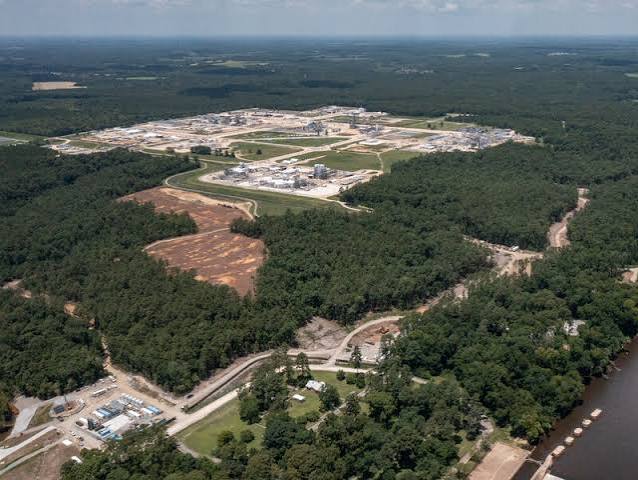
Chemours announced on June 24, 2026 that it reached a settlement with the US Environmental Protection Agency resolving claims tied to PFAS discharges and related non-compliance issues. The agreement covers three operating sites, Washington Works, Fayetteville Works and Chambers Works, with the West Virginia Department of Environmental Protection joining as a party. For a company that has spent years managing legacy PFAS liability, this settlement marks a meaningful regulatory de-risking milestone.
Buyers and partners tracking Chemours' compliance posture now have a clearer picture of what the company owes, what it has already fixed and what remains ahead.
What the Settlement Actually Requires
Under the agreement, Chemours will pay a $22.5 million civil penalty to the EPA and WVDEP, split across three annual installments in 2026, 2027 and 2028. Of that total, $15 million was already accrued before the settlement was finalized.
Separately, Chemours has committed to funding $90 million in additional mitigation projects over the next 15 years. These projects target further PFAS emission reductions and expand existing off-site drinking water programs near its facilities.
The settlement sits under the Strengthening the Long Term pillar of Chemours' broader Pathway to Thrive strategy, which the company has used as a framework for addressing legacy environmental claims. A few structural points stand out:
Multi-year penalty structure. Spreading the civil penalty across three years reduces the immediate cash impact rather than requiring a lump sum.
Long-horizon mitigation commitment. The 15-year mitigation window signals this is treated as an ongoing operational obligation, not a one-time settlement cost.
Recognition of prior work. The agreement explicitly credits operational improvements Chemours had already implemented at its facilities before the settlement closed.
Why This Matters Beyond Chemours
PFAS liability has been one of the more unpredictable cost lines for chemical manufacturers with legacy fluorochemical operations. A resolved federal claim removes a layer of uncertainty that tends to weigh on supplier risk assessments during procurement due diligence.
For buyers who source specialty chemicals or fluoropolymers from Chemours, a settled claim changes how compliance risk gets evaluated. It replaces open-ended litigation exposure with a defined, budgeted obligation running through 2028 for penalties and through the following 15 years for mitigation work.
The Broader PFAS Regulatory Picture
This settlement lands during a year when PFAS reporting deadlines, regulatory consultations and product restrictions have been overlapping across multiple jurisdictions. Chemours' agreement gives one data point in a regulatory landscape that is still fragmented rather than uniform.
The EPA's own account of the case frames the total settlement value considerably higher than the penalty and mitigation figures alone, when factoring in broader injunctive relief commitments such as alternative drinking water provisions near affected sites. That gap between how the company frames the number and how the regulator frames it is worth understanding for anyone assessing the deal's full scope.
For procurement and compliance teams tracking suppliers with PFAS exposure, a few takeaways apply broadly:
Settled claims are not the end of PFAS risk. Ongoing mitigation obligations mean continued monitoring is still warranted, even after a settlement closes.
Drinking water programs are becoming a recurring settlement feature. Expect more agreements across the sector to include community water mitigation funding as a standard term.
Regulatory clarity can be a sourcing advantage. Suppliers who have resolved major claims may present lower compliance risk than those still facing open litigation.
What Buyers and Suppliers Should Watch Next
Chemours' settlement is unlikely to be the last major PFAS agreement this year, given how many reporting deadlines and consultations are converging in 2026. Buyers working with any supplier holding legacy fluorochemical operations should treat this case as a template for what a resolved claim looks like structurally.
The three year penalty schedule and 15 year mitigation window offer a useful benchmark when evaluating a supplier's remaining PFAS exposure. Settlements with defined timelines and funded mitigation plans generally represent lower forward risk than open regulatory disputes without resolution dates attached.
Acrylic Acid (Glacial) - China
Found this useful?