China vs India Chemical Exports: How Global Buyers Compare Supply Origins
China and India have become two of the most important supply origins in international chemical trade, giving global buyers more options across commodity, specialty and intermediate chemicals. China vs India chemical exports is therefore becoming a procurement question that involves more than comparing quoted prices.
Chinese suppliers often compete through large-scale production, integrated industrial clusters and extensive export capacity. Indian suppliers bring a broad manufacturing base, established pharmaceutical and specialty chemical capabilities and growing export reach.
For importers and distributors, the practical decision often comes down to the total supply proposition. Product price, consistency, documentation, lead time, production scale, regulatory requirements and supplier responsiveness can all influence the final sourcing decision.
China and India Chemical Exports Serve Different Supply Needs
China has built an exceptionally broad chemical manufacturing ecosystem covering basic chemicals, intermediates, polymers, solvents, pigments, additives and numerous specialty products. Large production clusters can connect feedstocks, utilities, processing facilities and logistics infrastructure within relatively concentrated industrial regions.
India has developed strong capabilities across pharmaceuticals, agrochemicals, dyes, specialty chemicals, surfactants and selected commodity chemicals. Its manufacturing sector also includes a large network of small and mid-sized producers that serve international niche markets.
For buyers, this creates two broad sourcing models:
China: Large manufacturing capacity and extensive product availability can support high-volume procurement and broad product searches.
India: Diverse manufacturers and established export capabilities can support specialty products, intermediates and applications where technical specifications matter closely.
Both origins: Established export infrastructure allows qualified suppliers to serve buyers across Asia, the Middle East, Africa, Europe and other major markets.
The difference becomes more significant when buyers move from initial supplier discovery to detailed qualification.
Price Is Important, but Procurement Costs Go Beyond the Quote
Chemical buyers naturally compare supplier quotations, but the lowest initial offer does not always produce the lowest overall procurement cost. Freight, packaging, duties, financing, insurance, testing and inventory requirements can materially change the economics.
Chinese producers can benefit from scale and integrated supply chains, particularly for high-volume chemicals. India can also remain competitive in products where local manufacturing expertise, feedstock access or established production networks support efficient exports.
Buyers should therefore compare the landed cost, rather than focusing only on the factory or FOB quotation.
Key cost variables include:
Product price and minimum order quantity
Freight and port charges
Packaging requirements
Payment terms and financing costs
Import duties and applicable tariffs
Inspection and laboratory testing
Storage requirements
Lead time and inventory carrying costs
A supplier offering a slightly higher unit price may still provide a more suitable commercial package if it offers consistent specifications, dependable delivery and favorable payment terms.
Production Scale and Capacity Influence Supply Security
Production capacity has become an increasingly important factor in chemical procurement. Buyers that depend on large monthly volumes need suppliers with sufficient capacity and reliable access to raw materials.
China's extensive industrial base gives many producers access to large-scale manufacturing infrastructure. Industrial clusters can also provide supporting industries, logistics networks and upstream feedstocks that strengthen production economics.
India's chemical industry continues to expand across specialty chemicals, intermediates and other manufacturing segments. Indian producers can offer valuable alternatives for buyers seeking to diversify their supplier base or reduce dependence on a single country.
Capacity, however, should not be evaluated only at the country level. Supplier-level capacity matters more than national production statistics when a buyer needs a specific grade, specification or delivery schedule.
Procurement teams should request practical information such as:
Annual production capacity for the specific product
Current plant utilization
Available export allocation
Production location
Typical lead time
Backup manufacturing capability
Availability of raw materials
Quality and Technical Consistency Can Separate Suppliers
Price competition becomes less meaningful when chemical quality varies between shipments. For manufacturers using chemicals as raw materials, even small differences in purity, moisture, color, particle size or other specifications can affect downstream production.
Both Chinese and Indian manufacturers supply products across a wide range of quality levels. Buyers therefore need to evaluate individual suppliers rather than assuming that country of origin alone determines product quality.
A robust supplier qualification process should include a current specification sheet, certificate of analysis, sample approval and, where appropriate, independent laboratory testing.
For regulated or technically sensitive products, buyers may also need documentation covering manufacturing standards, safety data, product registration and traceability.
Compliance Requirements Are Becoming More Important
International chemical trade involves regulatory requirements that vary by destination market and product category. Importers increasingly need suppliers that can provide accurate technical and compliance documentation alongside the physical product.
This creates an important distinction between supplier availability and supplier readiness. A producer may manufacture the required chemical but still require additional qualification before an international buyer can place regular commercial orders.
Procurement teams should review:
Safety Data Sheets and technical data
Product specifications and certificates of analysis
Origin documentation
Applicable registrations
Packaging and labeling requirements
Transport classification
Export documentation
Customer-specific compliance requirements
For pharmaceutical, food, agriculture and other regulated applications, documentation can become a major part of supplier selection.
Supply Chain Diversification Is Changing the China vs India Debate
Global buyers increasingly view country diversification as a supply-chain strategy rather than simply a price comparison exercise. A company that previously sourced most requirements from one origin may now consider qualified suppliers from both China and India.
This approach can reduce exposure to production interruptions, freight disruptions, geopolitical developments, regulatory changes or unexpected capacity constraints.
For example, a buyer may maintain a primary supplier in one country while qualifying a secondary supplier in the other. The objective is not necessarily to replace one origin completely, but to create additional sourcing flexibility.
Dual sourcing can also improve negotiating visibility. Buyers with qualified alternatives can compare commercial terms, lead times and production availability without relying entirely on one supply relationship.
Logistics and Lead Times Affect the Final Sourcing Decision
The physical distance between the production site, export port and destination market can influence delivery economics. However, shipping distance alone does not determine the best supply route.
Port availability, container schedules, congestion, inland transportation and hazardous cargo requirements can all affect delivery performance.
Buyers should evaluate logistics based on the actual trade lane rather than broad assumptions about either country.
A useful comparison includes:
Factory location and distance to the export port.
Typical container availability and shipping frequency.
Transit time to the destination port.
Availability of alternative ports.
Inland transportation requirements.
Hazardous goods handling requirements.
Historical delivery performance.
This approach gives procurement teams a more realistic view of supply reliability.
Specialty Chemicals Create a Different Procurement Equation
The China versus India comparison becomes more complex for specialty chemicals. Buyers often require technical support, customized specifications, application knowledge and long-term consistency rather than simply a competitive commodity price.
India has a substantial presence in pharmaceutical intermediates, agrochemical intermediates and specialty chemical manufacturing. China also has extensive capabilities across intermediates, additives and specialty products, supported by its large chemical manufacturing ecosystem.
For these products, procurement teams should place greater emphasis on technical qualification.
Important questions include:
Can the supplier consistently meet the required specification?
Can it support product customization?
Does it maintain stable raw material sourcing?
Can it provide technical documentation quickly?
Does it have experience exporting to the destination market?
Can it maintain supply during periods of higher demand?
These factors can matter more than a small difference in the initial quotation.
What Global Buyers Should Compare Before Choosing a Supply Origin
A structured procurement comparison can prevent buyers from making decisions based on price alone. Instead of treating China and India as uniform supply markets, buyers should assess each supplier against the requirements of the specific chemical.
A practical sourcing checklist includes:
Commercial: Unit price, payment terms, MOQ and contract flexibility.
Quality: Specification, consistency, testing procedures and batch traceability.
Capacity: Production scale, utilization and export availability.
Logistics: Lead time, port options and shipping frequency.
Compliance: Documentation, registrations and destination-market requirements.
Reliability: Delivery record, communication and contingency planning.
Technical support: Product development, troubleshooting and customization.
Supply diversification: Availability of a qualified secondary source.
This framework allows procurement managers to compare supply origins using operational information rather than general perceptions.
The 2026 Sourcing Picture Is Moving Toward Flexibility
China and India will continue to play important roles in global chemical trade, but buyer strategies are becoming more diversified. Companies increasingly need supply chains that combine competitive economics with predictable quality, documentation and delivery.
For commodity chemicals, production scale and landed cost can remain major considerations. For specialty chemicals, technical capability, regulatory readiness and consistency can carry greater weight.
The most useful question for a procurement team is therefore not simply whether China or India offers the lower price. It is which qualified supplier and supply route can meet the buyer's complete commercial, technical and logistical requirements.
What Buyers Should Do Now
Global chemical procurement is moving toward a more detailed comparison of supply origins. China and India each provide extensive manufacturing capabilities, but the right sourcing strategy depends on the chemical, application, destination market, volume and risk profile.
Buyers can strengthen their procurement process by qualifying suppliers from both markets, comparing landed costs and testing product samples before committing to larger volumes. Maintaining multiple qualified sources can also provide greater flexibility when market conditions change.
For traders, importers and industrial buyers, supplier discovery is only the first step. The strongest procurement process connects competitive offers with product quality, reliable documentation, capacity and dependable logistics.
Ready to source Chemical Exports from verified global suppliers? Explore competitive offers on our platform today.
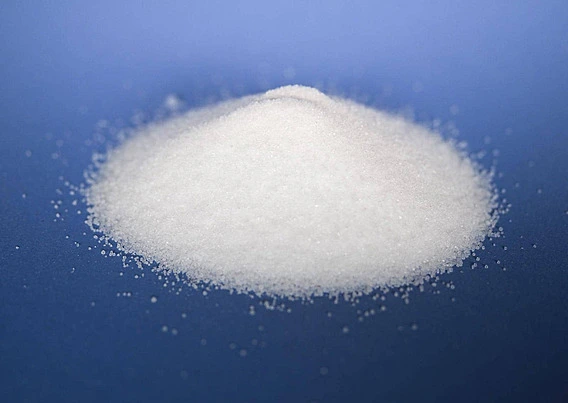
Citric Acid Monohydrate (E330)
Found this useful?